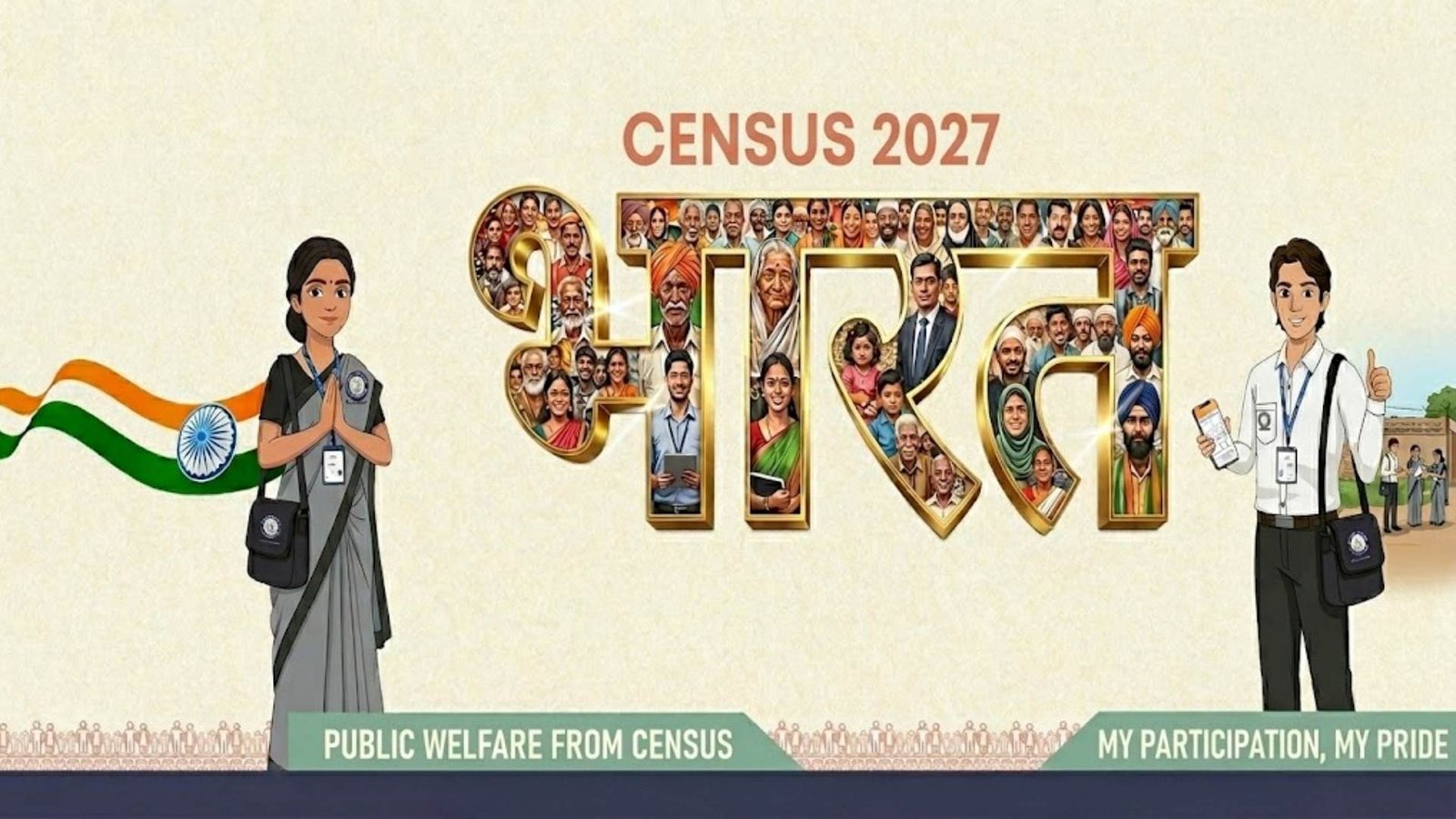
The first phase of Census 2027 in India will begin on April 1, 2026. This will be the world’s largest census and the 16th in India’s history, the 8th since independence after 1947. For the first time in history, the 2027 census will be done entirely online. Enumerators will collect data using mobile apps, and there will be an online self-enumeration portal in 16 languages. Shri Mritunjay Kumar Narayan, the Registrar General and Census Commissioner of India, announced at a press conference in New Delhi on March 30, 2026. This is a historic event in India’s administrative history and an important current events topic for all competitive exams in 2026. Let’s see the complete details about the 2027 Census in India, with its date, digital process, schedule, and key facts.
Quick Facts for Census 2027
| Feature / Metric | Details |
| Series Number | 16th Census in India’s series (8th since Independence) |
| Approved Budget | ₹11,718.24 Crore (Union Government approved) |
| Workforce | 31 Lakh+ Enumerators & supervisors nationwide |
| Linguistic Reach | 16 Languages supported in the Mobile App & SE portal |
| Geographic Scope | 36 States & Union Territories covered |
| Village Coverage | 6.39 Lakh Villages to be covered across India |
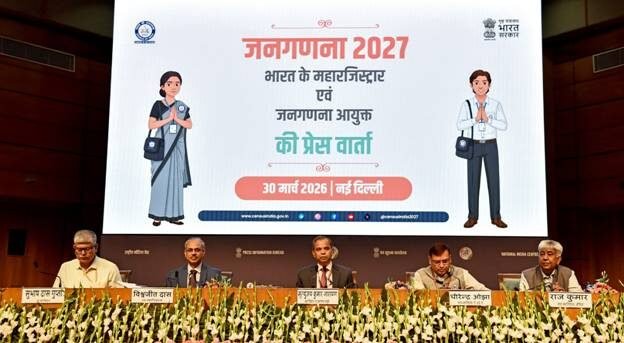
Source: PIB
What is the background of Census 2027?
The last Census of India was conducted in 2011. The Census 2021 was delayed due to the COVID-19 pandemic and has not yet been conducted. Census 2027 will finally update India’s demographic data after a 16-year gap.
The intent of the government to conduct Population Census 2027 was notified in the Gazette of India on June 16, 2025. The Census of India is conducted under the provisions of the Census Act, 1948, and Census Rules, 1990 (as amended).
The reference date of Census 2027 is 00:00 hours of March 1, 2027. For the UT of Ladakh and snow-bound areas of J&K, Uttarakhand, and Himachal Pradesh, the reference date is 00:00 hours of October 1, 2026.
Census 2027: Two Phases
- Phase I: House Listing & Housing Census (HLO): Conducted from April to September 2026 across all states/UTs. Collects data on housing conditions, household amenities, and assets. The Self-Enumeration (SE) window of 15 days precedes the 30-day door-to-door phase.
- Phase II: Population Enumeration (PE): Scheduled for February 2027. Collects individual-level data on demographics, socio-economics, education, migration, and fertility. Caste enumeration will also be conducted in this phase as decided by CCPA.
India’s First Digital Census: What’s New in Census 2027?
In India, the 2027 Census is a historic first in the Census to be held as India’s first digital census to be optimised.
- First fully digital census: Enumerators will collect and submit data directly through a dedicated mobile app on their smartphones—no paper forms.
- First Self-Enumeration (SE) facility: Respondents can fill their census data online before the enumerator’s visit, in any of 16 languages.
- Caste enumeration: For the first time since 1931, caste data will be collected during Census 2027 (Phase II), as decided by the Cabinet Committee on Political Affairs.
- Real-time monitoring: A dashboard provides near real-time progress tracking, including auto-generation of census records and abstracts.
- Frozen administrative units: All administrative units are frozen for the period January 1, 2026, to March 31, 2027.
Source: PIB
How Does Self-Enumeration (SE) Work?
The Self-Enumeration (SE) portal is a secure, web-based facility that allows respondents to enter their household and individual information online — at their own convenience — before the enumerator visits. The portal is available at se.census.gov.in.
- Access SE Portal: Visit se.census.gov.in
- Log in using Mobile Number: Secure OTP-based authentication
- Identify Location on Map: Pin your household on the web map
- Fill in Household Details: Available in 16 languages including Hindi & English
- Submit & Receive SE ID: A unique Self-Enumeration ID is generated
- Provide SE ID to Enumerator: Data confirmed and included in Census
Census 2027 Phase 1 State-wise Schedule
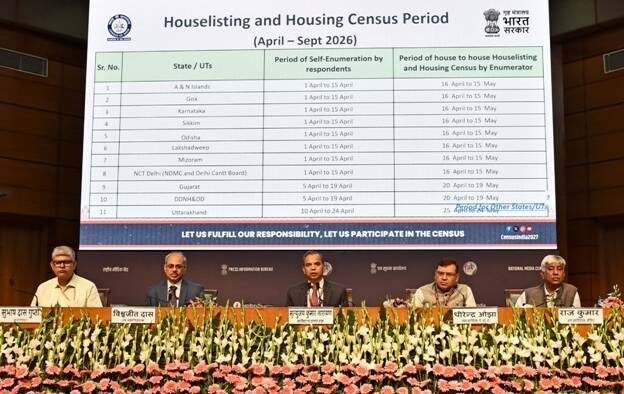
Below is the complete state and UT-wise schedule for the Self-Enumeration window and House Listing & Housing Census (Phase 1), as officially announced:
| State / UT | Self-Enumeration Period | Houselisting & Housing Census Period |
| Andaman and Nicobar Islands, Delhi (NDMC & Delhi Cantonment Board), Goa, Karnataka, Lakshadweep, Mizoram, Odisha, and Sikkim | 1 April – 15 April | 16 April – 15 May |
| Gujarat, Dadra and Nagar Haveli and Daman and Diu | 5 April – 19 April | 20 April – 19 May |
| Uttarakhand | 10 April – 24 April | 25 April – 24 May |
| Madhya Pradesh, Andhra Pradesh, Arunachal Pradesh, Chandigarh, Chhattisgarh, and Haryana | 16 April – 30 April | 1 May – 30 May |
| Bihar | 17 April – 1 May | 2 May – 31 May |
| Telangana | 26 April – 10 May | 11 May – 9 June |
| Punjab | 30 April – 14 May | 15 May – 13 June |
| Delhi (MCD), Maharashtra, Meghalaya, Rajasthan, and Jharkhand | 1 May – 15 May | 16 May – 14 June |
| Uttar Pradesh | 7 May – 21 May | 22 May – 20 June |
| Jammu and Kashmir, Ladakh, and Puducherry | 17 May – 31 May | 1 June – 30 June |
| Himachal Pradesh | 1 June – 15 June | 16 June – 15 July |
| Kerala and Nagaland | 16 June – 30 June | 1 July – 30 July |
| Tamil Nadu and Tripura | 17 July – 31 July | 1 August – 30 August |
| Assam | 2 August – 16 August | 17 August – 15 September |
| Manipur | 17 August – 31 August | 1 September – 30 September |
| West Bengal | To be decided | To be decided |
Source: PIB
Key Facts for Census 2027 to be noted:
- Census 2027 is the 16th census of India and 8th since independence.
- Last census conducted: 2011 — a gap of 16 years.
- Conducted under the Census Act, 1948 & Census Rules, 1990.
- Registrar General & Census Commissioner: Shri Mritunjay Kumar Narayan.
- Reference date: March 1, 2027 (00:00 hrs); for snow-bound areas: October 1, 2026.
- Total budget approved: ₹11,718.24 crore.
- Self-Enumeration portal: se.census.gov.in — available in 16 languages.
- Phase 1 begins: April 1, 2026 (first batch of states).
- Caste enumeration: included in Phase II (February 2027) — first since 1931.
- Number of enumerators: more than 31 lakh (3.1 million).
- Administrative units frozen: January 1, 2026, to March 31, 2027.
- Pre-test / rehearsal conducted: November 2025 in ~5,000 blocks across all States/UTs.
- Coverage: 36 States/UTs, 7,092 sub-districts, 5,128 statutory towns, ~6.39 lakh villages.