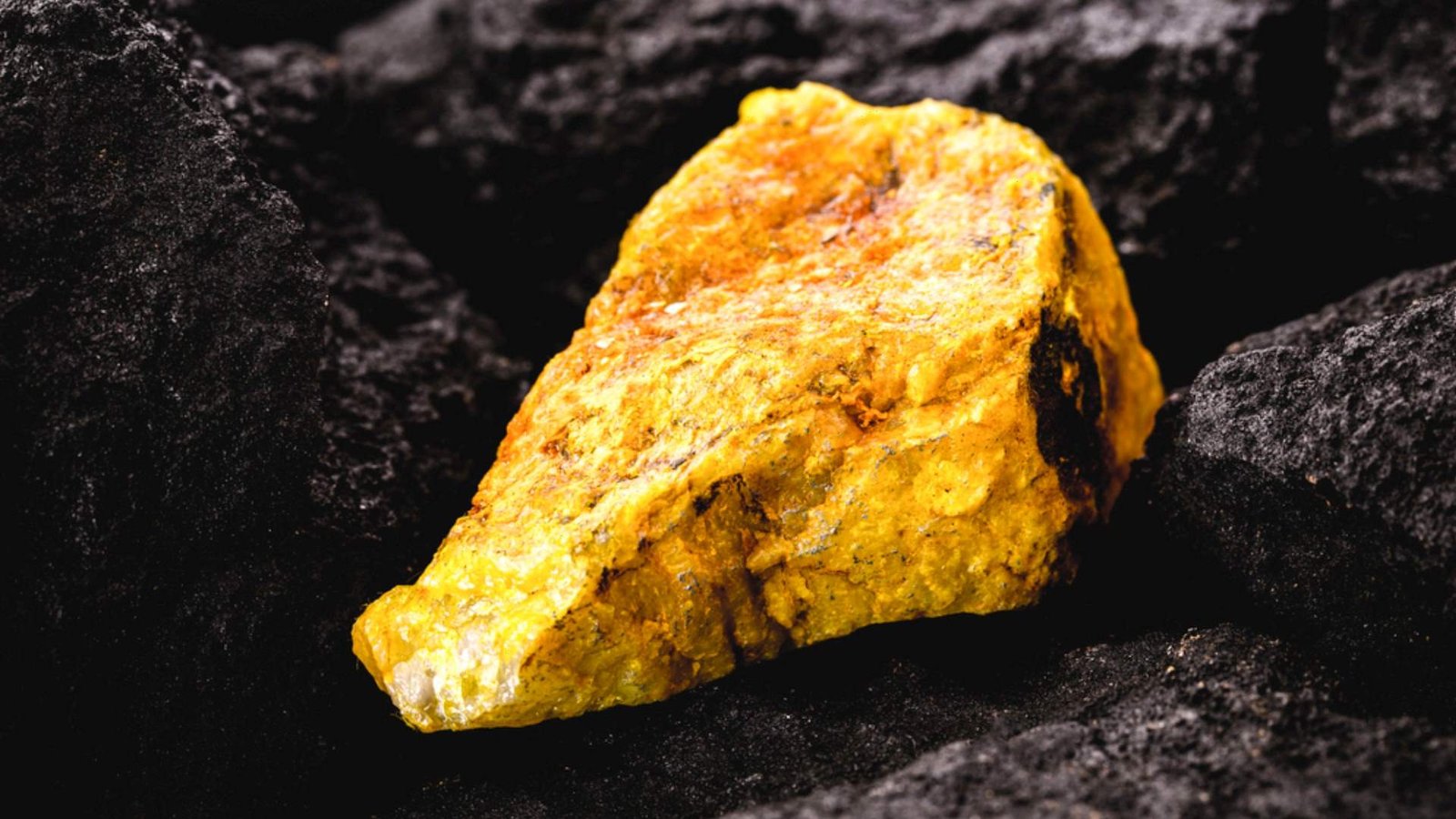
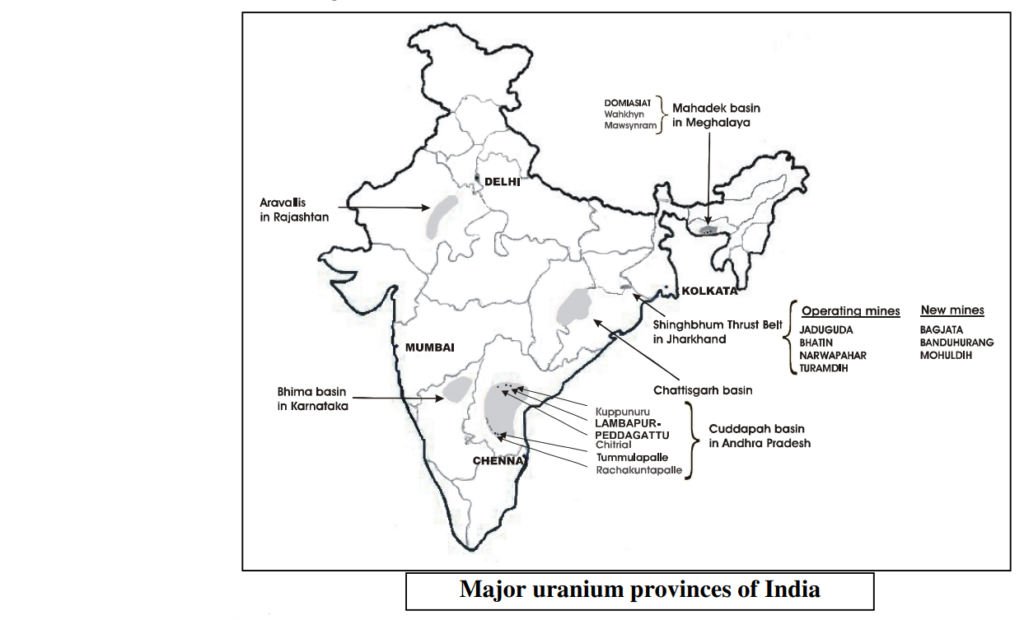
Largest Producer of Uranium in India: Uranium is a heavy metal that has been used as an abundant source of concentrated energy over the last 70 years. It was discovered in 1789 by Martin Klaproth, a German chemist. Due to its excessive demand, India has also been marked as a producer of uranium. Jaduguda, located in the Singhbhum Thrust Belt in Jharkhand, was the first uranium deposit to be discovered in 1951. But the largest producer of uranium in India is not Jharkhand. Which Indian states produced the largest amount of uranium? Let’s explore this article to know which states are the largest producers of uranium in India.
Which State is the Largest Producer of Uranium in India?
As of 2026, Andhra Pradesh is the largest producer of uranium in India. As per the BARC report, the major uranium deposit in India is Andhra Pradesh. The Tummalapalle Mine is the largest mine with a 3,000-ton-per-day capacity using innovative mining technology and a conveyor hoisting system.
Jharkhand is known as a vital producer of uranium, but Andhra Pradesh, located in the southwest part of the Cuddapah Basin, has surpassed Jharkhand in annual uranium production in India, contributing 49% to the country’s total uranium production and reserves.
List of States that are the Largest Producer of Uranium in India
| State | Facility | Key Features & Technology | Status / Commissioned |
| Andhra Pradesh | Tummalapalle Mine | A large mine with a 3,000 TPD capacity uses innovative mining technology and a conveyor hoisting system. | Operational |
| Tummalapalle Processing Plant | Uses alkaline processing technology developed by BARC, AMD, and UCIL. | Continuous operation since 2017 | |
| Jharkhand | Jaduguda Mine | India’s first commercial uranium mine; vertical shaft reaching 905 m depth; uses horizontal cut-and-fill stoping. | Operational |
| Bhatin Mine | Small deposit accessed through adits. | Commissioned in 1987 | |
| Narwapahar Mine | Uses trackless mining technology with a 7° decline entry. | Commissioned in 1995 | |
| Bagjata Mine | Employs trackless mining with a decline entry. | Commissioned in 2008 | |
| Turamdih Mine | Accessed via an 8° decline for trackless equipment. | Commissioned in 2003 | |
| Banduhurang Mine | The first opencast uranium mine in India. | Operational since 2007 |
Processing Plants in Jharkhand:
- Jaduguda Plant: Operating since 1968 using acid leaching technology. It has a capacity of 2500 tonnes per day.
- Turamdih Plant: Set up in 2007 with a 3,000-ton-per-day capacity, following an acid leaching process similar to Jaduguda.
Uses of Uranium
Uranium is a heavy, silvery-white metal that is best known for its radioactive properties. Despite its negative portrayal in popular culture, such as glowing green sticks in cartoons, uranium’s actual applications are crucial to modern energy and science.
1. Nuclear Power Generation
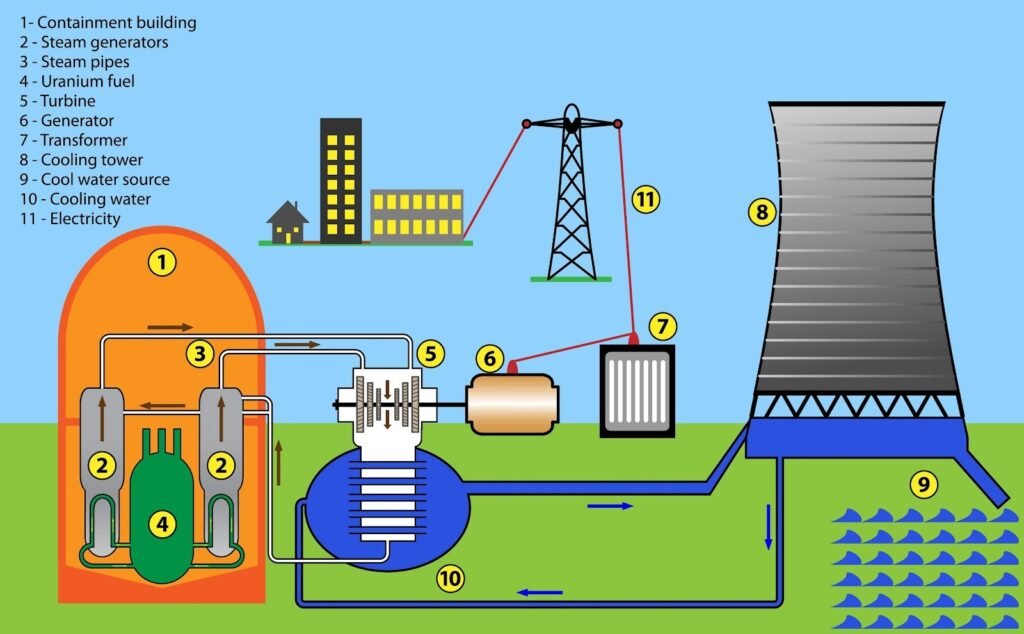
The most important use of uranium is as fuel for nuclear power plants. It uses nuclear fission, which is when the nucleus of a uranium atom splits and releases a lot of energy.
- U-235 Isotopes: Natural uranium is mostly U-238, but the U-235 isotope (which constitutes about 0.7% of natural uranium) is used as fuel because it can split.
- Energy Density: A single uranium fuel pellet, roughly the size of a gummy bear, can generate as much energy as three barrels of oil or one ton of coal.
- No carbon: Nuclear power makes electricity without releasing greenhouse gases while it is running, unlike fossil fuels.
Source: shutterstock
2. Military and Defense
Uranium is useful in the defense industry because it is dense and radioactive, but these uses are very strict.
- Propulsion: Nuclear-powered submarines and aircraft carriers use small nuclear reactors that run on highly enriched uranium. This lets them stay at sea for years without needing to refuel.
- Armor and Projectiles: Depleted uranium (uranium with most of the U-235 removed) is incredibly dense—about 1.6 times denser than lead. It is used to make armor-piercing shells and reinforced plating for tanks.
- Deterrents: Highly enriched uranium is a core component in the production of nuclear weapons.
3. Industrial and Scientific Applications
Beyond its role in power and war, uranium also plays a significant role in various industries.
- Radioisotope Production: Nuclear reactors produce medical isotopes used in cancer treatments (radiotherapy) and for diagnostic imaging like PET scans.
- Geochronology: Scientists use uranium-lead dating to determine the age of rocks and the Earth itself. By measuring the decay of uranium into lead, geologists can date samples that are billions of years old.
- Radiation Shielding: Because it is so dense, depleted uranium is actually used as a shield against radiation in medical settings (like X-ray machines) and for transporting other radioactive materials.
- Aircraft Counterweights: Its high density makes it useful as ballast or counterweights in the control surfaces (flaps and rudders) of large aircraft.
Andhra Pradesh is the largest producer of uranium in India, which is contributing nearly half of the nation’s reserves. While Jharkhand remains a historic hub, AP’s advanced Tummalapalle mine drives the country’s energy future. Uranium continues to be a vital component of India’s scientific and industrial development, powering everything from carbon-free electricity to life-saving cancer treatments.