Last Updated on July 7, 2026 by Gaurav
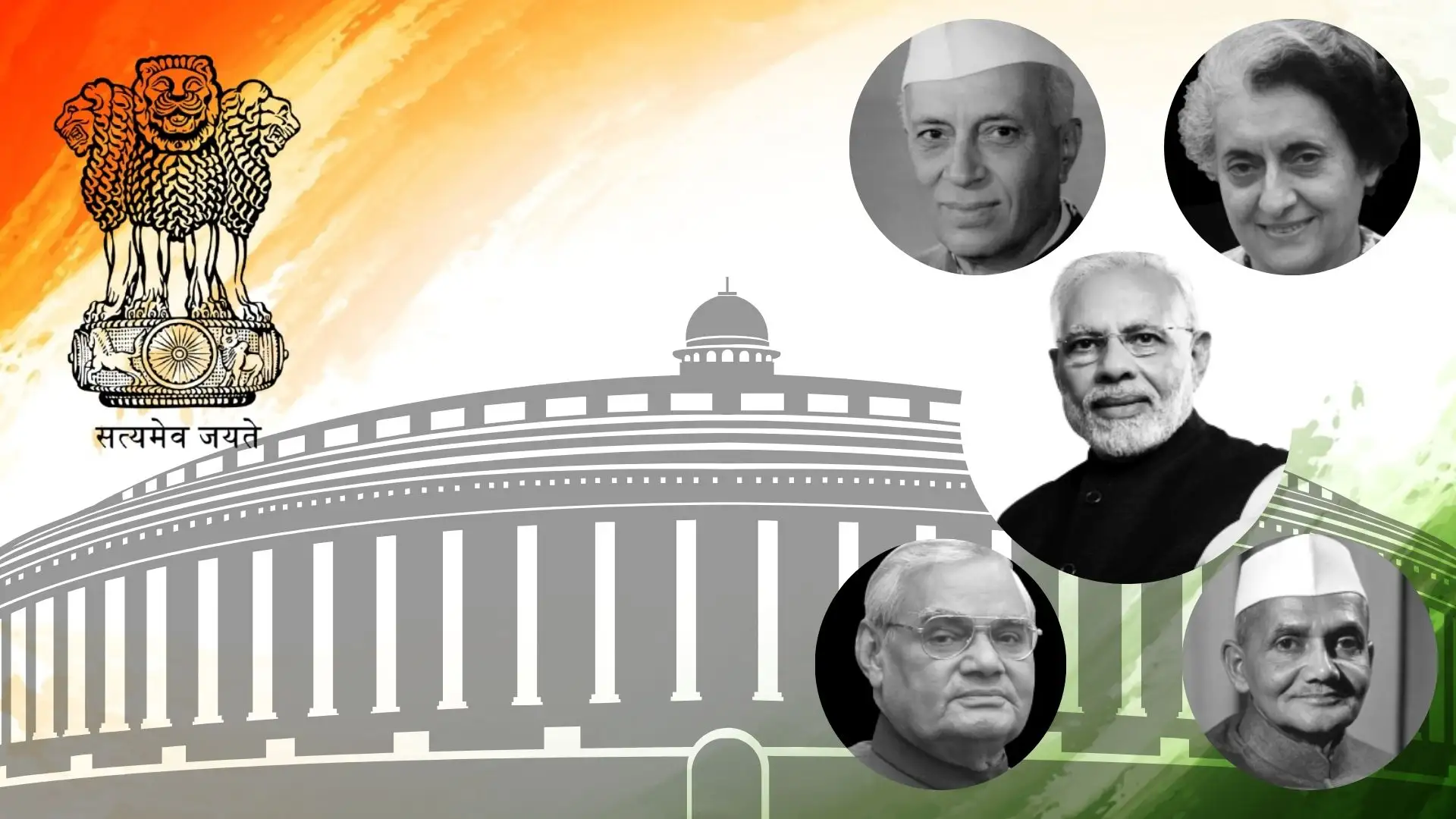
India gained independence on 15 August 1947. Since that historic day, the nation has been ruled by some really remarkable leaders that left a mark on the destiny of the nation. From the visionary Jawaharlal Nehru up to the current Prime Minister Narendra Modi, each of them had something unique for the nation.
Whether you are a student preparing for a competitive exam, a general knowledge enthusiast, or simply someone who wants to know more about India’s political journey, this complete list of Prime Ministers of India is the only guide you need.
Let us take you through each Prime Minister, their tenure, their party, and what they are best remembered for.
How is the Prime Minister of India Appointed?
Before we get into the list, here is a quick background for context.
The Prime Minister of India is the head of the government. Although the President of India is the constitutional head of state, real executive power rests with the Prime Minister and the Council of Ministers.
The President appoints the Prime Minister, who is typically the leader of the party or coalition that holds a majority in the Lok Sabha (the lower house of Parliament). The Prime Minister can be a member of either the Lok Sabha or the Rajya Sabha.
The term of the Lok Sabha is five years, after which fresh general elections are held. The Prime Minister can serve multiple consecutive terms if the party or alliance keeps winning elections.
Complete List of Prime Ministers of India (1947 – Present)
Here is the complete list along with the timeline as per Pradhanmantri Sangrahalaya:
| No. | Prime Minister | Party | From | To |
| 1 | Jawaharlal Nehru | INC | Aug 1947 | May 1964 |
| 2 | Gulzarilal Nanda (Acting) | INC | May 1964 | Jun 1964 |
| 3 | Lal Bahadur Shastri | INC | Jun 1964 | Jan 1966 |
| 4 | Gulzarilal Nanda (Acting) | INC | Jan 1966 | Jan 1966 |
| 5 | Indira Gandhi (1st term) | INC | Jan 1966 | Mar 1977 |
| 6 | Morarji Desai | Janata Party | Mar 1977 | Jul 1979 |
| 7 | Charan Singh | JP (S) | Jul 1979 | Jan 1980 |
| 8 | Indira Gandhi (2nd term) | INC | Jan 1980 | Oct 1984 |
| 9 | Rajiv Gandhi | INC | Oct 1984 | Dec 1989 |
| 10 | V.P. Singh | Janata Dal | Dec 1989 | Nov 1990 |
| 11 | Chandra Shekhar | SJP | Nov 1990 | Jun 1991 |
| 12 | P.V. Narasimha Rao | INC | Jun 1991 | May 1996 |
| 13 | Atal Bihari Vajpayee (1st term) | BJP | May 1996 | May 1996 |
| 14 | H.D. Deve Gowda | Janata Dal | Jun 1996 | Apr 1997 |
| 15 | Inder Kumar Gujral | Janata Dal | Apr 1997 | Mar 1998 |
| 16 | Atal Bihari Vajpayee (2nd & 3rd) | BJP | Mar 1998 | May 2004 |
| 17 | Manmohan Singh | INC | May 2004 | May 2014 |
| 18 | Narendra Modi | BJP | May 2014 | Present |
1. Jawaharlal Nehru (1947 to 1964)
Jawaharlal Nehru was the first Prime Minister of India and one of the longest-serving ones in the country’s history. He took charge on the very day India gained independence and served the nation for over 16 years until he passed away in office in May 1964.
Under his leadership, India set up institutions like the IITs and IIMs, launched the Five-Year Plans, and built major dams and steel plants. Nehru believed deeply in science, secularism, and socialism as the guiding principles for a newly independent India.
2. Gulzarilal Nanda (1964)
When Jawaharlal Nehru passed away on 27 May 1964, Gulzarilal Nanda was sworn in as the Acting Prime Minister of India. He held the post for 13 days until Lal Bahadur Shastri was elected as the new Prime Minister.
Nanda was serving as the Home Minister at the time and stepped up to ensure a smooth transfer of power during a sensitive period for the country. His role was largely to maintain stability and continuity in governance.
He is a unique figure in Indian political history as he served as Acting Prime Minister not once, but twice
3. Lal Bahadur Shastri (1964 to 1966)
Lal Bahadur Shastri was a simple, humble, and deeply respected leader who succeeded Nehru as the second full-time Prime Minister of India. Despite his quiet personality, he showed remarkable courage and leadership during one of India’s most testing times.
He led India through the Indo-Pakistani War of 1965 with great determination. His famous slogan “Jai Jawan, Jai Kisan” (Hail the Soldier, Hail the Farmer) became a rallying cry for the entire nation, recognising both the armed forces and the farming community as the backbone of India.
Shastri also played an important role in promoting the Green Revolution and the White Revolution (Operation Flood for milk production).
Tragically, he passed away on 11 January 1966 in Tashkent (present-day Uzbekistan).
4. Gulzarilal Nanda (1966, Acting PM for 13 days, Second Time)
Following the sudden demise of Lal Bahadur Shastri in Tashkent, Gulzarilal Nanda once again stepped in as Acting Prime Minister of India. This was his second stint in the role, each lasting exactly 13 days.
He maintained stability in the country until Indira Gandhi was elected as the new leader of the Indian National Congress and sworn in as Prime Minister.
5. Indira Gandhi (1966 to 1977)
Indira Gandhi was India’s first and, so far, only female Prime Minister. The daughter of Jawaharlal Nehru, she became one of the most powerful and controversial political figures in Indian history.
Her first term was marked by a series of bold decisions. She led India to a decisive victory in the 1971 war against Pakistan, which resulted in the creation of Bangladesh.
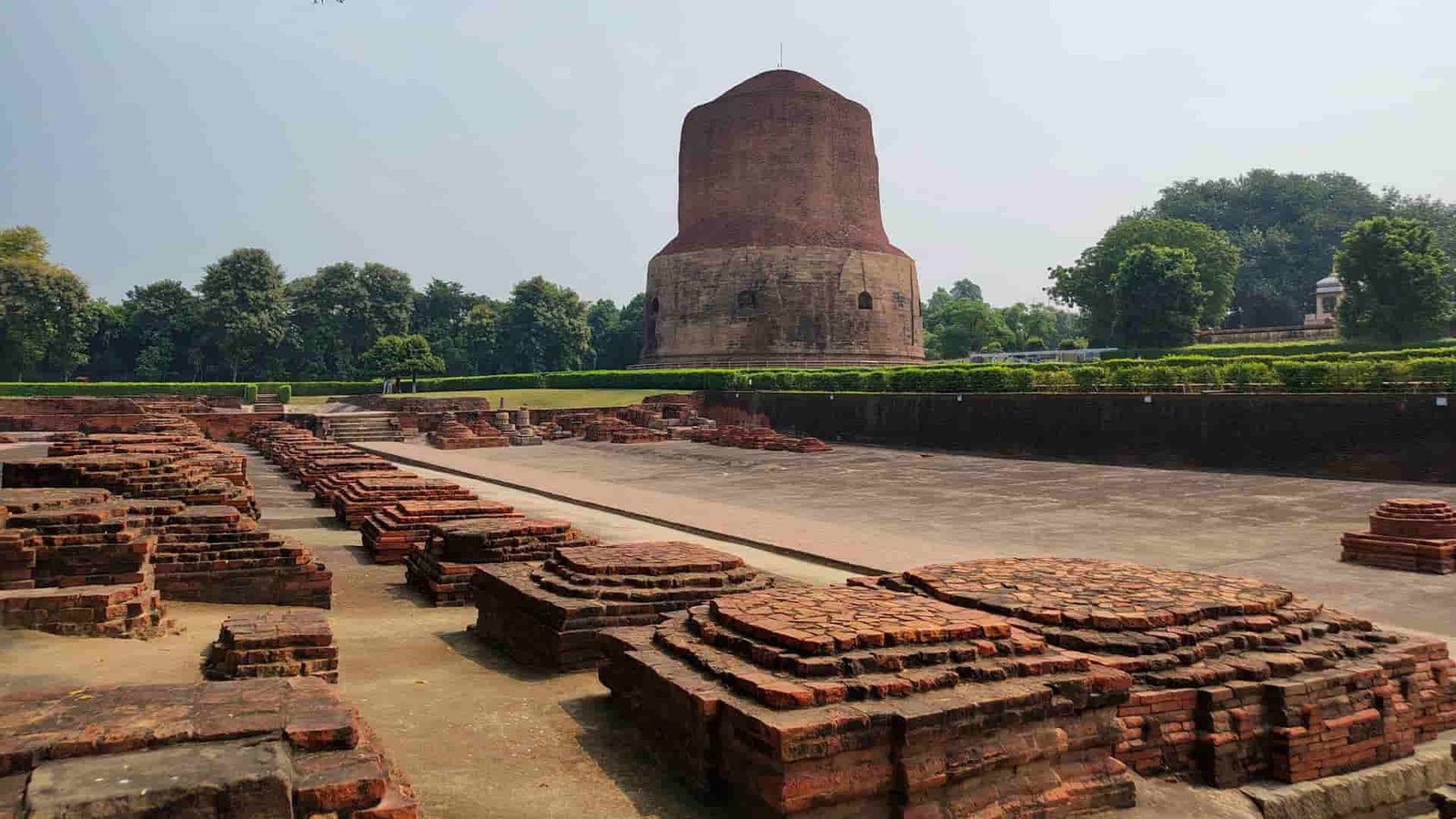
In 1974, India conducted its first nuclear test, codenamed “Smiling Buddha,” at Pokhran in Rajasthan, making India a nuclear-capable state.
6. Morarji Desai (1977 to 1979)
Morarji Desai became the first non-Congress Prime Minister of India after the Janata Party swept to power in the 1977 elections.
Desai was a seasoned politician and freedom fighter who had previously served as Finance Minister and Deputy Prime Minister under Nehru and Indira Gandhi respectively.
His government reversed several Emergency-era policies and worked to restore democratic freedoms. However, the Janata Party was a coalition of diverse groups with different ideological leanings, and internal disagreements led to the government’s fall. Desai resigned in July 1979 following a breakdown within the coalition.
7. Charan Singh (1979 to 1980)
Charan Singh served as India’s Prime Minister for a brief period following Morarji Desai’s resignation. He is remembered as a champion of farmers and the rural poor.
Charan Singh was known for his pro-farmer policies and his simple lifestyle. He was the first Prime Minister to come from a purely rural background and had a strong following among the farming community of north India. Charan Singh was awarded the Bharat Ratna posthumously in 2024.
8. Indira Gandhi (Second Term: 1980 to 1984)
Indira Gandhi made a dramatic comeback in the 1980 elections, leading the Congress party to a landslide victory. Her second term was marked by serious political and security challenges, particularly in Punjab and in India’s northeast.
9. Rajiv Gandhi (1984 to 1989)
Rajiv Gandhi, the son of Indira Gandhi, was sworn in as Prime Minister after his mother. He was just 40 years old at the time, making him the youngest Prime Minister in India’s history.
A former Indian Airlines pilot with little prior political experience, Rajiv Gandhi brought a young, modern outlook to the Prime Minister’s office. He focused heavily on technology, telecommunications, and computerisation of India, which many credit as the foundation for India’s eventual IT revolution. Rajiv Gandhi passed away on 21 May 1991.
10. Vishwanath Pratap Singh (1989 to 1990)
V.P. Singh came to power after Rajiv Gandhi’s Congress was voted out in the 1989 elections. He led a minority government supported from outside by both the BJP and the Left parties.
11. Chandra Shekhar (1990 to 1991)
Chandra Shekhar served as Prime Minister for a brief period, heading a minority government that was supported by the Congress party. He was a veteran politician known for his independent streak and his long Bharat Yatra (padyatra) in which he walked from Kanyakumari to Delhi to connect with ordinary Indians.
12. P.V. Narasimha Rao (1991 to 1996)
P.V. Narasimha Rao is one of the most underrated Prime Ministers in Indian history and is often called the “Father of Indian Economic Reforms.”
He came to power in 1991 at a time when India was on the verge of an economic collapse. With finance minister Dr. Manmohan Singh by his side, launched sweeping economic liberalisation reforms.
The government opened up the Indian economy to foreign investment, reduced import tariffs, dismantled the “Licence Raj” (a system of heavy industrial regulations), and set India on the path of a free-market economy.
These reforms transformed India’s economic trajectory and are directly responsible for the economic growth that the country has enjoyed in the decades since.
13. Atal Bihari Vajpayee (First Term: 1996, 13 days)
Atal Bihari Vajpayee became Prime Minister for the first time in 1996 after the BJP emerged as the single largest party in the elections. However, he could not prove his majority in Parliament and resigned after just 13 days without even facing a confidence vote, choosing to step down gracefully.
14. H.D. Deve Gowda (1996 to 1997)
H.D. Deve Gowda, a former Chief Minister of Karnataka, became Prime Minister as a candidate of the United Front coalition.
15. Inder Kumar Gujral (1997 to 1998)
I.K. Gujral succeeded Deve Gowda as Prime Minister from the United Front government. He was a respected diplomat and statesman.
16. Atal Bihari Vajpayee (Second and Third Term: 1998 to 2004)
Atal Bihari Vajpayee served as Prime Minister for the second time starting in 1998, this time for a full term (with a brief caretaker period). He is widely regarded as one of the most beloved and respected Prime Ministers in India’s history.
He successfully led the BJP-led National Democratic Alliance (NDA) coalition government through a turbulent period with remarkable steadiness.
In May 1998, his government conducted a series of nuclear tests at Pokhran, codenamed “Operation Shakti.” These tests declared India as a full-fledged nuclear weapons state and were received with great pride by most Indians, even as they drew international sanctions.
In 1999, India fought the Kargil War against Pakistan following a Pakistani military incursion into the Kargil sector of Jammu and Kashmir. India emerged victorious and Vajpayee’s handling of the crisis was widely praised.
His tenure also saw a major boost in infrastructure development, particularly through the National Highways Development Project (NHDP), which gave India the Golden Quadrilateral highway network connecting the four major metros.
17. Manmohan Singh (2004 to 2014)
Dr. Manmohan Singh served as Prime Minister for a full decade and is widely regarded as one of the most intellectually distinguished Prime Ministers India has had. An economist by training and profession, he had earlier served as Finance Minister under Narasimha Rao and was one of the main architects of India’s 1991 economic reforms.
As Prime Minister, he oversaw a period of strong economic growth. His government launched several landmark social welfare schemes including the Mahatma Gandhi National Rural Employment Guarantee Act (MGNREGA), the Right to Information (RTI) Act, and the National Rural Health Mission.
One of the biggest achievements of his foreign policy was the Indo-US Civil Nuclear Agreement, which ended India’s nuclear isolation and opened up cooperation with the United States in civilian nuclear energy. This deal was considered historically significant and demonstrated India’s growing global standing. He passed away on 26 December 2024.
18. Narendra Modi (2014 to Present)
Narendra Modi is the current and 14th Prime Minister of India. He is only the second Prime Minister in India’s history, after Jawaharlal Nehru, to win three consecutive terms in office.
He was sworn in for the first time on 26 May 2014 after the BJP won a historic majority in the Lok Sabha with 282 seats, the first time any single party had won an outright majority since 1984. He was re-elected in 2019 with an even bigger mandate of 303 seats. He was sworn in for a third term on 9 June 2024, this time leading a coalition government after the BJP fell short of a majority on its own.
Modi was born in Vadnagar, Gujarat, in 1950 and is the first Prime Minister to have been born after India’s independence. He served as the Chief Minister of Gujarat from 2001 to 2014.
His tenure has seen several major policy initiatives and events such as:
- Demonetisation in November 2016, withdrawing 500 and 1000 rupee notes from circulation
- Goods and Services Tax (GST) implementation in 2017, unifying India’s tax structure
- Make in India, Startup India, Digital India campaigns to boost manufacturing and technology
- Pradhan Mantri Jan Dhan Yojana for financial inclusion
- PM Awas Yojana for affordable housing
- Swachh Bharat Abhiyan for sanitation and cleanliness
- UPI (Unified Payments Interface) revolution in digital payments
- India hosted the G20 Summit in New Delhi in 2023
- India’s Chandrayaan-3 became the first spacecraft to land near the lunar south pole in August 2023
The Prime Minister of India is far more than just the head of government. He or she is the bridge between the elected Parliament and the executive machinery of the country. Every major policy decision, from foreign affairs to economic planning to internal security, flows through the Prime Minister’s office.
India’s democracy has shown remarkable resilience over the decades. Power has transferred peacefully after almost every election. Governments have been voted out and voted in. Coalitions have risen and fallen. Through it all, India has maintained its democratic character.
Each Prime Minister, regardless of political ideology or party affiliation, has added a chapter to the ongoing story of a nation that was once dismissed as ungovernable and has gone on to become one of the most significant democracies and economies in the world.
For more such well-researched GK articles helpful for exam aspirants and general readers seeking authentic and up-to-date coverage of current affairs, history, polity, science, technology, economy, sports, and beyond, keep exploring various categories of GKinfoBuzz, your trusted resource for knowledge and information.