Last Updated on July 8, 2026 by Parikshit
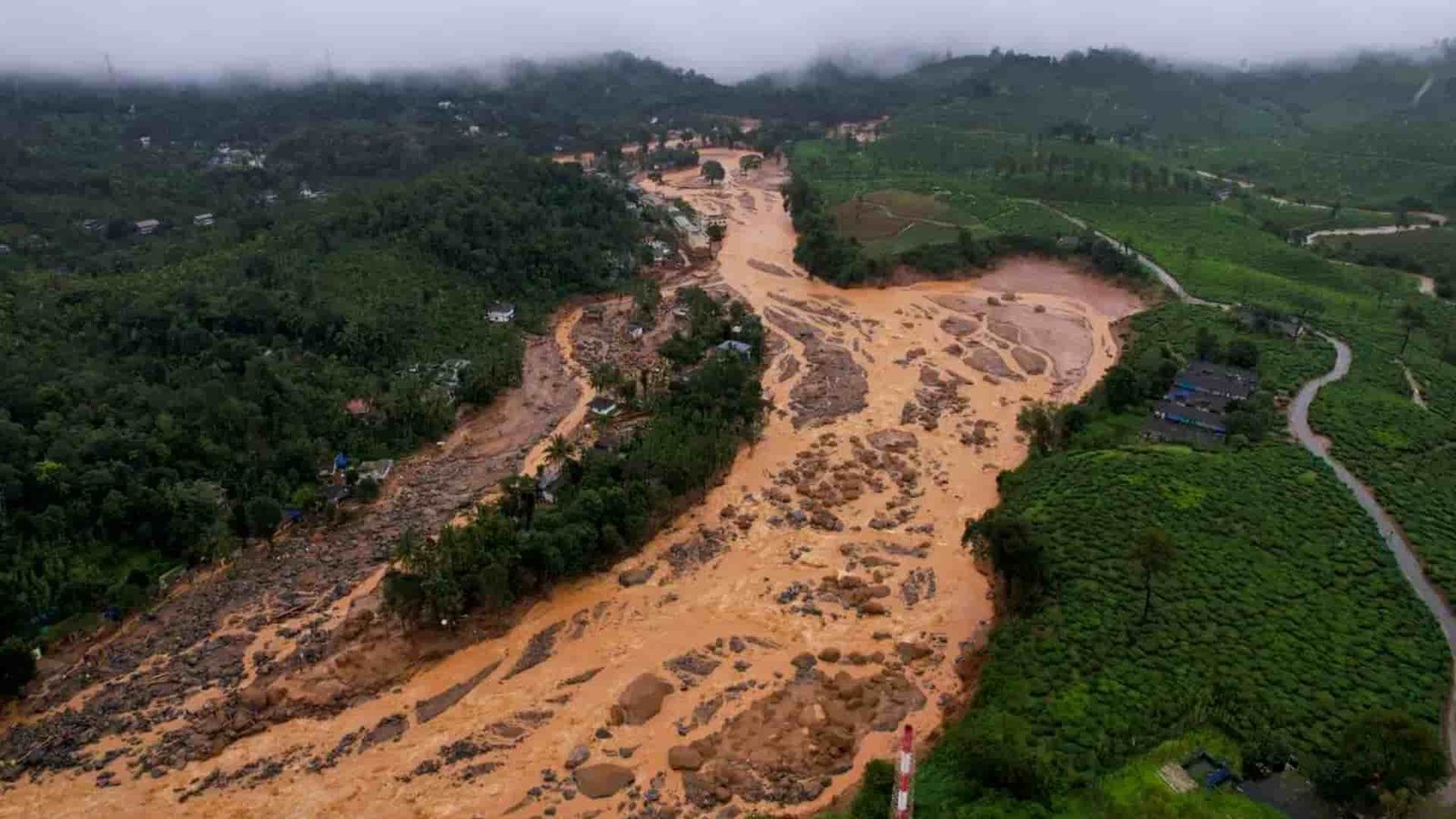
Recently, on 7 June 2026, in Wayanad, a massive landslide struck at Kalladi near Meppadi due to the torrential monsoon rain near the entrance of the under-construction Wayanad Tunnel Road (Anakkampoyil–Kalladi–Meppadi) project linking Kozhikode to Wayanad.
As per the North Eastern Regional Node for Disaster Risk Reduction, a total of 46 landslides occurred in India in 2026, including the recent landslide that occurred on June 7, 2026.
Landslides are among the most natural catastrophes, which are caused by natural forces like earthquakes, floods, or hurricanes, and they also occur due to man-made causes, like constructing dams, tunnels, or roads in mountainous areas.
Let’s explore what are landslides & how do they occur, what causes landslides, how gravity, water, and friction trigger them, their types, categories, and major landslide-prone regions in India.
What Are Landslides?
According to the ISRO, a landslide is “a movement of a mass of rock, earth or debris down a slope.” It is one of the common geological hazards in hilly areas, whereas rainfall is the natural triggering factor for the occurrence of landslides.
It led to massive environmental damages, such as increases of sediment discharge due to soil erosion, transportation, effects on living prone areas, etc.
Main Causes of Landslide
Landslide are caused by rainfall, undercutting of slopes due to flooding or excavation, earthquakes, snowmelt, and other natural and anthropogenic causes like overgrazing cattle, terrain cutting & filling, excessive development, etc.
How Does The Landslide Occur?
Landslides can occur due to the main reasons of gravity, water, and friction. Let’s see what role they play in landslide occurrences.
Role of Gravity
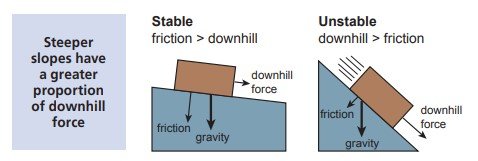
Landslides generally occur moving down a slope because of the force of gravity, which forces the material to move downhill, which is usually counteracted by two things, which are:
- The internal strength of material.
- The friction of the material
Source: Washington Department of Natural Resources
So, due to the force of gravity, the occurrence of landslides becomes greater than either friction or internal strength.
Role of Water
Source: Washington Department of Natural Resources
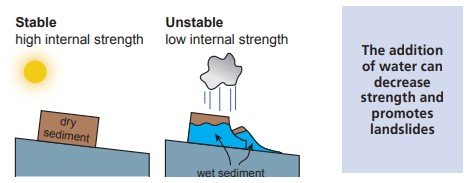
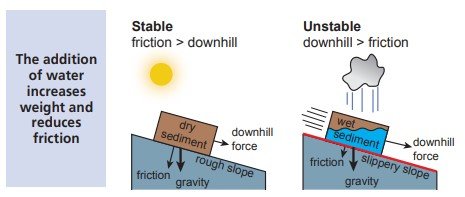
In the occurrence of the landslides, the water also plays an important role. Due to the addition of water, it increases the weight of the material on the slope’s side as it seeps into the ground slopes, adding to the gravitational force, which increases the high chances of landslide.
Role of Friction
Source: Washington Department of Natural Resources
In the occurrence of the landslides, the role of friction is very important. Suppose you have to push any big rock on the plain road; you need to push hard for moving the rock because of very high friction, but on the slopes, you do not need to push; it is automatically rolled down.
The same condition is for landslides also, as in steeper slopes, friction is very low, which increases the occurrence of landslides.
Major Category Of Landslides
Landslides can be categorized into two major categories, which are:
- Shallow Landslides
- Deep-Seated Landslides
Shallow Landslides
Shallow landslides occur on the top layer of the soil when it becomes loose or slides down on the slope. These landslide are often occurs on roads and hills, and these make the fast-flowing movement of landslides, which is often called “mudslide.”
Deep-Seated Landslides
Deep-seated landslide are occurred in bedrock and are often slow moving that can covers the large areas to destroy the infrastructure and living-prone areas.
These landslides are usually occurs as translational slides, rotational slides, or large block slides, and these slides are much larger than shallow slides.
Types Of Landslides
There are generally three types of landslides that are flows, slides, and rockfalls & topples.
Flows
In this type of landslide, generally a slurry mixture of water, soil, and rock debris that moves rapidly downslope occurs. It is further classified in six other types, which are:
- Earthflows
- Debrisflows
- Debris Avalanches
- Lahars
- Lateral Spread
- Soil Creep
Slides
Slides are the downslope movement of rock or soil along a surface and can be deep-seated or shallow.
The starting of slides, like flows or rockfalls, is moving faster on steep side slopes. These are further classified into three different types, which are:
- Translational slides
- Rotational slides (slumps)
- Block slides
Landslides Disaster in India
India is among the top four countries with the highest landslide risk. In India, they mostly occur in the month of monsoon, between June to September.
As per Froude and Petley (2018), stated by ISRO, India contributes around 16% of rainfall-triggered landslide events worldwide.
Source: ISRO
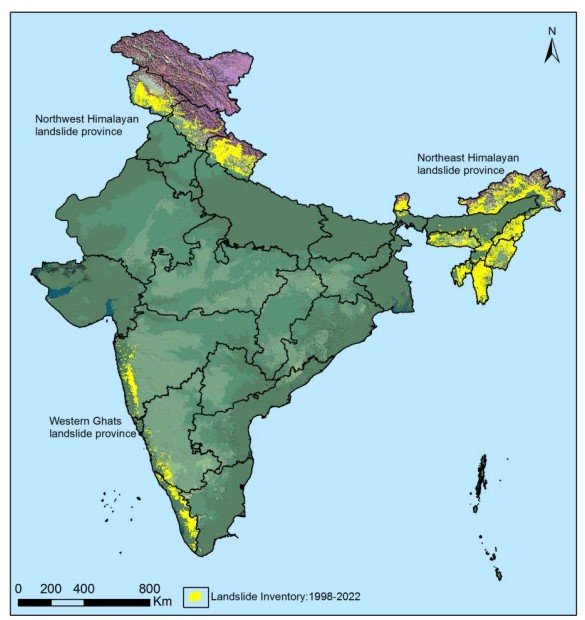
In India, the main landslide-prone areas include the Himalayas, the Northeastern hill ranges, the Western Ghats, the Nilgiris, the Eastern Ghats, and the Vindhyas range.
So, this article was all about landslides, main causes, how do they occur, major categories, types of landslides, and landslide disasters in India in detail, which is a very important topic in disaster management and the environment.
So, for more such well-researched GK articles helpful for exam aspirants and general readers seeking authentic and up-to-date coverage of current affairs, history, polity, science, technology, economy, sports, and beyond, keep exploring various categories of GKinfoBuzz, your trusted resource for knowledge and information.