Last Updated on April 20, 2026 by Parikshit
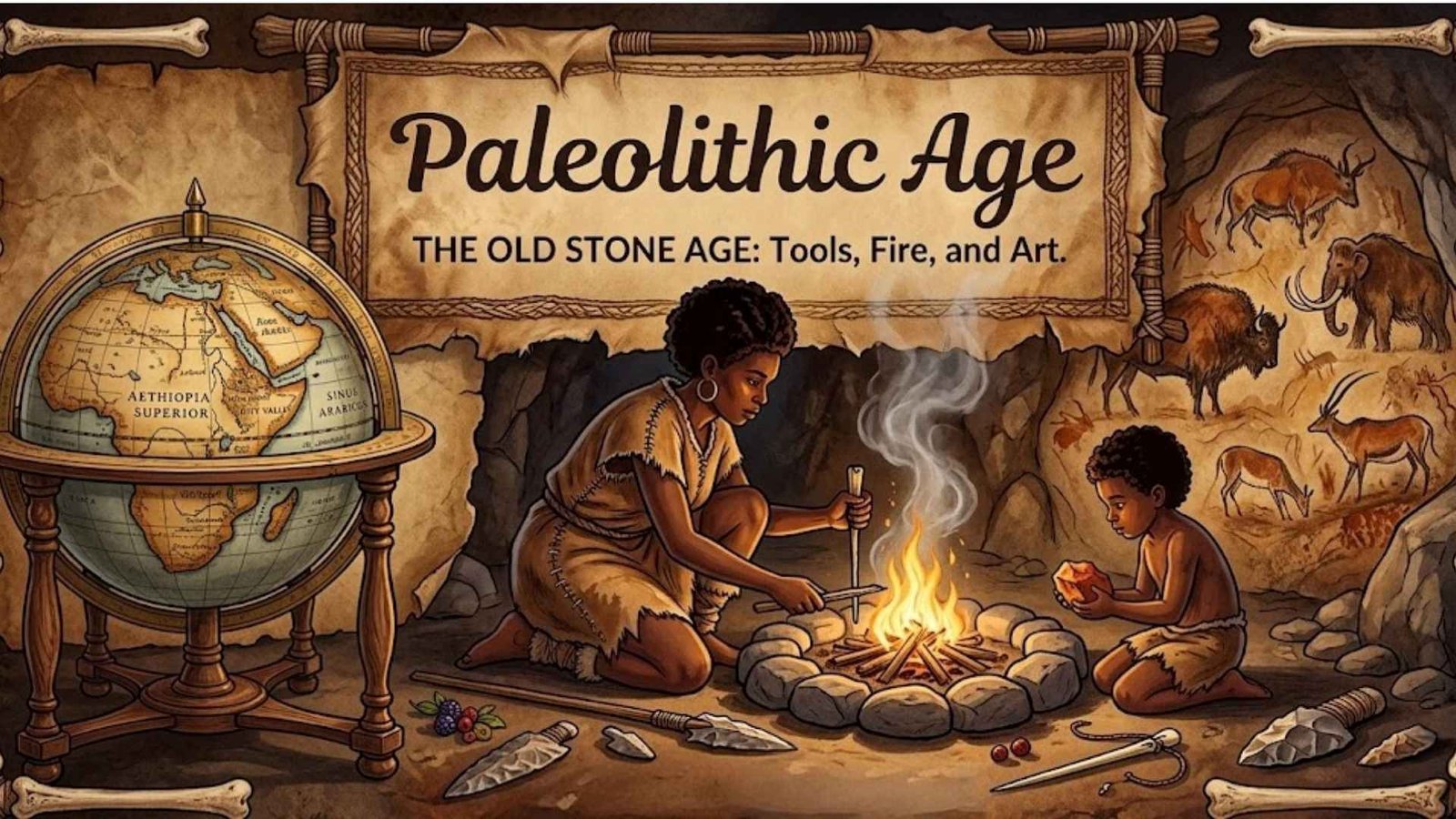
Palaeolithic Age in India: The term “Palaeolithic” is derived from the Greek words ‘palaeo,’ which means “old,” and ‘lithic,’ which means “stone.” Therefore, the term “Palaeolithic age” is the “Old Stone Age.” The time period of the Old Stone Age, or Palaeolithic age, around 2.6 million years ago in India, was developed during the Pleistocene period, or the Ice Age, which was referred to as the geological period of age when our Earth was covered with ice & snow and the weather was so extremely cold that humans or plant life could not exist.
The first stone tools were used in the Palaeolithic Age, but in India, no evidence of human fossils was found. The oldest fossils of genus Homo (Homo habilis) are about 2.8 million years old and were found in Africa. Interestingly, the world’s oldest known stone tools are around 3.3 million years old, made by species considered transitional between apes and Homo. This age was later divided into three main categories. So, here in this article, let’s explore in detail the Palaeolithic Age in India.
What are the characteristics of the Palaeolithic Age in India?
There are many characteristics of the Palaeolithic Age in India, which are
- It is believed that the earliest Indian people belonged to the ‘Negrito’ race’, and they usually lived in the open air, caves, rivers, valleys, and rock shelters.
- They usually gathered the food, hunted the animals, and ate wild fruits and vegetables.
- They have no knowledge of houses, pottery, and agriculture. These all were discovered in a later stage.
- In the later Palaeolithic Age, the art of painting was found as the evidence.
- They used unpolished, rough stone tools like choppers, axes, blades, burins, and scrapers.
Classification of the Palaeolithic Age in India
The Palaeolithic Age in India is divided into three phases, depending on the technology of tools used in this period, their economic activities, and also according to the nature of the change of climate:
- Lower Palaeolithic Age: beginning to 100,000 BC
- Middle Palaeolithic Age: 100,000 BC – 40,000 BC
- Upper Palaeolithic Age: 40,000 BC – 10,000 BC
Lower Palaeolithic Age in India (beginning to 100,000 BC)
It covers the greater part of the Ice Age. The Lower Palaeolithic has two cultural traditions:
i) Soanian pebble-tool tradition, and
ii) The Peninsular Indian handaxe-cleaver tradition.
The term “Acheulean” is used for hand axes and cleavers found as tool assemblages and representing advanced and increasingly symmetrical shapes. The handaxe-cleaver, or biface, assemblages constitute the Acheulian prehistoric period tradition, which is widely known from the western half of the Old World (Africa, Western Europe, the West, and South Asia).
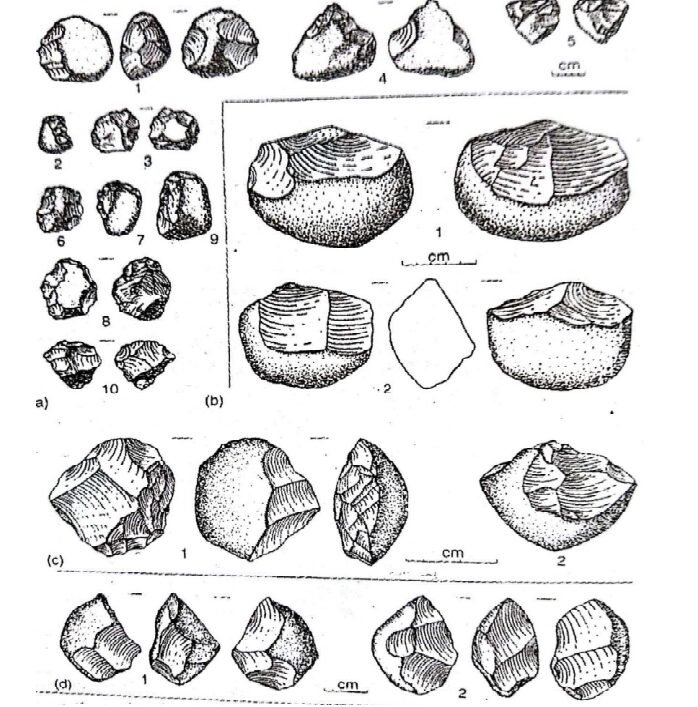
Hunters and food gatherers used tools such as hand axes, choppers, and cleavers. Tools were rough and heavy. One of the earliest lower Palaeolithic sites is Bori in Maharashtra. In the Lower Palaeolithic Age in India, limestone was also used to make tools.
Major sites of lower Palaeolithic age
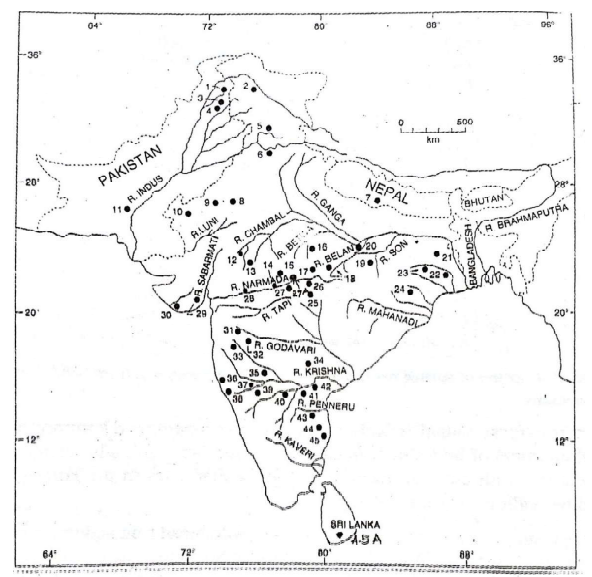
- Soan valley (in present-day Pakistan)
- Singi Talav in western Rajasthan
- Bhimbetka in Madhya Pradesh
- Adamgarh in Madhya Pradesh
- Lalitpur in Jhansi district of UP
- Paisra in Munger district, Bihar
- Chirki-Nevasa in Maharashtra
- Morgaon, a site from Deccan basalt landscape in the Bhima drainage basin
- Hunsgi in the Hunsgi valley and Yediyapur in the Baichbal valley in north Karnataka have in situ cultural levels.
- Isampur in the Hunsgi valley in North Karnataka
- Attirampakkam (Tamil Nadu), an in situ Acheulian site
Middle Palaeolithic age in India (100,000 BC – 40,000 BC )
The Middle Palaeolithic age in India is called Nevasian, after flake tools, which were found at Pravara at Nevasa (Maharashtra) and then later in the Godavari Valley in north Karnataka. The tools that were used in the Middle Palaeolithic age in India were smaller, lighter, and thinner.
There was a decrease in the use of hand axes with respect to other tools.
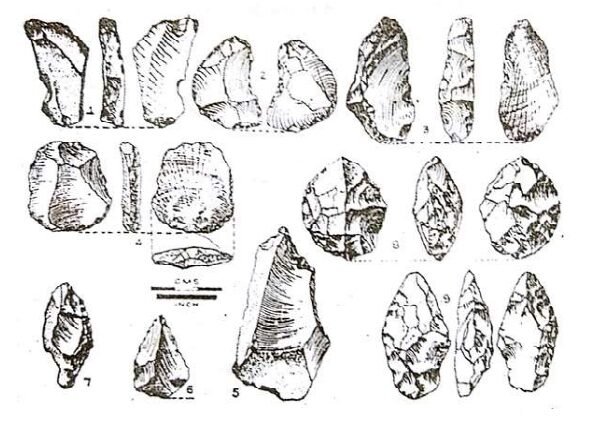
- Hand axe: Generally a core tool. It is a bifacial tool since it is worked on
- both sides. It is roughly triangular in shape, broad at one end and pointed at
- the other. It is meant to be held in hand by the butt and sometimes hafted
- onto handles.
- Cleaver
- Chopper
- Chopping tool
Important middle Palaeolithic age sites
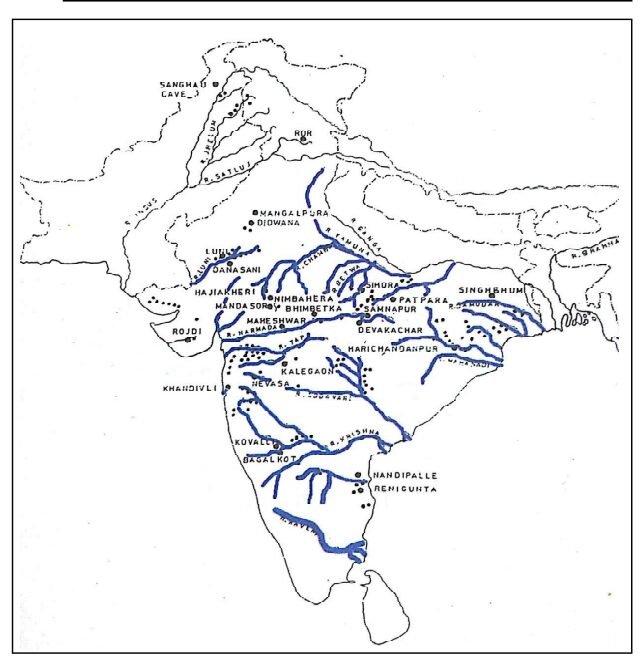
- Didwana in Rajasthan
- Hiran valley in Gujarat
- Potwar Plateau between the Indus and Jhelum rivers
- Sanghao cave in NWFP of Pakistan
- Budh Pushkar in Rajasthan
- Luni river system denoting tool industries west of the Aravallis
- Chirki Nevasa in Maharashtra
- Kalpi in Uttar Pradesh
Upper Palaeolithic age in India (40,000 BC – 10,000 BC)
The Upper Paleolithic age coincided with the last phase of the ice age when the climate became comparatively warmer and less humid. This age is the emergence of Homo sapiens.
The period is marked by innovation in tools and technology.
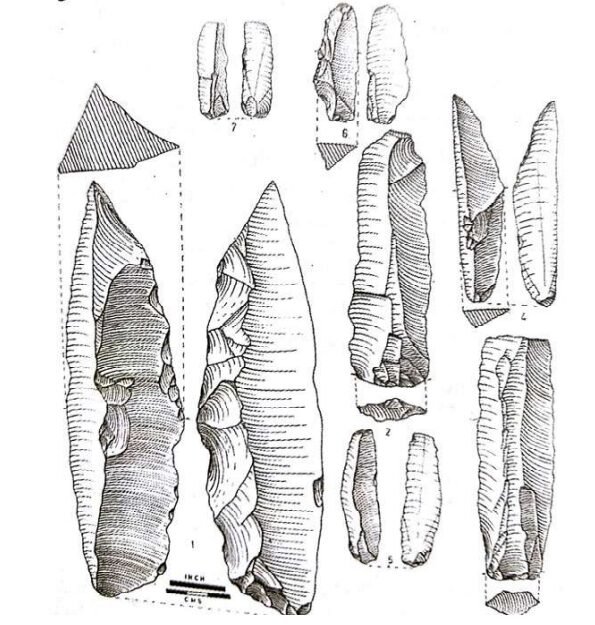
A lot of bone tools, including needles, harpoons, parallel-sided blades, fishing tools, and burin tools.
Major sites of the Upper Palaeolithic age
- Rohri Hills in upper Sindh
- Milestone 101 in lower Sindh
- Chopani Mando in Belan valley
- Baghor I in Madhya Pradesh
- Paisra in Munger district of Bihar
- Lalmai hills of Bangladesh
- Haora and Khowai river valleys in western Tripura
- Kurnool in Andhra Pradesh
- Muchchatla Chintamanu Gavi in Andhra Pradesh