Last Updated on May 18, 2026 by Gaurav
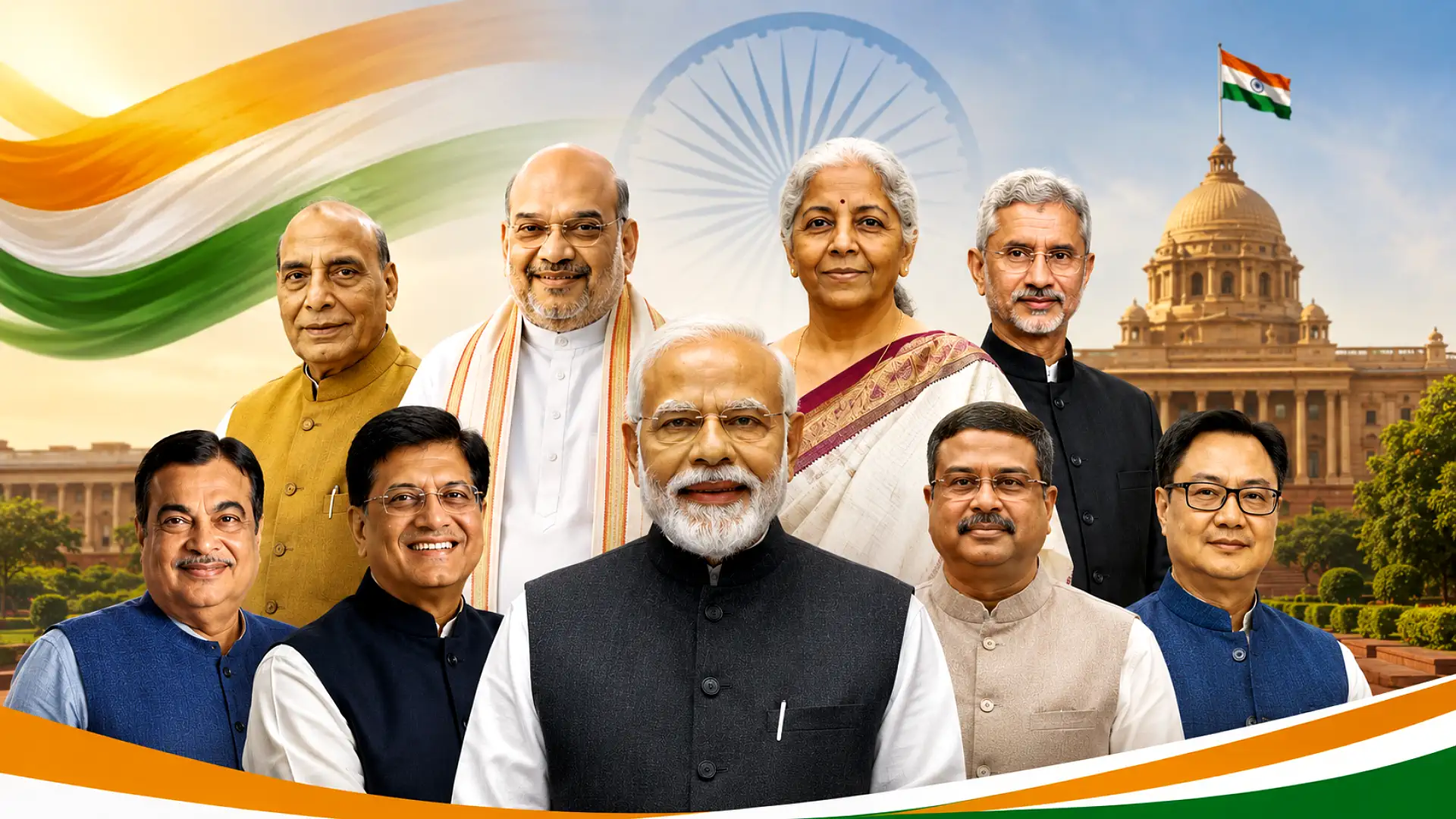
The cabinet ministers of India is the top decision-making body in the executive branch of the Indian government. These are the top officials of the Union Council of Ministers. They are the head of various ministries like Defence, Home Affairs, Finance etc.
This group of cabinet ministers is headed by the Prime Minister who distributes work amongst them. As of May 2026, the cabinet is currently made up of 30 ministers who help the PM in the governance of the country. Each minister is accountable for the policies and administration of their respective departments.
What is the role of Cabinet Ministers of India?
The cabinet ministers of India are the senior-most members of the Union Council of Ministers. They lead major government departments and make critical policy decisions for the nation. Under the leadership of the Prime Minister, they form the core executive body. Their primary role is to advise the President and implement national laws.
Who are the current Cabinet Ministers of India?
The current list of cabinet ministers of India includes experienced leaders from the ruling NDA coalition. These ministers manage vital sectors that affect both domestic growth and international relations. The Prime Minister holds additional charges of all important policy issues and departments not assigned to others.
The cabinet is headed by Prime Minister Narendra Modi who looks over the following portfolios:
1. Ministry of Personnel, Public Grievances and Pensions;
2. Department of Space;
3. Department of Atomic Energy;
4. All important policy issues and other portfolios not allocated to any minister
The list of 30 cabinet ministers of India, along with their portfolios in 2026, is as follows:
| S.No. | Name | Portfolio(s) | Party | State |
| 1 | Rajnath Singh | Defence | BJP | Uttar Pradesh |
| 2 | Amit Shah | Home Affairs; Cooperation | BJP | Gujarat |
| 3 | Nitin Gadkari | Road Transport & Highways | BJP | Maharashtra |
| 4 | Jagat Prakash Nadda | Health & Family Welfare; Chemicals & Fertilizers | BJP | Himachal Pradesh |
| 5 | Shivraj Singh Chouhan | Agriculture & Farmers Welfare; Rural Development | BJP | Madhya Pradesh |
| 6 | Nirmala Sitharaman | Finance; Corporate Affairs | BJP | Karnataka |
| 7 | S. Jaishankar | External Affairs | BJP | Gujarat |
| 8 | Manohar Lal Khattar | Housing & Urban Affairs; Power | BJP | Haryana |
| 9 | H.D. Kumaraswamy | Heavy Industries; Steel | JD(S) | Karnataka |
| 10 | Piyush Goyal | Commerce & Industry | BJP | Maharashtra |
| 11 | Dharmendra Pradhan | Education | BJP | Odisha |
| 12 | Jitan Ram Manjhi | Micro, Small & Medium Enterprises | HAM(S) | Bihar |
| 13 | Rajiv Ranjan Singh (Lallan Singh) | Panchayati Raj; Fisheries, Animal Husbandry & Dairying | JD(U) | Bihar |
| 14 | Sarbananda Sonowal | Ports, Shipping & Waterways | BJP | Assam |
| 15 | Virendra Kumar | Social Justice & Empowerment | BJP | Madhya Pradesh |
| 16 | Ram Mohan Naidu | Civil Aviation | TDP | Andhra Pradesh |
| 17 | Pralhad Joshi | Consumer Affairs, Food & Public Distribution; New & Renewable Energy | BJP | Karnataka |
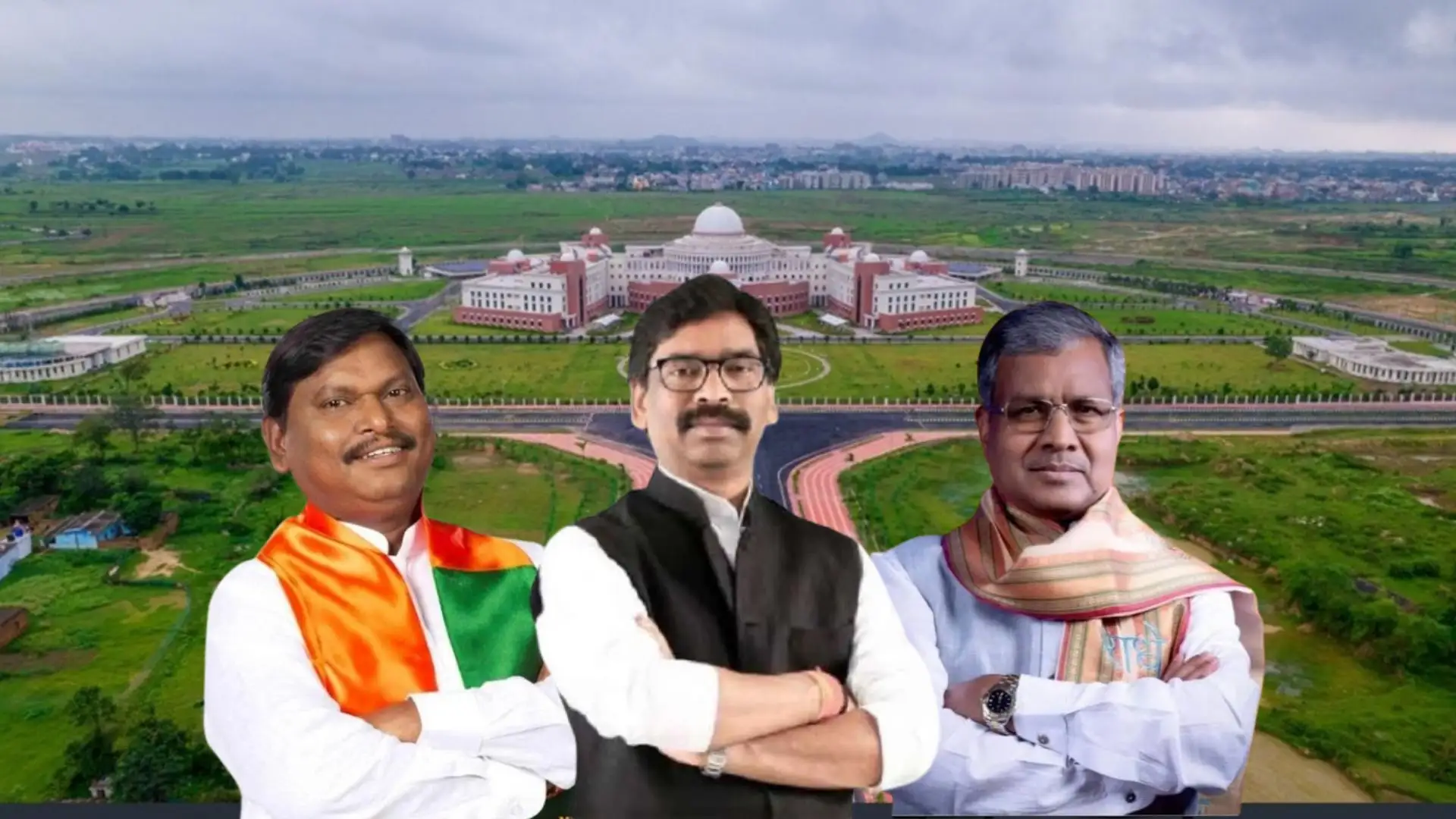
| 18 | Jual Oram | Tribal Affairs | BJP | Jharkhand |
| 19 | Giriraj Singh | Textiles | BJP | Bihar |
| 20 | Ashwini Vaishnaw | Railways; Information & Broadcasting; Electronics & Information Technology | BJP | Odisha |
| 21 | Jyotiraditya Scindia | Communications; Development of the North Eastern Region | BJP | Madhya Pradesh |
| 22 | Bhupender Yadav | Environment, Forest & Climate Change | BJP | Rajasthan |
| 23 | Gajendra Singh Shekhawat | Culture; Tourism | BJP | Rajasthan |
| 24 | Annapurna Devi | Women & Child Development | BJP | Jharkhand |
| 25 | Kiren Rijiju | Parliamentary Affairs; Minority Affairs | BJP | Arunachal Pradesh |
| 26 | Hardeep Singh Puri | Petroleum & Natural Gas | BJP | Uttar Pradesh |
| 27 | Mansukh Mandaviya | Labour & Employment; Youth Affairs & Sports | BJP | Gujarat |
| 28 | G. Kishan Reddy | Coal; Mines | BJP | Telangana |
| 29 | Chirag Paswan | Food Processing Industries | LJP | Bihar |
| 30 | C.R. Patil | Jal Shakti | BJP | Gujarat |
ALSO READ: List of Prime Ministers of India (1947 – Present)
How is the Union Council of Ministers structured?
The Union Council of Ministers has three distinct categories of ministers. The cabinet ministers of india occupy the top tier. They attend cabinet meetings and take part in major policy deliberations. The second tier consists of Ministers of State (Independent Charge). These ministers head smaller ministries but do not usually attend cabinet meetings.
The third tier includes Ministers of State. These individuals assist Cabinet Ministers in their daily work. The Constitution of India limits the total number of ministers. According to the 91st Amendment Act, the council cannot exceed 15 percent of the total strength of the Lok Sabha.
Note: The 91st Amendment Act of 2003 is the law that limits the size of the Council of Ministers to 15% of the Lok Sabha.
What are the constitutional provisions for the Cabinet?
The Indian Constitution provides a formal framework for the cabinet system. Article 74 states there shall be a Council of Ministers with the Prime Minister at the head. This body exists to aid and advise the President. The President usually acts in accordance with this advice.
Article 75 details the appointment and responsibility of ministers. The President appoints the Prime Minister. Other ministers are appointed by the President on the advice of the Prime Minister. All ministers are collectively responsible to the Lok Sabha. This means the entire council must resign if they lose a vote of confidence in the lower house of Parliament.
Why is the Cabinet significant in Indian Polity?
The cabinet is the supreme directing authority of the government. It coordinates the work of various departments and resolves inter-ministerial disputes. The cabinet also manages the legislative agenda. Most bills introduced in Parliament are drafted and approved by the cabinet first.
Furthermore, the cabinet handles national emergencies and financial crises. It acts as the chief crisis manager for the country. In foreign policy, the cabinet determines India’s stance on global issues and international treaties.
ALSO READ: List of Presidents of India (1950 – Present)
Who appoints the cabinet ministers of india?
The President of India appoints the cabinet ministers. However, the President only acts on the formal advice of the Prime Minister. The Prime Minister chooses the individuals and decides which ministry they will lead.
Can a non-member of Parliament become a minister?
Yes, a person who is not a member of either House can be appointed as a minister. However, that person must become a member of either the Lok Sabha or Rajya Sabha within six consecutive months. If they fail to do so, they must resign from their post.
What is the difference between the Cabinet and the Council of Ministers?
The Council of Ministers is a larger body that includes all tiers of ministers. The Cabinet is a smaller, more powerful group within the Council. It consists only of senior ministers who hold the highest portfolios and attend policy-making meetings.
How often does the cabinet meet?
The cabinet usually meets once a week. However, the Prime Minister can call a meeting at any time to discuss urgent national matters or approve new government schemes.
The cabinet ministers of India form the essential executive core of the nation’s democratic structure. Led by the Prime Minister, they manage everything from national security to economic growth. Understanding this hierarchy is vital for anyone studying the Indian political system or following current affairs. The cabinet remains the ultimate authority for policy implementation and administrative governance in India.