Last Updated on July 1, 2026 by Gaurav
Key Takeaways
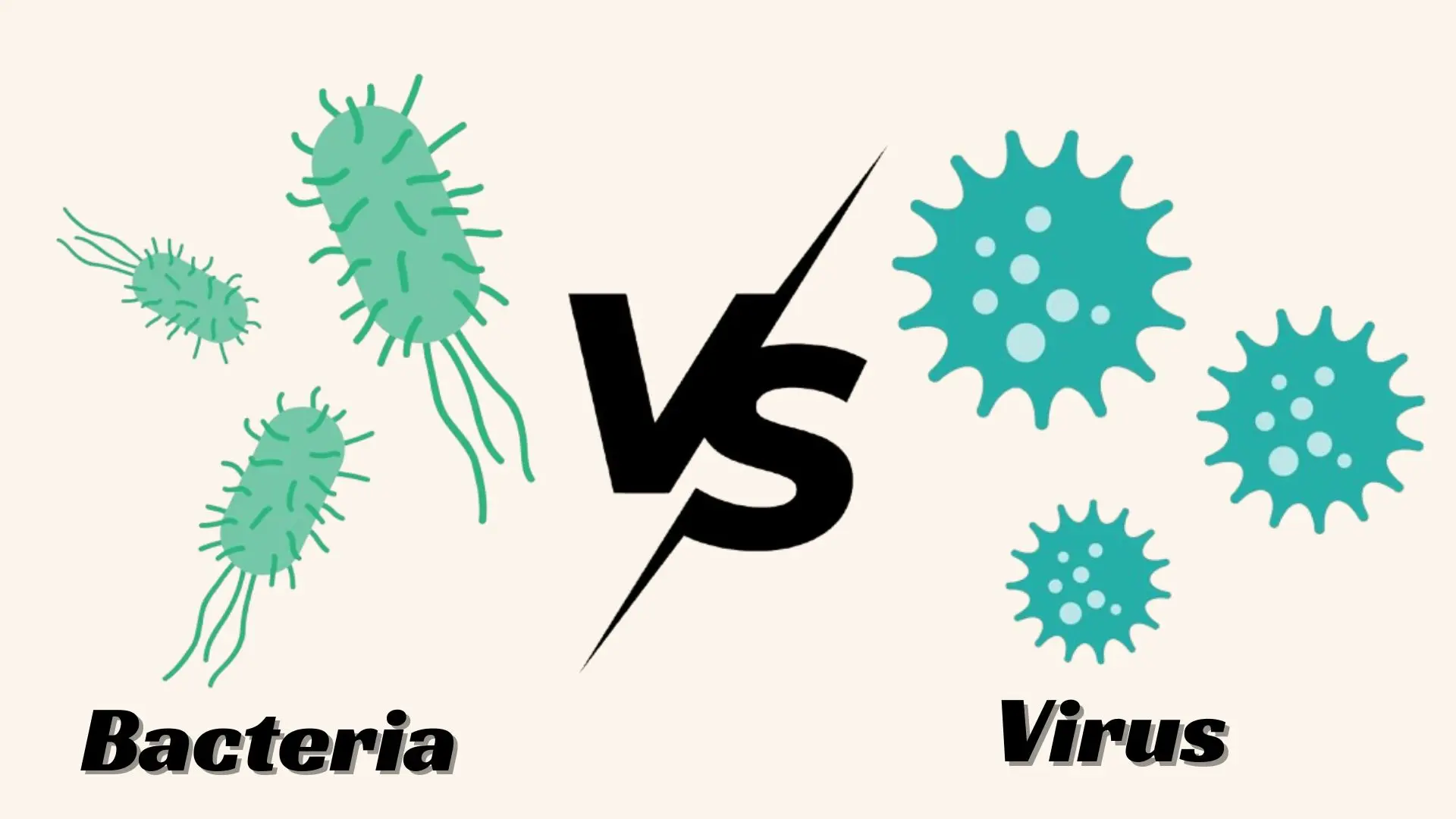
- Bacteria are a single cell organism while on the other hand viruses are not completely alive as they need a host for their survival.
- Bacteria can be good as well as bad. Some of them even help the human bodies whereas viruses are majorly known to cause infections.
- Viruses are quite small in size and some of them can’t even be seen with a microscope.
- Antibiotics can easily work on bacteria however, they have no effect on viruses.
Bacteria vs virus, this term often makes people confused. People usually use them interchangebly thinking they are the same but they are not. There are stark differences between the two. The most common difference between bacteria and virus is that bacteria are living cells and can live independently. However, on the other hand, viruses need a host to survive.
This is just the most basic difference between the two and there are many others. That is why knowing the difference between bacteria and virus is useful for school exams, competitive exams and even daily life.
READ| Who Discovered Radioactivity?
Bacteria vs Virus: Check the Key Differences between Bacteria and Virus
| Feature | Bacteria | Virus |
| Living or Non-Living | Living organism | Non-living particle |
| Size | Larger, visible under regular microscope | Much smaller, needs electron microscope |
| Structure | Has cell wall, membrane, and genetic material | Only a protein coat (capsid) with DNA or RNA inside |
| Reproduction | Reproduces on its own through binary fission | Can only reproduce inside a host cell |
| Where They Survive | Can survive independently in many environments | Needs a living host to survive and replicate |
| Examples of Diseases | TB, Typhoid, Cholera, Strep throat | Flu, COVID-19, Dengue, Chickenpox |
| Useful Forms | Yes, many bacteria are beneficial | Some, like bacteriophages, are being studied for benefits |
What is Bacteria?

Source: NCERT
Bacteria are living organisms that are made up of single cells. They are known as the first life forms on Earth. Bacteria can be found everywhere, from air to soil, every little component is filled with bacteria.
The Cleveland Clinic mentions: “Bacteria are microscopic living organisms that have only one cell. The word for just one is “bacterium.” Millions (if not billions) of different types of bacteria can be found all over the world, including in your body. They’re on your skin and in your airways and mouth. They’re also in your digestive system, reproductive system and urinary tract. Scientists estimate you have 10 times more bacterial cells than human cells in your body.”
The most important thing to understand is that the majority of the bacteria are not harmful but in fact useful to human bodies as well as in daily lives. The most common example that is around us is of curd, which is made using helpful bacteria.
However, there are certain bacteria which can cause illnesses. Some of the common illnesses are strep throat and E. Coli infections.
What are the Characteristics of Bacteria?
Here are the characteristics of bacteria:
- They are single celled organisms that are alive.
- They can grow, eat and can reproduce on their own.
- These organisms can reproduce through a process known as binary fission. Under binary fission one cell can split into two cells.
- Their structure involves a rigid cell wall that offers them shape and protection.
- The bacteria are grouped under four categories depending on the shape. NCERT mentions: “Bacteria are grouped under four categories based on their shape: the spherical Coccus (pl.: cocci), the rod-shaped Bacillus (pl.: bacilli), the comma-shaped Vibrium (pl.: vibrio) and the spiral Spirillum (pl.: spirilla)”
| Interesting Fact: As per National Library of Medicine, bacteria can reproduce within 20 to 30 minutes in the right conditions. This simply means it can multiply millions of times in a few hours. |
What is Virus?
Source: Shutterstock
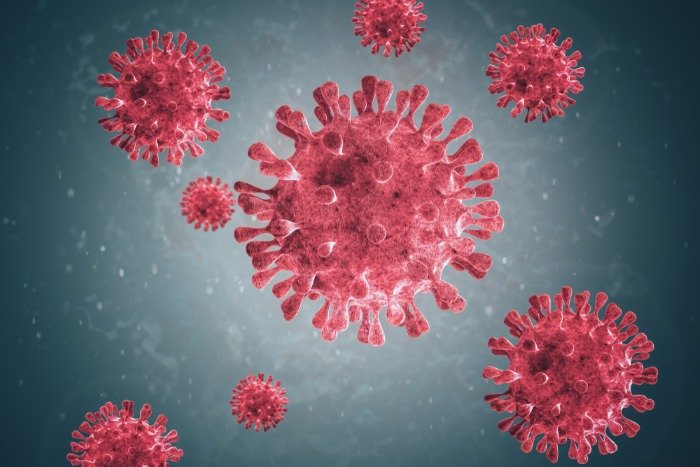
Now, when we talk about virus then it is quite different from bacteria. Viruses are not considered fully alive as they depend on the host for their survival. Scientists describe them as sitting in a grey zone between living and non-living things.
The National Human Genome Research Institute mentions: “A virus is an infectious microbe consisting of a segment of nucleic acid (either DNA or RNA) surrounded by a protein coat. A virus cannot replicate alone; instead, it must infect cells and use components of the host cell to make copies of itself.”
To simply put, a virus is made up of a genetic material either DNA or RNA and it is surrounded by a protein coat that is called capsid. A virus has no cell of its own and that is why it needs to enter and attach to a living cell, human, animal or plant. After attaching to a cell, the virus starts to multiply.
Common viral infections include the common cold, flu, COVID-19, dengue fever, chickenpox, hepatitis, and measles.
What are the Characteristics of Virus?
- Virus is not a complete living organism.
- It has no cell wall for any protection and only carries genetic material inside a protein shell.
- It cannot reproduce on its own. It must enter a host cell first.
- It cannot be killed by antibiotics. Only antiviral medicines or vaccines can help control it.
| Interesting Fact: A virus is usually ten times smaller than a typical bacterium, and at least 100 times smaller than a typical human cell. |
How Do Viral and Bacterial Infections Spread?
One reason that both infections are often confused is that they spread in a very similar fashion.
By the air: When a person who is sick coughs, sneezes or speaks, they will spread small droplets into the air that may be inhaled by others who are near.
Through touch: Both bacteria and viruses are able to survive for hours on surfaces, such as doorknobs, mobile phones and counter tops. One of the most common ways that infections are spread is by touching a contaminated object and then putting the hands to your face.
Food and water: Both bacteria and viruses can be transmitted in contaminated foods and water. This is particularly relevant in India during the summer and monsoon season when the risk of food safety is increased.
By direct contact: Certain infections are transmitted by direct contact with the infected person.
Simple measures like washing hands frequently, drinking clean water and observing good hygiene makes a big difference in preventing both types of infections.
Why is This Difference Important?
This difference is not just a biological fact, it also affects real medical decisions. Doctors need to figure out whether an illness is caused by bacteria or a virus before giving medicine.
Antibiotics work only on bacteria and that is why using antibiotics for a viral illness like the common cold does nothing to cure it and can make bacteria in the body resistant to antibiotics over time. Knowing the difference helps people avoid unnecessary medicines and helps doctors choose the right treatment faster.
Both bacteria and viruses are microscopic, cause infection, and impact millions of people worldwide annually. However, they are constructed differently, act differently, and must be comprehended differently.
What are five differences between bacteria and viruses?
1. Bacteria are fully alive. Viruses are not fully alive.
2. Bacteria are bigger. Viruses are much smaller.
3. Bacteria can be seen with a normal microscope. Viruses need a powerful electron microscope.
4. Bacteria have a complete cell with a cell wall. Viruses only have genetic material in a protein coat.
5. Bacterial infections are treated with antibiotics. Viral infections need antiviral medicine or vaccines.
What is the difference between a virus and bacteria for Class 5 students?
Bacteria are tiny living things. They can grow and multiply on their own.
Example of helpful bacteria: the bacteria used to make curd.
Viruses are even tinier than bacteria.
Viruses cannot grow or multiply on their own. They need to enter a living cell first.
Example: the flu virus needs to enter a person’s body to spread.
Bacteria can be good or bad. Viruses mostly make us sick.
For more such well-researched GK articles helpful for exam aspirants and general readers seeking authentic and up-to-date coverage of current affairs, history, polity, science, technology, economy, sports, and beyond, keep exploring various categories of GKinfoBuzz, your trusted resource for knowledge and information.