Last Updated on June 30, 2026 by Parikshit
Economic planning has always played an important role in India’s economic development. Since the independence of India, there have been poverty and food shortages with no industrial setup as a base. Thus, the Five-Year Plans of India are planned for economic development.
The plans were the major tool for the Indian state to prioritise, mobilise and coordinate the efforts of the public and private sectors, and this is the most important topic in UPSC Civil Services, State PCS examinations, SSC, banking or railways exams.
So, explore this article in detail, and stick this note in your study material.
What is the Historical Background and Origin of Planning in India?
India’s tryst with planning did not begin at independence. Theoretical efforts toward planned economic development had begun much earlier, even before independence, driven by nationalist thinkers who understood that a free India would need a coherent economic strategy.
The key milestones in the pre-independence planning history include the following. The Indian National Congress set up a National Planning Committee in 1938 under Jawaharlal Nehru to study the framework for a future planned economy. In 1944, the Bombay Plan (formally the ‘A Plan of Economic Development for India’) was drafted by leading industrialists including J.R.D. Tata and G.D. Birla. Also in 1944, the Gandhian Plan was put forward by Shriman Narayan Agarwal, emphasising village-based decentralised economic activity. In 1945, the People’s Plan was proposed by the Post-War Reconstruction Committee of the Indian Trade Union, while the Sarvodaya Plan was introduced by Jayaprakash Narayan in 1950, rooted in Gandhian socialism.
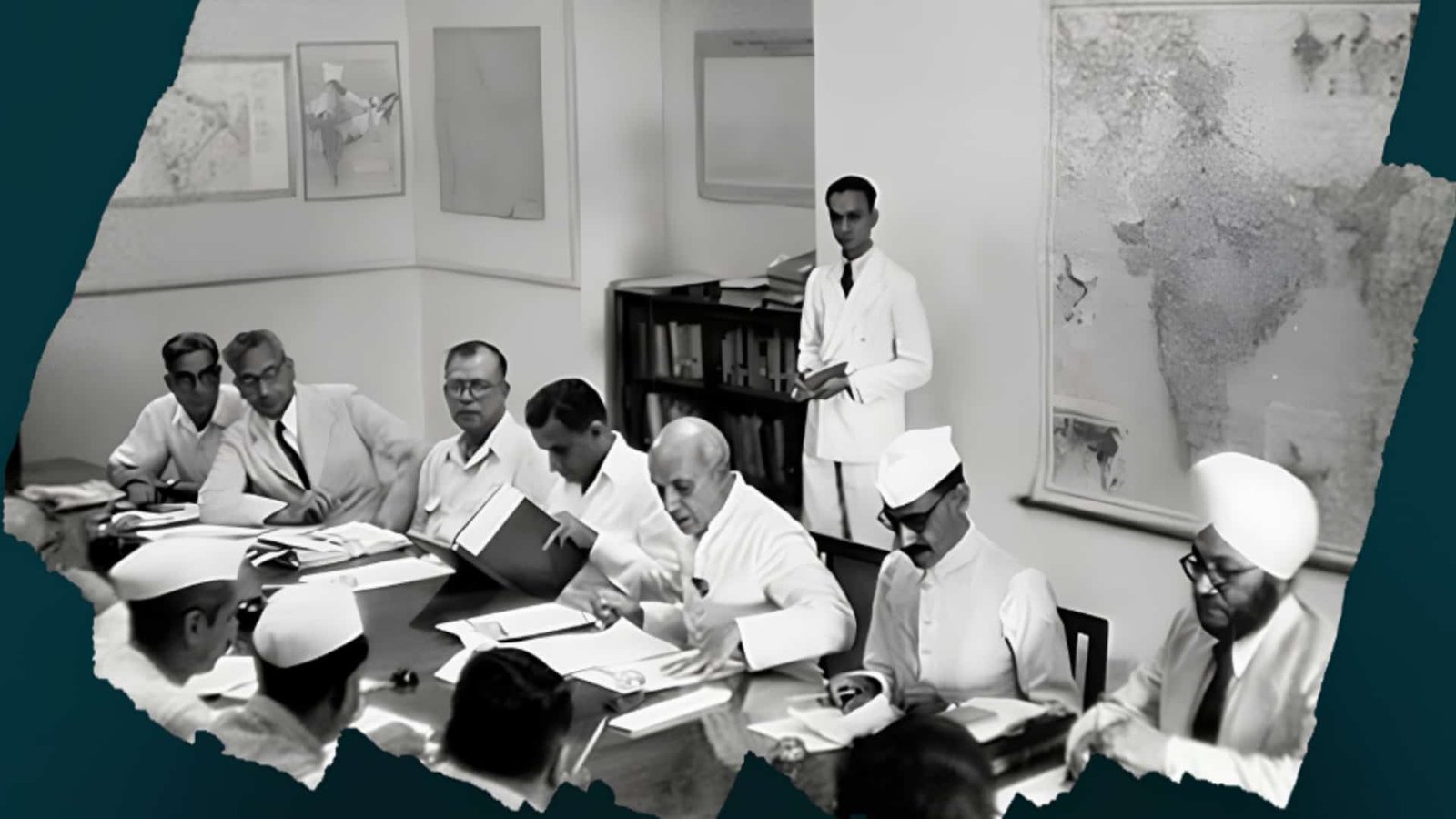
After independence, the Planning Commission was set up on 15 March 1950 through a Cabinet Resolution, to promote a rapid rise in the standard of living of the people through efficient exploitation of the country’s resources, increasing production, and offering opportunities for employment. The Commission was charged with assessing all national resources, augmenting deficient resources, formulating plans for balanced utilisation of resources, and determining priorities for investment.
As MoSPI’s Statistical Year Book records, Five Year Plans are centralized and integrated national economic programmes. The concept was first implemented by Joseph Stalin in the Soviet Union in the late 1920s, and was subsequently adopted by several countries including India and China. India launched its First Five Year Plan in 1951, under the socialist influence of its first Prime Minister Jawaharlal Nehru.
Overview of All Five-Year Plans: At a Glance
The table below provides a quick reference summary of all Five-Year Plans, covering the plan period, target growth rate, actual growth achieved, and the central focus area. This is the most exam-friendly format and should be memorised carefully.
| Five-Year Plan | Period | Target Growth | Actual Growth | Key Focus |
| First Plan | 1951-56 | 2.1% | 3.6% | Agriculture, price stability, power, transport |
| Second Plan | 1956-61 | 4.5% | 4.3% | Heavy & basic industries (Mahalanobis Model) |
| Third Plan | 1961-66 | 5.6% | 2.8% | Self-reliance; disrupted by wars and drought |
| Plan Holiday | 1966-69 | N/A | N/A | Annual Plans; focus on agriculture and Green Revolution |
| Fourth Plan | 1969-74 | 5.7% | 3.3% | Growth with stability; self-reliance |
| Fifth Plan | 1974-79 | 4.4% | 4.8% | Poverty removal (Garibi Hatao), self-reliance |
| Sixth Plan | 1980-85 | 5.2% | 5.7% | Poverty alleviation, modernisation, employment |
| Seventh Plan | 1985-90 | 5.0% | 6.0% | Food, Work and Productivity |
| Eighth Plan | 1992-97 | 5.6% | 6.8% | Economic reforms; liberalisation under Narasimha Rao |
| Ninth Plan | 1997-02 | 6.5% | 5.4% | Growth with Social Justice and Equality |
| Tenth Plan | 2002-07 | 8.0% | 7.6% | Monitorable targets; governance; agriculture as prime mover |
| Eleventh Plan | 2007-12 | 9.0% | 8.0% | Faster and More Inclusive Growth |
| Twelfth Plan | 2012-17 | 8.0% | ~6.5% | Faster, Sustainable and More Inclusive Growth |
| Note: Pay close attention to the plans where actual growth significantly exceeded the target (like the 1st and 7th plans) and the ones heavily disrupted by external factors (like the 3rd plan). |
Detailed Overview of Five-Year Plans Of India
1. First Five-Year Plan (1951-56)
Growth Target vs Achievement: Target – 2.1% vs Actual – 3.6% (Successful)
Economics Model Applied: Harrod-Domar Model
The First Five-Year Plan was launched in India in 1951, with great problems. The Partition resulted in a huge influx of refugees into the country, which was also facing a huge shortage of food and escalating inflation. The plan thus focused mainly on agriculture, stability of prices, development of power facilities and extension of transport networks.
The First Plan was pretty much a success in the good harvests of the past two years in the plan period. The goal of rehabilitation of refugees, food self-sufficiency and price control were more or less achieved. In terms of relative success, the actual growth rate of 3.6% is well above the target of 2.1%, one of the more successful plans. Resource allocation was based on the Harrod-Domar model, which shows the relationship between the savings rate and growth.
2. Second Five-Year Plan (1956-61)
Growth Target vs Achievement: Target 4.5%, Actual 4.3% (Moderately Successful)
Economic Model adopted: Mahalanobis Model (Two-Sector and Four-Sector)
The Second Plan, popularly known as the Mahalanobis Plan, was based on the two-sector and four-sector models designed by Professor P.C. Mahalanobis of the Indian Statistical Institute, which were used for making resource allocation between agriculture and industry. The plan had been formulated by a government which felt the economy was stable at the end of the First Plan, and agriculture was given lesser importance due to the belief that the food situation had been brought under control.
The main feature of the Second Plan was rapid industrialisation with a focus on heavy and basic industries to be undertaken by the public sector. This was given a firm base by the Industrial Policy Resolution, 1956, which made a “socialistic pattern of society” the target of economic policy. But the acute shortage of foreign exchange necessitated a reduction of the development targets in the plan. Price inflation of the order of 30% was observed in contrast to the 1st Plan, when prices were stable, and the Second Plan is considered as moderately successful.
3. Third Five-Year Plan (1961-66)
Growth Target vs Achievement: Target 5.6%, Actual 2.8% (Failed)
When it was conceived, planners believed that the Indian economy had reached the take-off point and they wanted to make it a self-reliant and self-generating economy. The Third Plan emerged from the experience of the first two plans that agricultural production was the limiting factor in development, and thus placed emphasis on agriculture to serve exports and industry.
The Third Plan was a thorough failure in reaching its targets. All this was due to a set of unexpected events, viz., Chinese aggression of 1962, Indo-Pakistan war of 1965 and the drought conditions of 1965-66. In the later phase, with the shift in the nation’s policy from the development to the defence-and-development, the targets in the plan had to be abandoned. The Third Plan managed to attain only 2.8% growth as compared to the targeted 5.6%.
*Plan Holiday / Annual Plans (1966-69)
The Third Plan failed, and the devaluation of the Indian rupee (which was aimed at increasing exports) and the inflationary recession forced the postponement of the Fourth Five-Year Plan. Instead, three annual plans were put in place for the period 1966-1969, and this period is sometimes referred to as the Plan Holiday.
During this time, a new agricultural plan was adopted which was the basis of the Green Revolution. This included providing High-Yielding Variety (HYV) seeds, liberal use of fertilisers, tapping of irrigation potential and soil conservation measures. The shocks of the Third Plan were absorbed, and the way was laid for planned growth in the future during this period.
4. Fourth Five-Year Plan (1969-74)
Growth Target vs Achievement: Target 5.7%, Achieved 3.3% (Failed)
The Indo-Pakistan War and non-supply of essential equipment and raw materials by allies made the Fourth Plan have twin objectives – growth with stability and the progressive attainment of self-reliance. The plan gave main emphasis to growth in the agriculture sector to enable other sectors to move forward.
Production during the first two years of the Fourth Plan was the highest ever recorded. But the last three years were disappointing because of unfavourable monsoons. One of the major factors of destabilisation was the huge influx of Bangladeshi refugees before and after the Indo-Pakistan war of 1971, and the deterioration in the price situation to crisis proportions. So this is seen as a major failure in terms of achieving growth in the Plan.
5. Fifth Five-Year Plan (1974-79)
Growth Target vs Achievement: Target 4.4%, Actual 4.8% (Successful in growth terms)
The Fifth Plan was prepared by D.P. Dhar in the backdrop of runaway inflation due to the oil price boom in the world in 1973-74 and the failure of the government’s attempt to take over the wholesale wheat trade. It suggested two major goals, the elimination of poverty (Garibi Hatao) and self-reliance. Three instruments were considered key: promotion of high growth, of better distribution of income and of significant growth in the domestic savings rate.
The price estimates calculated for the Plan were grossly incorrect and the original public sector outlay had to be substantially increased due to high inflation. The implementation of the Prime Minister’s 20-point programme took the centre stage after the promulgation of the Emergency in 1975 while the Five Year Plan got sidelined. The Fifth Plan was canceled one year early when the Janata Party came to power in 1978. In spite of this, the real growth rate (4.8%) was above the target growth rate (4.4%).
*Rolling Plan Period (1978-80)
The Janata Government in 1978–1983 adopted a Rolling Plan concept which focused on employment generation and condemned the Nehru model for concentration of power, increasing of inequality and growing poverty. But the Janata Government did not last long and was replaced after two years. In 1980, when the Congress regained power, they started a new Sixth Plan which was intended to attack the poverty problem itself by providing conditions for an expanding economy.
6. Sixth Five-Year Plan (1980-85)
Growth Target vs Achievement: Target 5.2%, Actual 5.7% (Successful)
The Sixth Plan was focused on four major areas: increase in national income, modernisation of technology, ensuring a continuous decrease in poverty and unemployment through skill-transfer schemes, and controlling population growth. Key poverty alleviation programmes introduced during this period included TRYSEM (Training Rural Youth for Self Employment), IRDP (Integrated Rural Development Programme), and NREP (National Rural Employment Programme).
Broadly, the Sixth Plan is considered a success as most of the targets were realised, with actual growth of 5.7% exceeding the target of 5.2%. This is notable even though in the last year of the plan (1984-85) many parts of the country faced severe famine conditions and agricultural output fell below the record level of the previous year.
7. Seventh Five-Year Plan (1985-90)
Growth Target vs Achievement: Target 5.0%, Actual 6.0% (Highly Successful)
The Seventh Plan, launched under Prime Minister Rajiv Gandhi, aimed at accelerating food grain production, increasing employment opportunities, and raising productivity. Its central slogan was Food, Work, and Productivity. The plan marked a conscious shift toward technology upgradation and modernisation of the economy.
The Seventh Plan was very successful. The economy recorded 6% growth against the targeted 5%, marking the decade of the 1980s as the period when India struggled out of what had been called the Hindu Rate of Growth (approximately 3.5% per year). This plan is often cited as the turning point that began India’s move toward higher-growth trajectories.
8. Eighth Five Year Plan (1992-97)
Growth Target vs Achievement: Target 5.6%, Actual 6.8% (Highly Successful)
The Eighth Plan could not take off in 1990 as originally scheduled due to fast-changing political conditions at the Centre, and the years 1990-91 and 1991-92 were treated as Annual Plans. The Eighth Plan was finally launched in 1992 after the initiation of structural adjustment policies under Prime Minister P.V. Narasimha Rao and Finance Minister Dr. Manmohan Singh.
The context of the Plan was one of crisis: worsening Balance of Payments, rising debt burden, widening budget deficits, industrial recession, and inflation. The plan undertook drastic policy measures to combat this situation, introducing fiscal and economic reforms including liberalisation, privatisation, and globalisation (LPG reforms). The Plan recorded the highest annual average growth rate so far at 6.8%, with high growth in agriculture, manufacturing, and exports. Remarkably, this high growth was achieved even as the share of the public sector in total investment declined considerably to about 34%.
9. Ninth Five-Year Plan (1997-2002)
Growth Target vs Achievement: Target 6.5%, Actual 5.4% (Below Target)
Theme: Growth with Social Justice and Equality
The Ninth Plan, prepared under the United Front Government, represented a clear shift in planning philosophy. It aimed to depend predominantly on the private sector, both Indian and foreign (FDI), while the State was envisaged to increasingly play the role of a facilitator and focus on the social sectors such as education, health, and infrastructure where private sector participation was likely to be limited.
The Plan assigned priority to agriculture and rural development with a view to generate adequate productive employment and eradicate poverty. However, the actual growth of 5.4% fell short of the target of 6.5%, largely due to the East Asian financial crisis of 1997-98 and natural calamities. The departure from a state-led model of development became more pronounced during this Plan.
10. Tenth Five Year Plan (2002-07)
Growth Target vs Achievement: Target 8.0%, Actual 7.6% (Near-Successful)
The Tenth Plan introduced a landmark innovation in Indian planning: monitorable targets. Recognising that economic growth alone cannot be the only objective of a national plan, the Tenth Plan set 11 specific, measurable targets for key development indicators beyond the overall growth target. These included reduction in gender gaps in literacy and wage rates, reduction in infant and maternal mortality rates, improvement in literacy rates, access to potable drinking water, and cleaning of major polluted rivers.
Governance was explicitly considered a factor of development for the first time, and agriculture was declared the prime moving force of the economy. The role of states in planning was to be increased, with greater involvement of Panchayati Raj Institutions. State-wise breakup of growth and social development targets sought to achieve balanced development across all states. The actual growth of 7.6% was close to the ambitious 8% target.
11. Eleventh Five-Year Plan (2007-12)
Growth Target vs Achievement: Target 9.0%, Actual 8.0%
Theme: Towards Faster and More Inclusive Growth
The Eleventh Plan was introduced when the UPA government came to power with its policy of aiding the Aam Aadmi (common man). By the end of the Tenth Plan, India had become one of the fastest-growing economies, characterised by increasing saving and investment rates and a responsive industrial sector to international competition. But the growth was not considered to be inclusive enough, especially for the Scheduled Castes, Scheduled Tribes and minorities, as indicated by poverty, malnutrition, mortality and employment.
The Eleventh Plan contains specific targets for reducing unemployment, headcount poverty ratio, drop-out rate, gender gap in literacy rates, infant mortality rate, total fertility rate, malnutrition in children (aged 0-3 years) and improvement in forest and tree cover and air quality in major cities. It also had a target of connecting all villages and BPL households with electricity by 2009 and connecting all villages with broadband connectivity by 2012.
The Eleventh Plan began at 9.3% growth during the first year, and slowed down to 6.7% in 2008-09 in the wake of the global financial crisis. The economy recovered to 8.6% and 9.3% in 2009-10 and 2010-11, respectively. A second global slowdown in 2011, brought about by the Eurozone sovereign debt crisis, and tight domestic monetary policy, however, weighed down growth and dragged it down to 6.2% in 2011-12. The Eleventh Plan GDP growth averaged 8%, which was lower than the growth target of 9% but higher than the Tenth Plan. The average of 8% is generally acceptable, during this period two global crises occurred.
12. Twelfth Five-Year Plan (2012-17)
Growth Target: 8.0% (Actual approximately 6.5%)
Theme: Faster, Sustainable, and More Inclusive Growth
The Twelfth Plan commenced at a time when the global economy was going through a second financial crisis precipitated by the Eurozone sovereign debt problems. India’s growth slowed to 6.2% in 2011-12 and continued to decelerate into the first year of the Twelfth Plan when the economy grew by only 5%. The Twelfth Plan therefore emphasised that the first priority must be to bring the economy back to rapid growth while ensuring that the growth is both inclusive and sustainable.
The Plan set 25 monitorable targets across five categories: Economic Growth (GDP growth of 8%, agriculture growth of 4%, manufacturing growth of 10%), Poverty and Employment (reduce poverty headcount by 10 percentage points, generate 50 million new non-farm work opportunities), Education (increase mean years of schooling to 7 years), Health (reduce IMR to 25 and MMR to 1 per 1,000 live births), and Infrastructure (increase infrastructure investment to 9% of GDP, connect all villages with all-weather roads, achieve 70% rural tele-density). Environment and sustainability targets included adding 30,000 MW of renewable energy capacity and reducing emission intensity of GDP in line with the 20-25% reduction target over 2005 levels by 2020.
Key policy challenges identified were reviving investor sentiment, removing implementation constraints in infrastructure, especially energy, addressing fuel supply issues to power stations, and managing the current account deficit. The fiscal deficit as a percentage of GDP was projected to decline progressively from 5.1% in 2012-13 to 3.0% by the terminal year of the plan. The Plan was also the last Five-Year Plan of India before the Planning Commission was replaced.
Role of the Planning Commission and Transition to NITI Aayog
The Planning Commission, set up on 15 March 1950 through a Cabinet Resolution, played a predominant role in Indian economic governance for over six decades. It is held responsible for deciding Annual Plans, transferring of Plan funds to State Governments, and priority setting in the national development. The Commission was directly under the Prime Minister who was the Chairperson, and it was given a paramount position in Indian governance.
But, one of the Planning Commission’s failing over the years was that it was a one-size-fits-all body, failing to adequately represent the diversity of India’s states and regions.Critics argued that it concentrated excessive power at the Centre, that its resource allocation decisions were often politically driven, and that its targets were frequently set without adequate regard for ground-level implementation capacity.
On 1 January 2015, the Planning Commission was replaced by the NITI Aayog (National Institution for Transforming India) through a Cabinet Resolution. The key distinctions are significant. NITI Aayog was mandated to work toward fostering cooperative federalism through structured support initiatives with the States, recognising that strong states make a strong nation. An important evolutionary change from the past is the replacement of a centre-to-state one-way flow of policy by a genuine and continuing partnership with the states. The work of determining Annual Plans and transferring Plan funds to State Governments was transferred to the Ministry of Finance.
The Chief Minister’s Sub-group on rationalisation of Centrally Sponsored Schemes (CSS) recommended that the number of CSS be reduced, states be given more flexibility in implementation, CSS be divided into core and optional schemes, and simplification in the release of funds and certainty about fund availability in the medium term be ensured.
Key Concepts and Analytical Points for Examinations
Growth Models Used in Planning
The Harrod-Domar Model was used in the First and Second Plans for overall projections. It establishes that the rate of growth of an economy is determined by the marginal savings rate divided by the capital-output ratio. The higher the savings rate and the lower the capital-output ratio, the higher the growth rate. The Mahalanobis Model, used in the Second Plan, was a two-sector and four-sector model that argued for heavy industrialisation as the key to long-run growth by expanding the capital goods sector.
Shift in Planning Philosophy
A critical shift in planning philosophy occurred at the Ninth Plan (1997-2002). For the first eight plans, the emphasis was on a growing public sector with massive investments in basic and heavy industries. Since the launch of the Ninth Plan in 1997, the emphasis on the public sector became less pronounced, and planning increasingly took on an indicative nature, with the state acting as a facilitator rather than a direct investor.
Concept of Plan Holiday
The Plan Holiday (1966-69) refers to the three Annual Plans between the Third and Fourth Five-Year Plans. It was caused by the failure of the Third Plan due to wars and drought, combined with the economic disruption caused by the devaluation of the rupee. This period was crucially used to implement the Green Revolution strategy that transformed India’s food security in subsequent decades.
Introduction of Monitorable Targets
The Tenth Five-Year Plan (2002-07) has included the concept of monitorable targets since it was accepted that GDP growth by itself is an inadequate indicator of development. This was a move towards indicators of multi-dimensional development, such as health, education, gender equality and environmental sustainability, which were to become the Sustainable Development Goals framework adopted later by India.
Finance Commission and Planning Commission
The Thirteenth Finance Commission (2014-15) has raised the share of the divisible pool (DP) from 30.5% to 32% for the states, including the first three years of the Twelfth Plan. It is an important area in so far as exam questions are concerned because of this interplay between the awards of the Finance Commission and the financing from the 5-year plan.
So, in conclusion, we can say that India has vast experience in FIVE-YEAR PLANS, in which implementing the Twelve Five-Year Plans is the most important plan in India in response to democratic economic planning in the post-colonial world.
These plans reflect the changing priorities, capabilities and challenges of a changing nation, from the agriculture-first approach of the First Plan to the inclusive growth of the Twelfth Plan.
These are the most important lessons to be learned from this history. Planning flexibility is important: multiple crises, such as wars, droughts and global crises, put the rigidity of five-year plans to the test and necessitate the implementation of Annual Plans and Rolling Plans.
The shift from the Planning Commission to NITI Aayog reflects a sense that, in a federal democracy, a top-down approach to planning has its limits and cooperative federalism is key.
From the exam point of view for aspirants, the Five-Year Plans are a very important topic. Every year, 1-2 questions are asked in UPSC Preliminary, State PCS, or any SSC, Banking or Railway exam papers.
So, stick these notes in your daily study material, which will help you in cracking the competitive exams. Good luck!