Last Updated on July 1, 2026 by Gaurav
For years, the Nobel Prize has been known as one of the highest honours that a person can receive in fields of science, literature and peace. However, for the majority of history this award was only presented to men. Women didn’t usually receive the award as they were often neglected, overlooked or simply not given the opportunity to prove themselves. Until 1803, when one Polish woman walked into history, and she never looked back.
Do you know who was the first woman to win a Nobel Prize? Let’s find out what’s her story.
Who Was the First Woman to Win a Nobel Prize?
Source: Nobel Prize
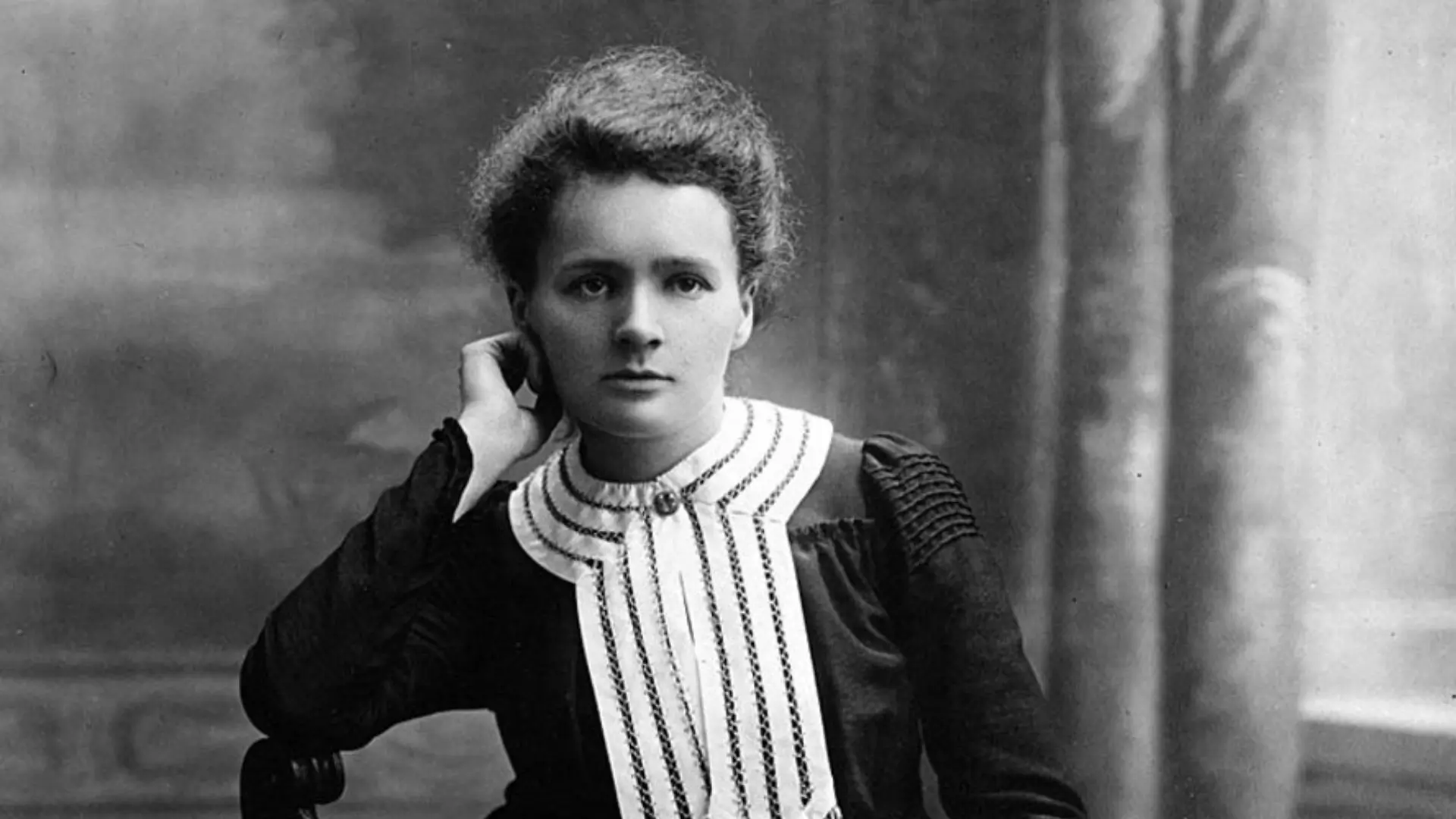
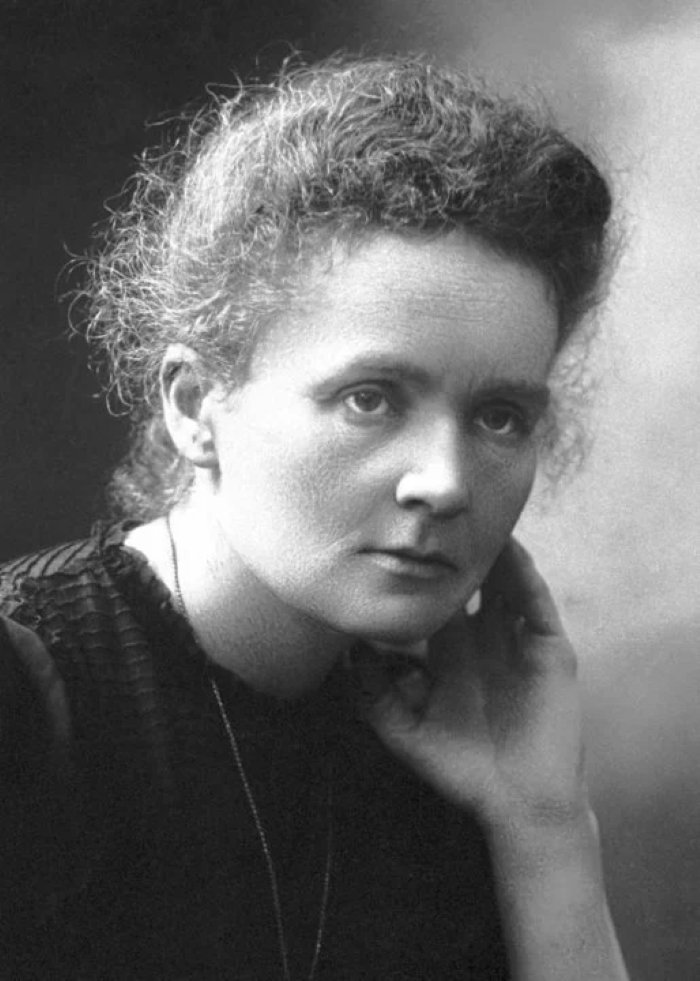
Marie Curie was the first woman to win a Nobel Prize. She was Polish-born French physicist and chemist and became the first woman to receive the award in two different fields which were Physics in 1903 and Chemistry in 1911. Moreover, she is the only woman till now who has won the Nobel Prize in two different fields.
The Nobel Prize website mentions: “Marie Curie is still the only individual to receive the prize in two different science categories. Her relentless resolve and insatiable curiosity made her an icon in the world of modern science. Indefatigable despite a career of physically demanding and ultimately fatal work, she discovered polonium and radium, championed the use of radiation in medicine and fundamentally changed our understanding of radioactivity.”
She was born in 1867 on 7 November in Warsaw, Poland as Marya Skłodowska. Her family suffered under the repressive Tsarist rule. Both her parents were teachers.
She was unable to study in Warsaw as women were not allowed to attend universities in the Russian Empire. She was 24 when she went to Paris and took admission in Sorbonne University.
This was one of the most daring steps for a young girl who hailed from a modest family yet she beat all the odds and continued to study.
What Did Marie Curie Discover?

Source: Nobel Prize
In Paris, she met Pierre Curie who was a scientist. The two of them married in 1895 and this union became one of the most fruitful ones in the field of science.
The two of them examined numerous substances and minerals for radioactivity. They discovered that the mineral pitchblende was more radioactive than uranium and that there must be other radioactive substances contained in it.
From this research, they were able to isolate two new elements, polonium and radium, which were more radioactive than uranium.
Marie named the element polonium in honor of her birth country Poland which was later added to the periodic table as well. Moreover, Marie invented the term radioactive as she and her husband mentioned the term in the scientific paper that was published in July 1898.
Why Did Marie Curie Win the Nobel Prize?
In 1903, Curie won her first Nobel Prize, for “radiation phenomena”, and that is how she became the first woman to win a Nobel Prize.
In 1906, Marie was a widow but still carried on the work for the betterment of the society and became the first person ever to be awarded two Nobel prizes. In 1911 she won her second prize, this time in Chemistry. This time she was awarded for the isolation of the radium.
How Did Marie Curie Help During World War I?
Marie Curie did not just stop after winning awards. During World War I, she applied her learning to help save lives on the battle-front.
To serve the needs of more than a million wounded soldiers, she set up mobile units for radiology. She broke new ground in radiation too, which resulted in new treatments for cancer. French soldiers saw these mobile X-ray cars coming to the front lines, and so named them “Petites Curies” (Little Curies).
Further, she trained women volunteers to work these machines, thereby once again opening a door for women in a field where no one stepped in before.
Quick Facts
| Detail | Fact |
| Full Name | Marie Salomea Skłodowska-Curie |
| Date of Birth | 7 November 1867 |
| Place of Birth | Warsaw, Poland |
| First Nobel Prize | Physics, 1903 |
| Second Nobel Prize | Chemistry, 1911 |
| Elements Discovered | Polonium and Radium |
| Coined the term | Radioactivity |
| Death | 4 July 1934 |
| Cause of Death | Aplastic anaemia from radiation exposure |
Things were not easy for Marie Curie. She was denied study under Russian rule, her health deteriorated as she worked in unsafe conditions for decades and she was almost kicked out of her own Nobel Prize nomination. In 1934 she succumbed to aplastic anemia, most probably due to long exposure to radiation.
Her works are still preserved and some of the papers are still radioactive such as her notebooks from 1899 to 1902. This shows her perseverance. Her tale isn’t only about science, but about a person who won’t take no for an answer.
For more such well-researched GK articles helpful for exam aspirants and general readers seeking authentic and up-to-date coverage of current affairs, history, polity, science, technology, economy, sports, and beyond, keep exploring various categories of GKinfoBuzz, your trusted resource for knowledge and information.