Last Updated on July 1, 2026 by Gaurav
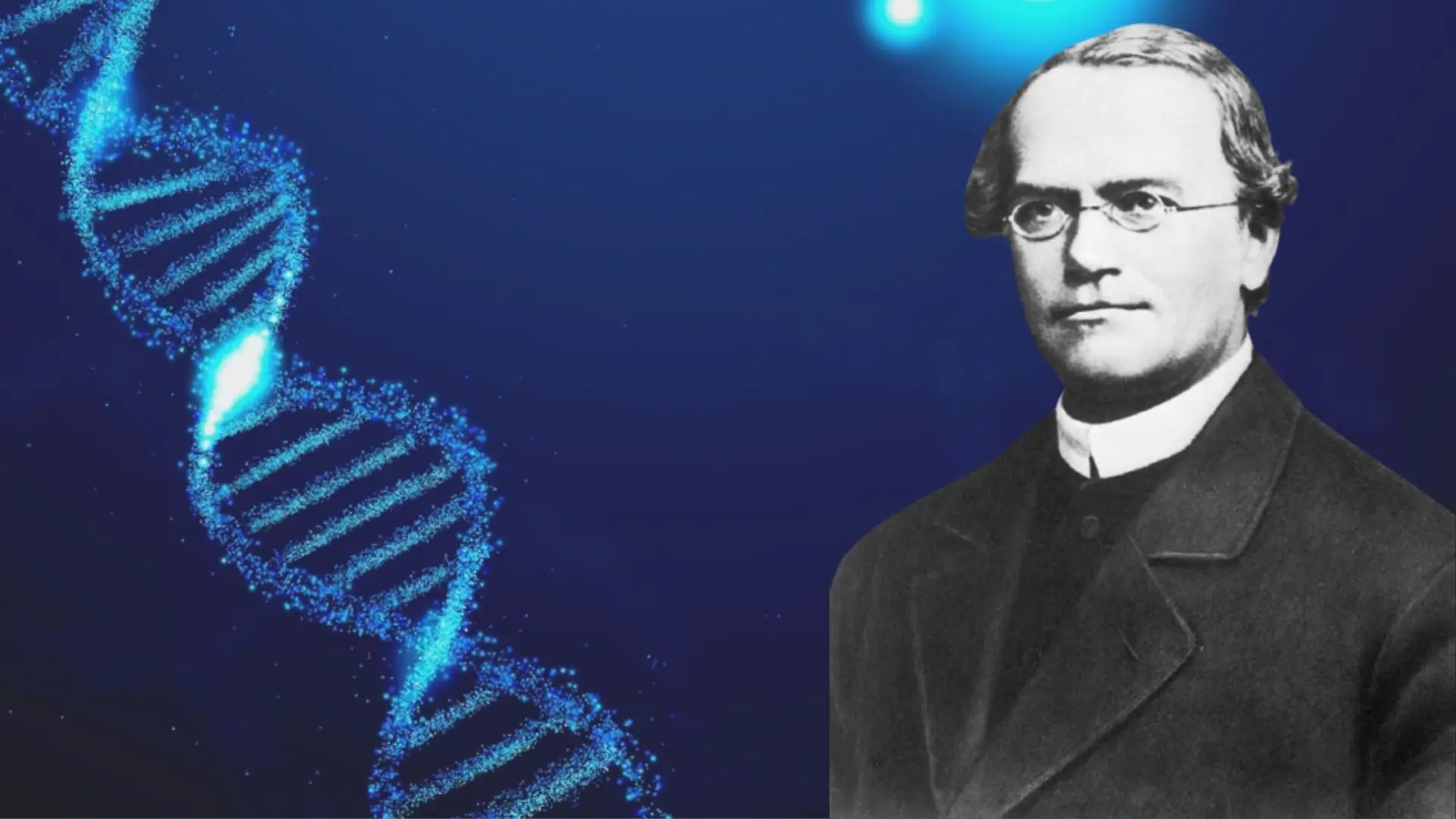
Genetics has defined how humans evolve and how different traits are passed on. You might have at least once heard someone saying, ‘Why do I have Dad’s eyes?’ or ‘Why is my nose just like my Mom’s?’. Well it is all because of genetics and today we will be learning about the man who is known as the father of genetics and understand how this man and his garden filled with pea plants defined the working of genetics.
Who is Known As the Father of Genetics?
Source: John Innes Centre
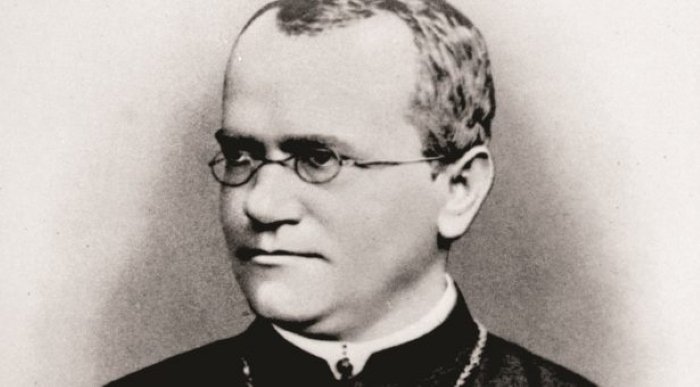
Gregor Mendel was an Augustinian monk, teacher and scientist that lived in the 1800s in Austria, and is known as the Father of Genetics. His story is one of the most inspirational in the field of science as he was a man with no big lab, no government grants and no team of scientists. Only a monastery garden, thousands of pea plants and a brilliant mind.
Quick Facts About Gregor Mendel
- Full Name: Gregor Johann Mendel
- Born: July 20, 1822
- Died: January 6, 1884
- Nationality: Austrian
- Profession: Monk, Teacher, Scientist
- Plant Used: Pisum sativum (Garden Pea)
- Experiment Duration: 8 years (1856–1863)
- Research Published: 1866
Why is He Called the Father of Genetics?
Mendel carefully bred garden pea plants to discover the basic principles of inheritance. Prior to him, people believed that the parents’ trait blended to children, similar to mixing two paint colours.
Mendel disproved this theory and provided a very clear and logical structure for science, which later evolved into the foundation for modern biology, medicine and DNA research.
Although his work was published in 1866, Mendel’s work was not widely recognized by the scientific community during his lifetime.
An understanding and appreciation of his experimental results was not reached until 1900 when his Laws were rediscovered. At this time Mendel already passed away and was unaware of the influence he was to have on the world.
READ| Who Discovered Radioactivity?
Who Was Gregor Mendel?
Gregor Johann Mendel was born in Heinzendorf, Austria (now the Czech Republic), on July 20, 1822. He was a country boy born on a farm and had a sharp mind from an early age.
He attended Grammar School in Troppau (Opava). His education could have halted but his sister helped him to study further.
The Gregor Mendel Organisation mentions: “After the village school, the excellent pupil attended the grammar school in Troppau (Opava). Poverty could have ended Gregor’s education early. However, a generous and very far-sighted gesture by a 12-year-old opened the way to a sound education for him. Mendel’s sister Theresia gave up a large part of her family inheritance to help him become an educated man. He did not have to drop out of school and was later even able to study at the University of Vienna.”
He later studied Philosophy at the University of Olomouc. However, due to bitter food worries, he was unable to finish his education.
As a young adult he joined the Augustinian Abbey of St. Thomas in Brno and was allowed by the monastery to teach physics, botany and natural science at a secondary and university level. In 1845 he started studying theology in Brno and was appointed as a priest in the year 1847.
During his studies, he also attended lectures on the cultivation of fruit trees. This was the place where he understood about crossing plants and it was a foundation stone for his later research work.
From 1851 to 1853 Mendel attended the University of Vienna where he studied under renowned mathematicians and physicists who taught him advanced research methods that he later uses in the systematic study of pea plants.
The Historic Pea Plant Experiments
Mendel’s experiments with pea plants took eight years (1856-1863) and he grew more than 10,000 pea plants. He kept records of the number and types of offspring produced.
This plant he selected was Pisum sativum, the common garden pea. This was a brilliant option. The pea plant is quick-growing, has easily observed traits, and is easy to cross breed.
The National Human Genome mentions: “For eight years, starting in 1857, he studied the peas he grew in the garden of his monastery. He carefully pollinated the plants, saved seeds to plant separately, and analyzed the succeeding generations. He self-pollinated plants until they bred true – giving rise to similar characteristics generation after generation. He studied easily distinguishable characteristics like the color and texture of the peas, the color of the pea pods and flowers, and the height of the plants.”
Mendel’s experiments were completed with almost 30,000 pea plants and he reported the outcome to the local Natural History Society in 1865. He proved that traits are inherited separately from other traits and in dominant/recessive patterns.
Mendel’s Three Laws
Mendel gave the world three fundamental laws which are still taught in every school and college. These are also the most common national level exam topics.
Law of Segregation: Each inherited trait is determined by a pair of genes. When sex cells are produced, parental genes are randomly separated, so that each sex cell will contain only one gene of the pair.
Law of Independent Assortment: The genes of different traits get sorted independently which means that the inheritance of one trait does not depend on the inheritance of another.
Law of Dominance: One trait can be dominant over another recessive trait. When different forms of a trait compete, one wins and it appears visibly, this is the dominant trait. The other is recessive. The PVP Mahavidyalaya mentions: “When parents with pure, contrasting traits are crossed together, only one form of trait appears in the next generation. The hybrid offspring’s will exhibit only the dominant trait in the phenotype.”
| Law | What It Says |
| Law of Dominance | Dominant trait appears; recessive is hidden |
| Law of Segregation | Alleles separate during gamete formation |
| Law of Independent Assortment | Different traits are inherited independently |
Science got its greatest achievement from a monk who cultivated pea plants and it took the world 34 years to rediscover his works.
For more such well-researched GK articles helpful for exam aspirants and general readers seeking authentic and up-to-date coverage of current affairs, history, polity, science, technology, economy, sports, and beyond, keep exploring various categories of GKinfoBuzz, your trusted resource for knowledge and information.