Last Updated on July 7, 2026 by Gaurav
Have you ever wondered what makes India different from North Korea? In India, people take part in voting and elect the government. In North Korea, one man has ruled for decades without asking anyone. This difference is reduced to one thing which type of government a country has.
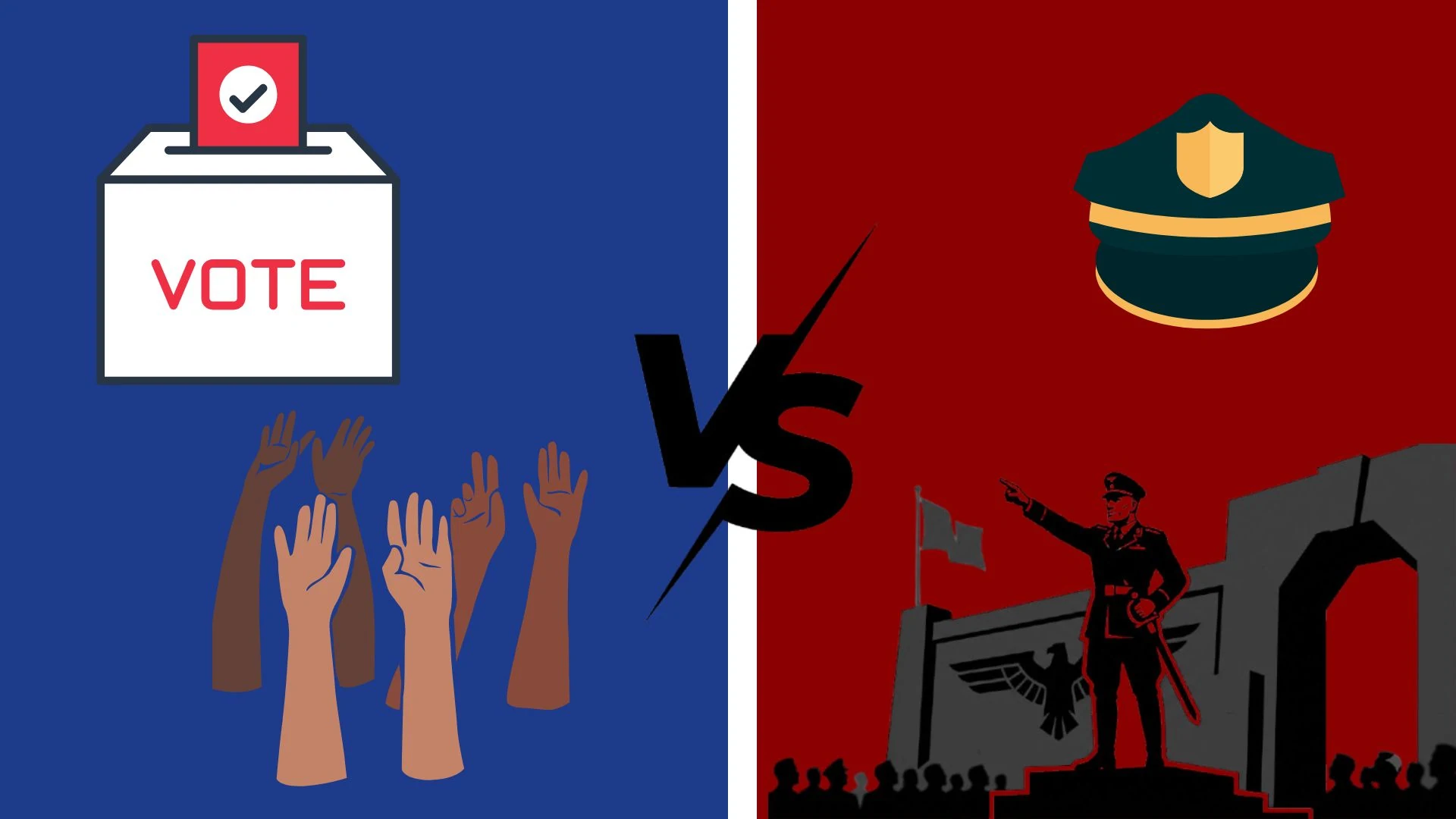
Democracy vs Dictatorship are known to be two contrasting forms of governance. However, these two are the most popular systems of government in the world today! Let’s understand the differences between democracy and dictatorship.
READ| List of Prime Ministers of India (1947 – Present)
What is Democracy?
Democracy is defined as “rule by the people.” Citizens elect leaders in free and fair elections in a democratic system. The Government works for the people and if the leaders do not perform, they can be removed.
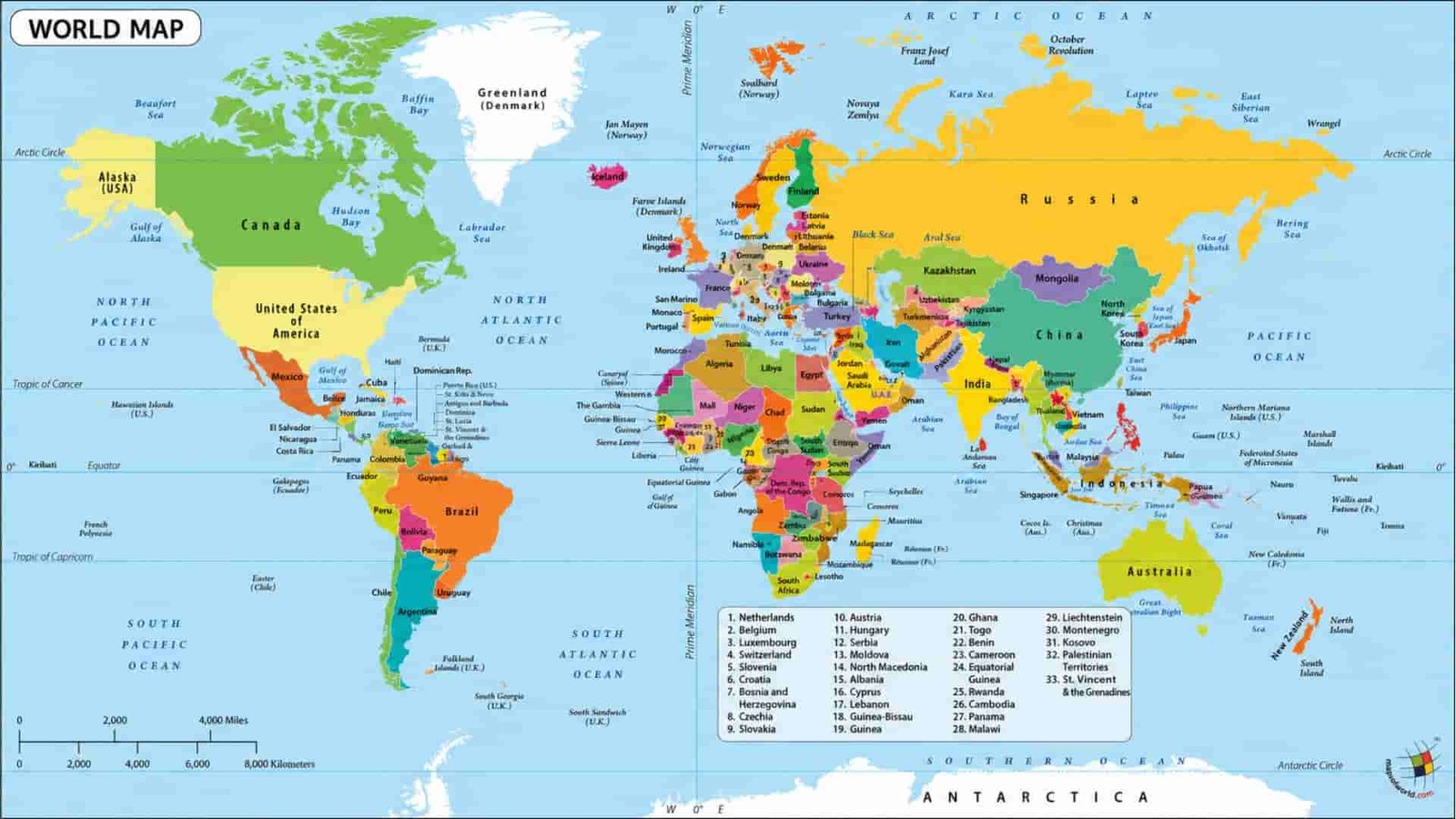
India is the biggest democracy in the world. Other democratic countries are the United States, the United Kingdom, and France.
India is the largest Democracy in the world. Democracy means government of the people, by the people and for the people. If democracy has to really succeed then government by the people is very important which was missing all these years. So Peopleís Participation in Governance is very important.
Human Rights Initiative
What are the Features of Democracy?
- Individuals caste their vote and elect their government
- Freedom of speech is protected
- Every person is equal before the law
- Opposition parties can freely function
- Media is free to question and criticise Government
- Leaders are answerable to the public
What is Dictatorship?
A dictatorship is a form of government in which a single leader or a very few people have the entire power. Citizens are not able to choose their rulers. There are no free elections.
By its nature, a dictatorship is established by force or by violating existing laws. Upon attaining power, they do not relinquish it easily.
North Korea, under Kim Jong Un, Syria, under Bashar al-Assad, and Iran are examples of countries ruled by dictators in modern times.
A dictatorship is a political system where power is concentrated in the hands of a single leader or a small group, often characterized by authoritarianism and a lack of democratic processes. Dictatorships can emerge from various circumstances, including coups d’état or governmental breakdowns, and are sometimes presented as necessary for restoring order during crises. While they can provide a semblance of stability and governance, dictatorships often suppress dissent, curtail civil liberties, and manipulate state structures to maintain control.
EBSCO
READ| List of Prime Ministers of Italy (1861 – 2026)
What are the Features of Dictatorship?
- One person or group controls everything
- Lack of free and fair elections
- Citizens have very limited rights
- Media is completely under control
- Opposition party members are not allowed
- No accountability to the public
What are the Differences Between Democracy and Dictatorship
Here are the simple differences between democracy and dictatorship:
| Feature | Democracy | Dictatorship |
| Who holds power | The people | One ruler or group |
| Elections | Free and fair | Absent or rigged |
| Freedom of speech | Fully protected | Restricted or banned |
| Media | Free and independent | Controlled by the state |
| Rights of citizens | Protected by law | Limited or removed |
| Opposition | Allowed | Not allowed |
| Accountability | Leaders answerable to people | No accountability |
| How power changes | Through elections | Through force or death |
Why Does Democracy Matter for India?
On 26th January 1950, India became a democratic republic. Every Indian has a right to vote, speak freely, and equality (without distinction based on religion, caste or gender).
India has managed to hold its general elections successfully for 18 times since independence. India is a nation of 1.4 billion people, with hundreds of languages and religions, all of which elect a government peacefully.
Democracy vs Dictatorship: Real World Numbers
As per World Population Review, there are 52 nations in the world that currently live under dictator or authoritarian regimes.
The website states: “As of 2020, there are 52 nations with a dictator or authoritarian regime ruling the country: Three in Latin America and South America, 27 in Asia and the Middle East, and 22 in Africa.”
On the other hand, as of 2017, there were 96 countries who were democracies of some kind. Further, nearly 46 countries showed hints of both democracy and autocracy.
The Pew Research Center mentions: “As of the end of 2017, 96 out of 167 countries with populations of at least 500,000 (57%) were democracies of some kind, and only 21 (13%) were autocracies. Nearly four dozen other countries – 46, or 28% – exhibited elements of both democracy and autocracy. Broadly speaking, the share of democracies among the world’s governments has been on an upward trend since the mid-1970s, and now sits just shy of its post-World War II record (58% in 2016).”
For more such well-researched GK articles helpful for exam aspirants and general readers seeking authentic and up-to-date coverage of current affairs, history, polity, science, technology, economy, sports, and beyond, keep exploring various categories of GKinfoBuzz, your trusted resource for knowledge and information.
In democracy, people choose the government through elections. In dictatorship, one person holds all power without public consent.
India is a democracy. It is the largest democracy in the world, with free elections held every five years.
North Korea, Syria, and Iran are commonly cited examples of countries under dictatorial rule.
Democracy protects the rights and freedom of every citizen. It ensures accountability, equality, and peaceful transfer of power.
Yes. History shows that when leaders misuse power, weaken institutions, and silence opposition, a democracy can slowly turn into a dictatorship.