Last Updated on June 16, 2026 by Parikshit
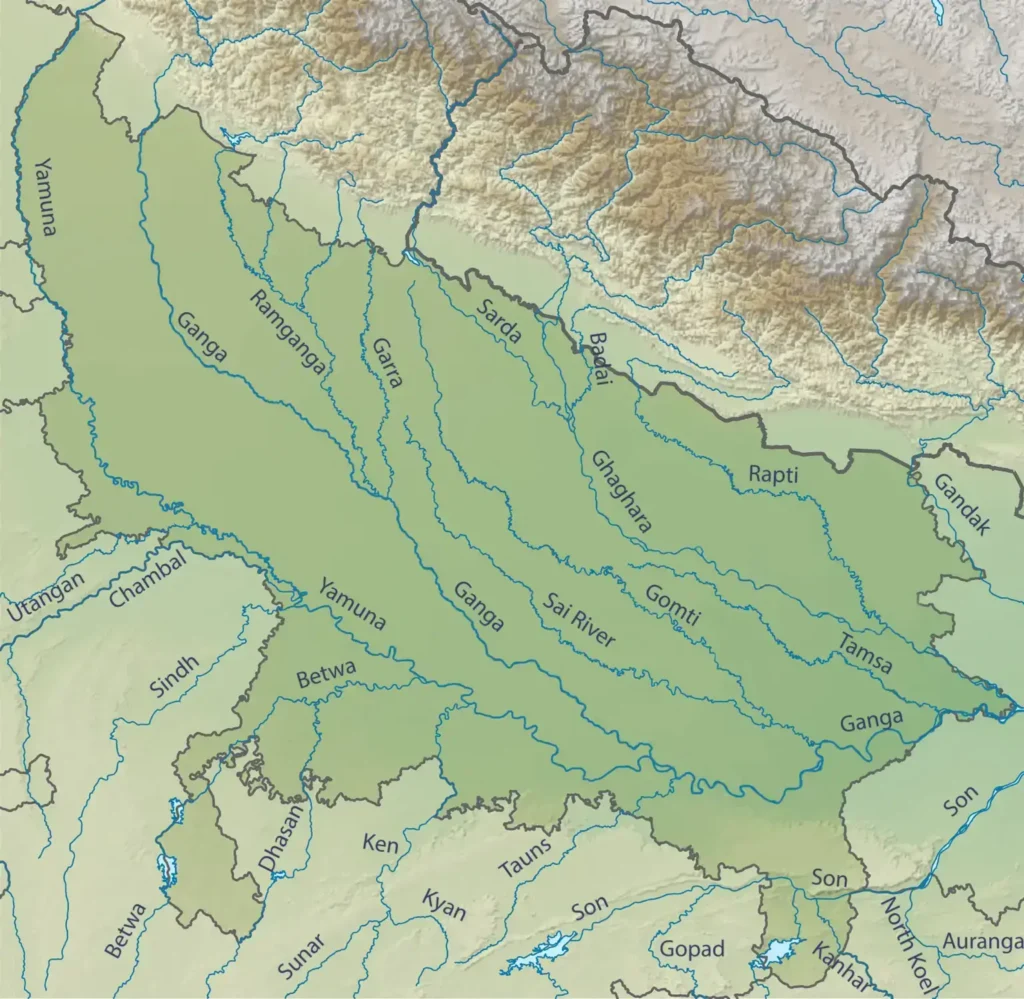
There are many rivers in the state of Uttar Pradesh, which is blessed with freshwater resources, mainly rivers and numerous wetlands. There are various major rivers in the state. These rivers either pass through the state, originate in the state, complete their journey in the state, or confluence with another river in the state. Major rivers include Ganga, Yamuna, Gomti, Rapti, Sharda, Ghaghra (Saryu), Ramganga, Gandak, and Son.
These rivers play a very important role not only for the lives but also support impressive aquatic biodiversity while providing required habitat conditions for these very species.
In this article, we will learn about the major rivers of Uttar Pradesh, where they come from, how long they are, and what the government is doing to keep them clean.
Why Does Uttar Pradesh Have So Many Rivers?
Uttar Pradesh sits in the middle of the Ganga plain. Many rivers from the Himalayas flow down into this flat land before moving towards Bihar and West Bengal. Some smaller rivers also start inside Uttar Pradesh itself. This is why the state has both big snow-fed rivers and small rain-fed rivers.
Importance of Rivers in Uttar Pradesh
Rivers are very important for the state because they:
- Provide water for drinking and household use.
- Help farmers irrigate their fields.
- Support fish farming and other livelihoods.
- Recharge groundwater.
- Hold religious and cultural importance.
- Support wildlife and natural ecosystems.
Two Main Types of Rivers in UP
Rivers in Uttar Pradesh can be put into two simple groups.
Himalayan rivers: These rivers get water from glaciers and snow. They flow all year round and never dry up completely. Ganga, Yamuna, Ghaghara and Ramganga belong to this group.
Peninsular and local rivers: These rivers mostly depend on rain. Some of them, like the Gomti, start inside Uttar Pradesh and join the Ganga later.
Rivers in Uttar Pradesh
Here is given a list of major rivers, according to official sources India WRIS (Ministry of Jal Shakti), the Central Water Commission, and Gyanganga.
| River Name | Origin | Type | Flows Through Uttar Pradesh | Joins Into |
| Ganga | Gangotri Glacier, Uttarakhand | Main River | Bijnor, Kannauj, Kanpur, Prayagraj, Varanasi, Ballia | Bay of Bengal |
| Yamuna | Yamunotri Glacier, Uttarakhand | Tributary of Ganga | Mathura, Agra, Etawah, Prayagraj | Ganga |
| Ghaghara | Tibetan Plateau near Mapchachungo Glacier | Tributary of Ganga | Bahraich, Gonda, Ayodhya, Ballia | Ganga |
| Gomti | Gomat Taal, Pilibhit | Tributary of Ganga | Pilibhit, Lucknow, Sultanpur, Jaunpur | Ganga |
| Ramganga | Kumaon Himalayas, Uttarakhand | Tributary of Ganga | Shahjahanpur, Bareilly, Hardoi | Ganga |
| Rapti | Lesser Himalayas, Nepal | Tributary of Ghaghara | Shravasti, Balrampur, Gorakhpur | Ghaghara |
| Gandak | Nepal Himalayas | Tributary of Ganga | Kushinagar, Maharajganj | Ganga |
| Sharda (Kali) | Milam Glacier, Uttarakhand | Tributary of Ghaghara | Lakhimpur Kheri | Ghaghara |
| Sarayu | Himalayan Region | Tributary of Ghaghara | Ayodhya and nearby districts | Ghaghara |
| Son | Amarkantak, Madhya Pradesh | Tributary of Ganga | Sonbhadra region | Ganga |
| Tons (Tamsa) | Kaimur Hills | Tributary of Ganga | Prayagraj, Mirzapur | Ganga |
| Chambal | Janapav Hills, Madhya Pradesh | Tributary of Yamuna | Etawah | Yamuna |
| Betwa | Vindhya Range, Madhya Pradesh | Tributary of Yamuna | Jhansi, Hamirpur | Yamuna |
| Ken | Kaimur Hills, Madhya Pradesh | Tributary of Yamuna | Banda | Yamuna |
| Sind | Malwa Plateau, Madhya Pradesh | Tributary of Yamuna | Jalaun region | Yamuna |
| Hindon | Shivalik Hills, Saharanpur | Tributary of Yamuna | Saharanpur, Meerut, Ghaziabad | Yamuna |
| Kali East | Muzaffarnagar Region | Tributary of Hindon | Muzaffarnagar, Baghpat | Hindon |
| Kali West | Shivalik Hills | Tributary of Yamuna System | Saharanpur region | Yamuna |
| Rohin | Nepal Hills | Tributary of Rapti | Maharajganj, Gorakhpur | Rapti |
| Budhi Rapti | Nepal | Tributary of Rapti | Siddharthnagar | Rapti |
| Varuna | Near Prayagraj Region | Tributary of Ganga | Varanasi | Ganga |
| Assi | Varanasi Region | Tributary of Ganga | Varanasi | Ganga |
| Karmanasa | Kaimur Hills | Tributary of Ganga | Chandauli | Ganga |
| Rihand | Matiranga Hills, Chhattisgarh | Tributary of Son | Sonbhadra | Son |
| Kanhar | Chhattisgarh Highlands | Tributary of Son | Sonbhadra | Son |
| Belan | Kaimur Hills | Tributary of Tons | Mirzapur | Tons |
| Chandraprabha | Vindhyan Range | Tributary of Karmanasa | Chandauli | Karmanasa |
| Dhasan | Raisen, Madhya Pradesh | Tributary of Betwa | Jhansi region | Betwa |
| Jamni | Madhya Pradesh | Tributary of Betwa | Jhansi | Betwa |
| Paisuni (Mandakini) | Vindhya Hills | Tributary of Yamuna | Chitrakoot | Yamuna |
| Kuwano | Gonda District | Tributary of Ghaghara | Basti, Sant Kabir Nagar | Ghaghara |
| Sai | Hardoi District | Tributary of Gomti | Raebareli, Pratapgarh | Gomti |
| Bakulahi | Pratapgarh Region | Tributary of Sai | Pratapgarh | Sai |
| Aril | Bareilly Region | Tributary of Ramganga | Bareilly | Ramganga |
| Isan | Shahjahanpur Region | Tributary of Ramganga | Shahjahanpur | Ramganga |
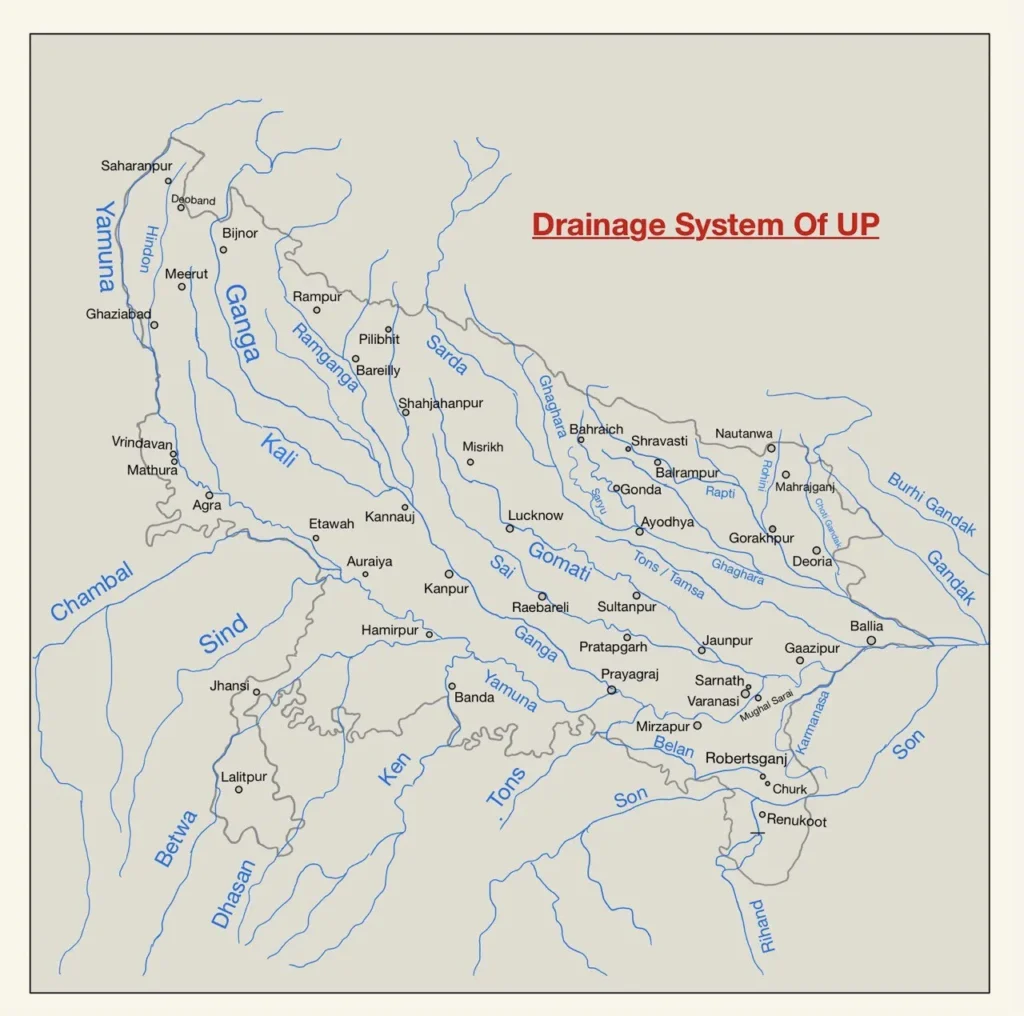
Rivers Grouped by Basin
1. Ganga Basin Rivers
Ganga, Gomti, Ramganga, Ghaghara, Gandak, Rapti, Sarayu, Varuna, Sai, Karmanasa, Tons, Son
2. Yamuna Basin Rivers
Yamuna, Chambal, Betwa, Ken, Sind, Paisuni, Hindon, Kali East, Kali West
3. Son Basin Rivers
Son, Rihand, Kanhar
4. Ghaghara Basin Rivers
Ghaghara, Rapti, Sarayu, Kuwano, Sharda
Top 10 Longest Rivers In Uttar Pradesh
| Rank | River | Approx Length |
| 1 | Ganga | 2,525 km |
| 2 | Yamuna | 1,376 km |
| 3 | Ghaghara | 1,080 km |
| 4 | Gomti | 940 km |
| 5 | Son | 784 km |
| 6 | Chambal | 965 km |
| 7 | Ramganga | 596 km |
| 8 | Rapti | 640 km |
| 9 | Betwa | 590 km |
| 10 | Ken | 427 km |
Major Rivers of Uttar Pradesh
1. Ganga River
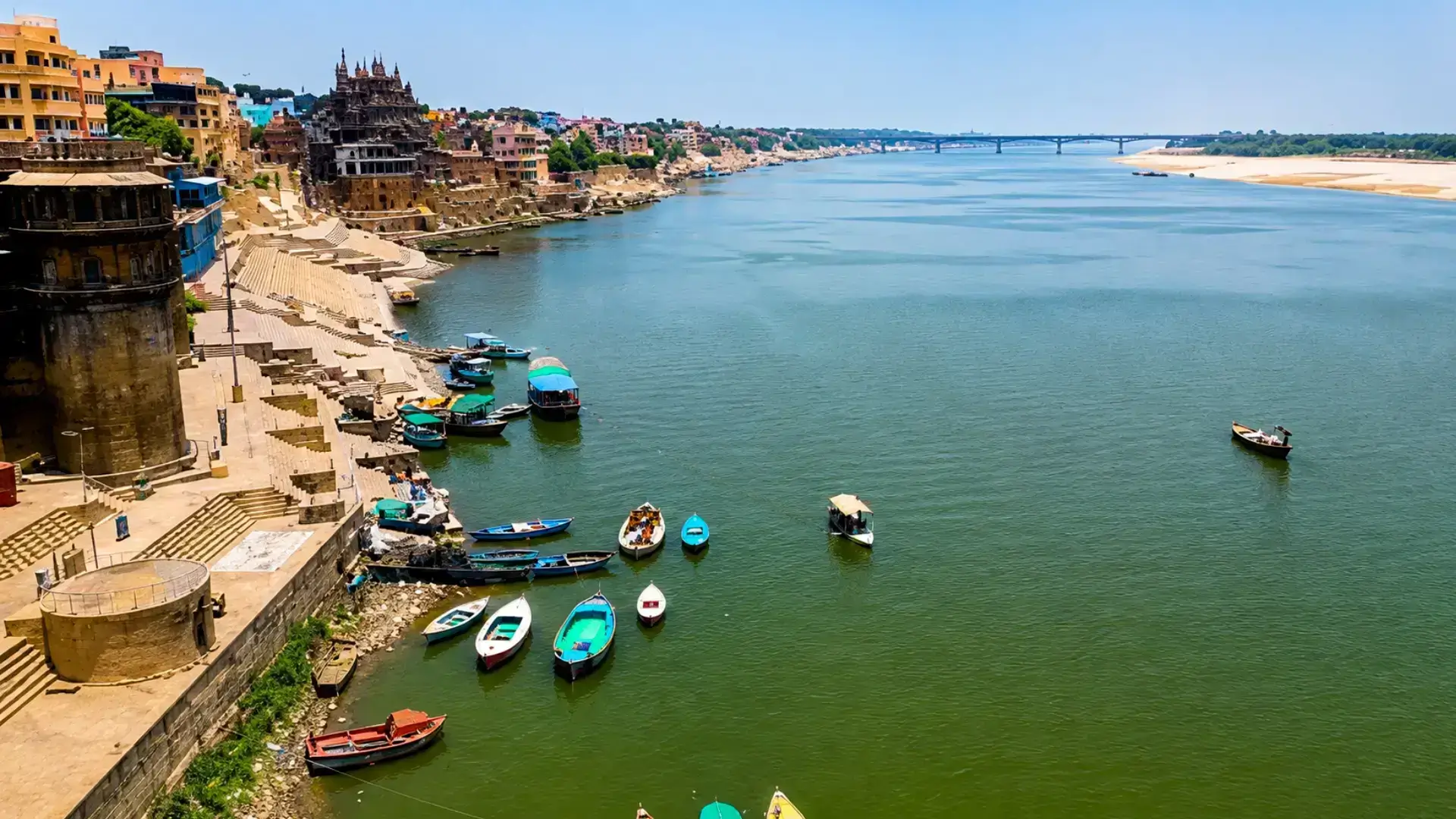
The Ganga is the most important river of Uttar Pradesh. It originates from the Gangotri Glacier in the Himalayas and enters Uttar Pradesh after flowing through Uttarakhand.
The river passes through many districts and cities, including Kannauj, Kanpur, Prayagraj, Varanasi, and Ballia. It is considered the holiest river in India and supports agriculture throughout the state.
Key Facts
- Largest river system in Uttar Pradesh.
- Considered sacred by Hindus.
- Supports farming and transportation.
- Many important tributaries join it in the state.
2. Yamuna River
The Yamuna River originates from the Yamunotri Glacier in Uttarakhand. It flows along the southern part of Uttar Pradesh and meets the Ganga at Prayagraj.
The meeting point of the Ganga and Yamuna is known as the Triveni Sangam, one of the most sacred places in India.
Key Facts
- Largest tributary of the Ganga.
- Flows through Agra and Prayagraj.
- Famous for the Taj Mahal located on its bank.
3. Ghaghara River
The Ghaghara is one of the largest rivers flowing through Uttar Pradesh. It originates in the Himalayas and enters the state from Nepal.
This river carries a large amount of water, especially during the rainy season. It finally joins the Ganga near Chhapra in Bihar.
Key Facts
- One of the longest rivers in northern India.
- Important source of irrigation.
- Often causes floods during heavy monsoon rains.
4. Gomti River
The Gomti River is a major river that flows entirely within Uttar Pradesh. It originates near Pilibhit and flows through Lucknow before joining the Ganga.
Key Facts
- Flows completely within Uttar Pradesh.
- Passes through Lucknow, the state capital.
- Important for local water supply and agriculture.
5. Ramganga River
The Ramganga River originates in the Kumaon Himalayas and joins the Ganga near Kannauj.
It is an important tributary of the Ganga and provides water for irrigation in many districts.
Key Facts
- Major tributary of the Ganga.
- Supports agriculture in western Uttar Pradesh.
- Important for local ecosystems.
6. Rapti River
The Rapti River originates in Nepal and enters eastern Uttar Pradesh. It flows through districts such as Gorakhpur and finally joins the Ghaghara River.
Key Facts
- Important river of eastern Uttar Pradesh.
- Helps agriculture in the region.
- Sometimes causes floods during monsoon.
7. Gandak River
The Gandak River rises in the Himalayas and enters Uttar Pradesh before joining the Ganga.
It carries a large amount of water from the Himalayan region and is important for irrigation.
8. Son River
The Son River originates near Amarkantak in Madhya Pradesh. It flows through the southeastern region and eventually joins the Ganga.
Key Facts
- Important right-bank tributary of the Ganga.
- Helps irrigation and farming.
- Flows through rocky and plateau regions.
Major Tributaries of the Ganga in Uttar Pradesh
The Ganga receives water from many tributaries in Uttar Pradesh.
Left Bank Tributaries
- Ramganga
- Gomti
- Ghaghara
- Gandak
- Rapti
Right Bank Tributaries
- Yamuna
- Son
- Tons
- Karmanasa
These rivers increase the water flow of the Ganga and help maintain fertile plains across the state.
What the Government is Doing to Clean These Rivers
Rivers in Uttar Pradesh face a lot of pollution from sewage and factory waste. To solve this problem, the central government runs the Namami Gange Programme under the Ministry of Jal Shakti.
According to the latest Government of India data released through the Press Information Bureau in 2026, this programme has been extended till March 2026 with a total outlay of about 22,500 crore rupees for its second phase. Out of 524 projects sanctioned across Ganga states, 355 projects, which is around 68 percent, were complete by February 2026. By December 2025, a sewage treatment capacity of 3,977 MLD (million litres per day) had been created.
The results are also showing in wildlife numbers. The Gangetic river dolphin population has grown from 3,330 in 2018 to 3,936 in 2024. Seven biodiversity parks have also been set up in UP districts such as Mirzapur, Bulandshahar, Hapur, Budaun, Ayodhya, Bijnor and Pratapgarh to protect river life.
Quick Facts About Rivers in Uttar Pradesh
| Fact | Detail |
| Longest river in UP | Ganga |
| River that flows fully inside UP | Gomti |
| Cleaning programme | Namami Gange |
| Programme extended till | March 2026 |
| Dolphin population (2024) | 3,936 |