Last Updated on May 24, 2026 by Parikshit
Buddhism is one of the oldest religions in the world. It was founded by Gautama Buddha more than 2,500 years ago in India. Buddhism teaches people to live a simple, peaceful, and honest life. It focuses on kindness, truth, non-violence, and wisdom. Today, millions of people across the world follow Buddhism and respect its teachings.
Buddhism started in ancient India and later spread to countries like Sri Lanka, China, Japan, Thailand, Myanmar, Nepal, and Tibet. The religion has played a major role in shaping Indian culture, art, architecture, and values. Many important Buddhist sites in India are protected and preserved by the Government of India and UNESCO.
Who Was Gautama Buddha?

Source: shutterstock
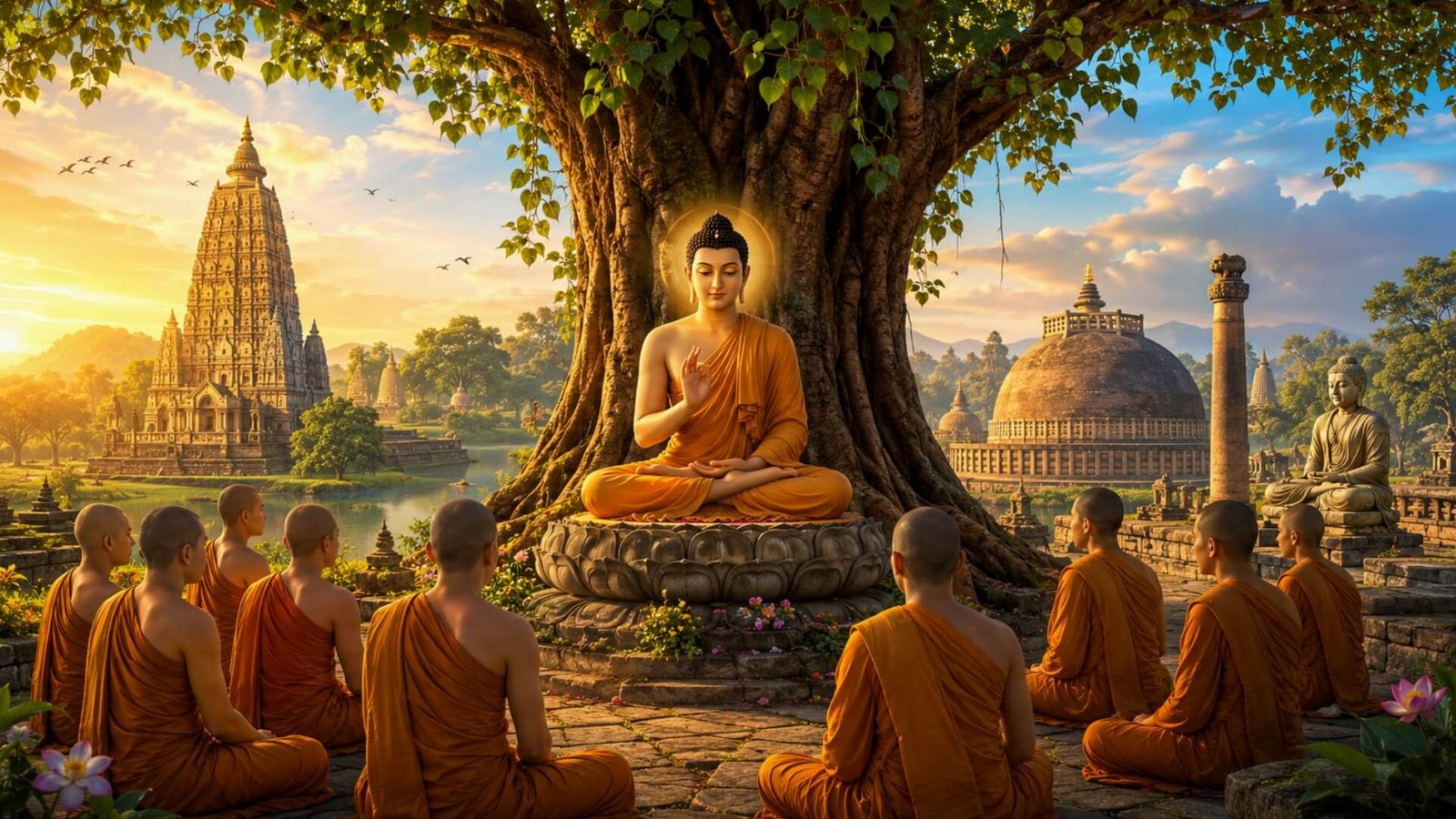
Gautama Buddha was born as Siddhartha Gautama around the 6th century BCE in Lumbini, which is now in Nepal. He was born into a royal family and lived a comfortable life during his childhood. However, when he saw sickness, old age, and death, he became worried about human suffering.
At the age of 29, Siddhartha left his palace in search of truth and peace. After years of meditation and deep thinking, he attained enlightenment under the Bodhi tree at Bodh Gaya in Bihar. After this, he became known as “Buddha,” which means “The Enlightened One.”
He spent the rest of his life teaching people the path to peace and freedom from suffering.
Main Teachings of Buddhism
Source: shutterstock
Buddhism is based on simple and practical teachings that help people live better lives. Buddha taught that human suffering is caused by desire and attachment. He also taught that suffering can end if people follow the right path.
The Four Noble Truths
The Four Noble Truths are the foundation of Buddhism.
1. Life has suffering.
2. Suffering is caused by desire and greed.
3. Suffering can end.
4. The Eightfold Path can end suffering.
These truths explain why people feel unhappy and how they can find peace.
The Eightfold Path
The Eightfold Path is a guide for living a good and meaningful life. It includes:
- Right Understanding
- Right Thought
- Right Speech
- Right Action
- Right Livelihood
- Right Effort
- Right Mindfulness
- Right Concentration
This path teaches people to behave honestly, think positively, and stay calm and disciplined.
Objectives of Buddhism
The main objective of Buddhism is to guide people toward peace and happiness. These are different objectives of buddhism is given below in detail:
1. To End Human Suffering: Buddhism teaches people how to reduce pain, stress, anger, and sadness in life.
2. To Promote Peace: Buddha always encouraged non-violence and peaceful living. Buddhism teaches people to avoid hatred and fights.
3. To Develop Good Character: The religion teaches honesty, kindness, patience, discipline, and respect for others.
4. To Spread Wisdom: Buddhism encourages learning, thinking, and understanding truth instead of blindly following beliefs.
5. To Help Society: Buddhist teachings promote equality, compassion, and care for all living beings.
Significance of Buddhism
Buddhism has great importance in India and around the world. Its teachings continue to inspire people even today.
1. Importance in Indian History: Buddhism became very popular during the rule of Emperor Ashoka. He spread Buddhist teachings across India and other countries. Many stupas, monasteries, and pillars were built during his rule.
2. Contribution to Art and Architecture: Buddhism influenced Indian art and architecture greatly. Famous Buddhist monuments include:
- Mahabodhi Temple
- Buddhist Monuments at Sanchi
- Ajanta Caves
- Nalanda Mahavihara
These sites are recognized as important cultural heritage sites.
3. Message of Equality: Buddhism teaches that all people are equal. Buddha opposed social discrimination and encouraged respect for everyone.
4. Influence on Education: Ancient Buddhist universities like Nalanda became famous centers of learning. Students from different countries came to study there.
5. Global Influence: Today, Buddhism is followed in many countries around the world. Its teachings of peace and meditation are respected globally.
What are the Different Branches of Buddhism
Over time, Buddhism developed into different branches.
1. Theravada Buddhism: This branch follows the original teachings of Buddha and is common in Sri Lanka, Thailand, and Myanmar.
2. Mahayana Buddhism: This branch focuses on compassion and helping others achieve enlightenment. It spread to China, Japan, and Korea.
3. Vajrayana Buddhism: This branch is mainly followed in Tibet and Himalayan regions. It includes special rituals and meditation practices.
Buddhist Sites in India
India has many important Buddhist pilgrimage sites. Thousands of tourists and followers visit these places every year.
- Bodh Gaya: This is the place where Buddha attained enlightenment under the Bodhi tree.
- Sarnath: Buddha gave his first sermon at Sarnath after attaining enlightenment.
- Kushinagar: This is the place where Buddha passed away and attained Mahaparinirvana.
- Nalanda: Nalanda was one of the world’s oldest universities and an important Buddhist learning center.
The Government of India also supports Buddhist culture and tourism through various programs and institutions.
Buddhism in Modern Times
Even today, Buddhism remains relevant because its teachings focus on peace, self-control, and mental well-being. Many people practice meditation and mindfulness to reduce stress and improve concentration. Buddhist organizations and institutions continue to preserve Buddhist culture and traditions in India and abroad.
Buddhism is a religion of peace, wisdom, and compassion. Founded by Gautama Buddha, it teaches people to live honestly, avoid violence, and help others. Its teachings are simple and practical, which makes them useful even today.
The objectives of Buddhism focus on ending suffering, spreading peace, and developing good values in society. Its significance can be seen in Indian history, culture, education, and architecture. Buddhism continues to inspire millions of people around the world with its message of kindness and humanity.