Last Updated on July 13, 2026 by Parikshit
The Constitution of India, which acts as the supreme law of the nation, was established to make India a sovereign, socialist, secular, democratic republic.
All the schedules play a major role in the Indian Constitution. The 1st Schedule of the Indian Constitution includes the list of all the Indian States and Union Territories. Here in this article, explore all the provisions, articles and major amendments in the 1st Schedule of the Indian Constitution.
Schedule Of Indian Constitution
The Indian Constitution was adopted by the Constituent Assembly on 26th November 1949 and came into force on 26th January 1950. Originally, the Indian Constitution adopted only 8 schedules, but it is now expanded to 12 schedules in the Indian Constitution through various amendments.
What is Schedule in the Indian Constitution?
The Schedule is the supplementary annexures or list that is attached to the Indian Constitution that contains the additional details on articles, provisions, and other classifications related to various constitutional matters that do not conflict with the constitution articles.
It is used to simplify the legal complexity and to amend a particular article instead of rewriting the whole article in the Indian Constitution.
1st Schedule of the Indian Constitution
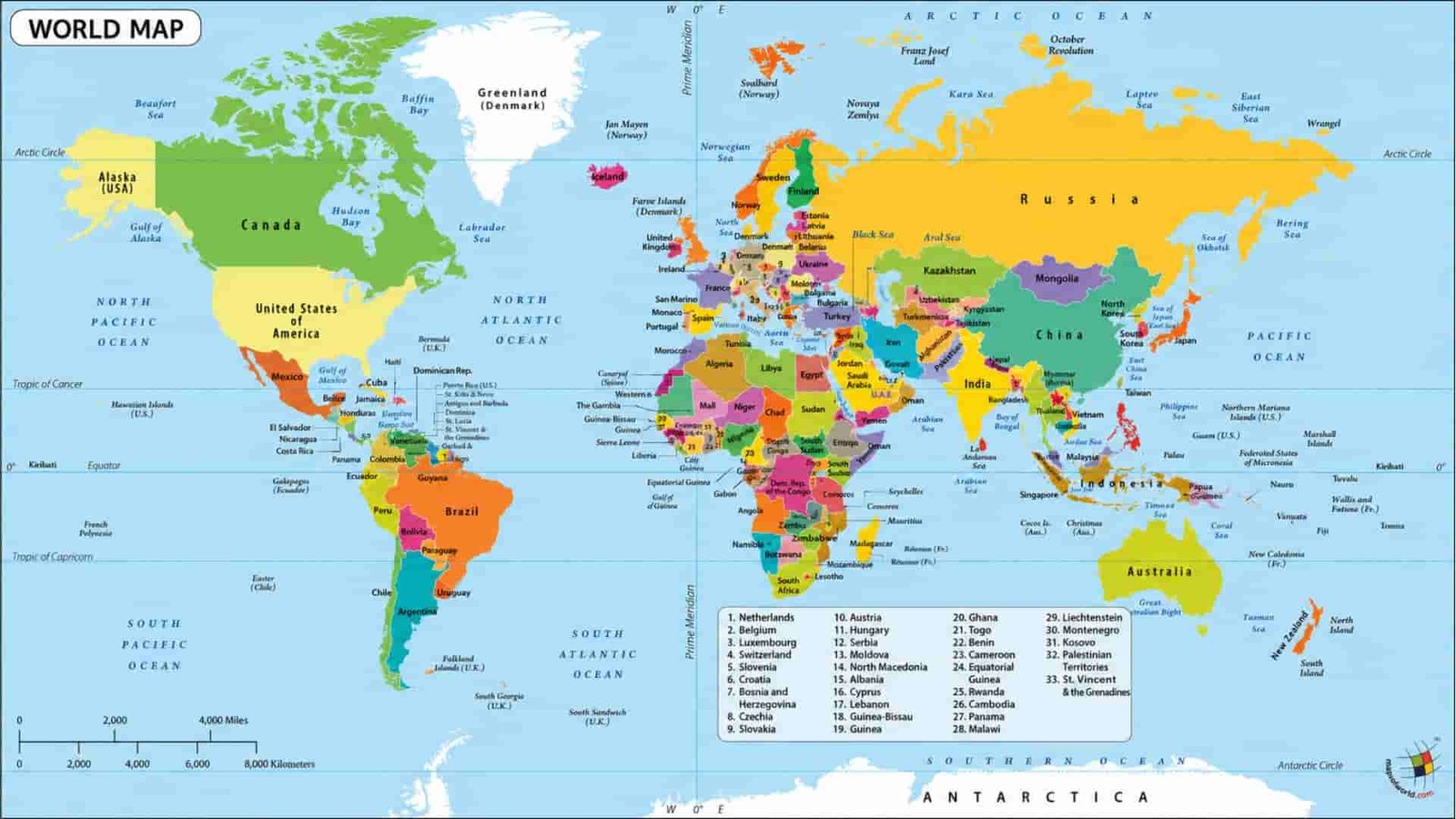
The 1st Schedule of the Indian Constitution includes all the names and territorial boundaries of the 28 Indian states and 8 Union Territories.
This schedule acts as the legal foundation for the political map of India, where this schedule states that India is a Union State which comprises 28 states and 8 UTs and gives the power to Parliament to create the laws on every Indian state and UTs.
Constitutional Articles in the 1st Schedule of the Indian Constitution
In the 1st Schedule of the Indian Constitution, there are two Constitutional articles mentioned, which are:
- Article 1
- Article 4
Article 1 of the Indian Constitution clearly specifies that “India, that is Bharat, shall be the Union of States”, and all the 28 states of India and 8 UTs thereof shall be the States and Union Territories specified in three parts, which are Part A, Part B, and Part of the 1st Schedule of the Indian Constitution.
Article 4 of the Indian Constitution gave the power to the Indian Parliament to create the laws on all the Indian states and UTs for reorganisation, including in the alteration of all the states’ names, with their boundaries or the formation of any new state or union territory in India.
Here are the newest state and UTs that were founded:
- Telangana is the newest state in India, which was officially separated from Andhra Pradesh. It was formed on 2 June 2014.
- The Union Territory “Dadar & Nagar and Daman & Diu” was established as the newest Union Territory in India on 20 January 2020. Previously, these two UTs were separated, but in 2020, by merging these UTs, the 8th Union Territory in India was created.
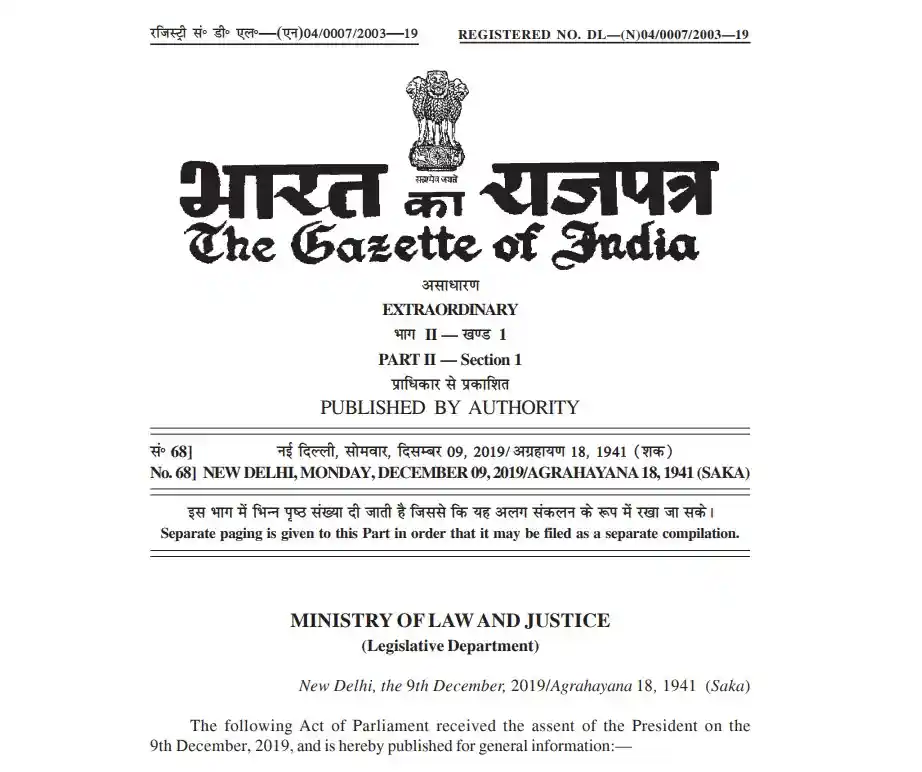
Source: Ministry of Home Affairs
3. With the passing of the Jammu & Kashmir Reorganisation Act 2019, the Union Territory of Jammu & Kashmir came into existence on 31.10.2019. All the central acts have been made applicable to The Union Territory of Jammu and Kashmir.
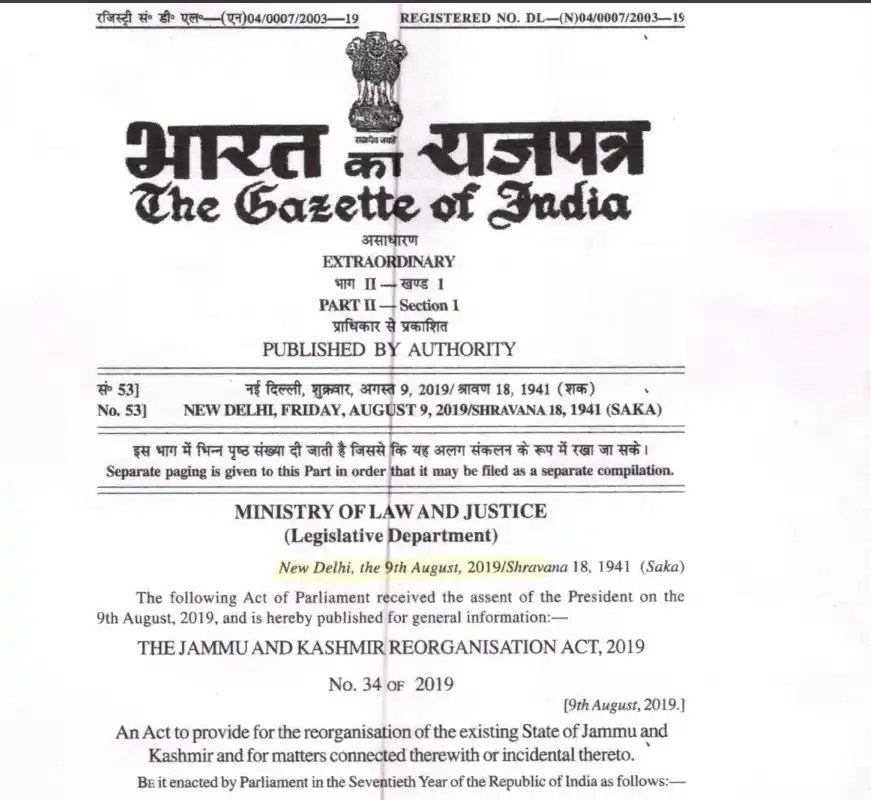
Source: Ministry of Home Affairs
Major Amendments in 1st Schedule of the Indian Constitution
For the formation or merger of any Indian State or any Union Territory, the 1st Schedule of the Indian Constitution will be amended. Here are major amendments done in the first schedule given below:
- The 1st Schedule of the Indian Constitution was amended for the first time by the Dr. B.R. Ambedkar, Drafting Committee Chairman, in 1949 to the creation of new States, transfer of territories between States and omission of existing States.
- Again in 1956, the first schedule was amended by the 7th Constitution Amendment Act during the formation of Andhra Pradesh as an independent state of India.
- The latest amendment was done in 2019 by introducing the Jammu & Kashmir Reorganisation Act, in which Jammu & Kashmir were removed from the state list of India and added to the list of Union Territories along with Ladakh.
So, this article was all about the 1st Schedule of the Indian Constitution with its provisions, articles and major amendments, which is one of the most important topics in polity.
For more such well-researched GK articles helpful for exam aspirants and general readers seeking authentic and up-to-date coverage of current affairs, history, polity, science, technology, economy, sports, and beyond, keep exploring various categories of GKinfoBuzz, your trusted resource for knowledge and information.