Last Updated on July 1, 2026 by Gaurav
Every country in the world has a national bird that represents the country and its story. The Bald Eagle was the choice of America. The Emu was the choice of Australia. The European Robin was selected as the United Kingdom’s bird.
But India? India chose a bird that doesn’t just represent the nation, it dances for it too. For thousands of years it has been a part of our religion, our art, and our stories.
Most people already know the answer to this question. However, do you know what is the whole story behind choosing this bird? Why do you think this bird was chosen rather than other birds? Do you know what makes it so special that it has survived in India for centuries without needing protection until modern times? Let us find out everything about the national bird of India.
READ| What is the National Song of India?
What is the National Bird of India?
Source: Shutterstock
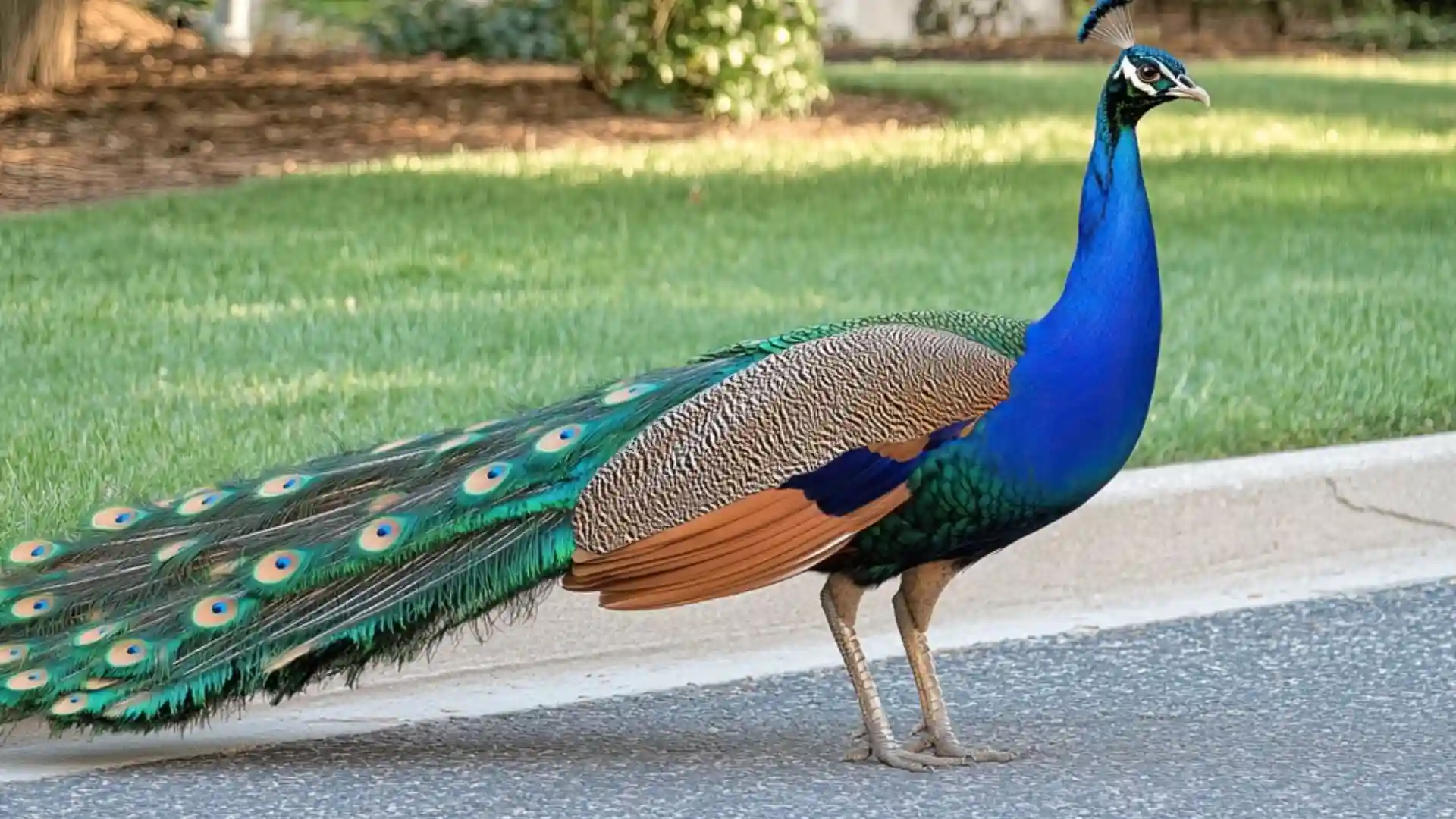
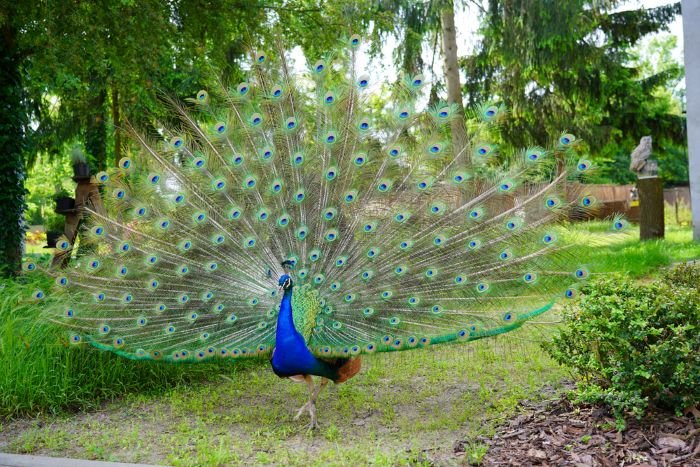
The national bird of India is the Indian Peacock. Its scientific name is Pavo cristatus.
It is also known as Indian Peafowl. The term ‘peacock’ is typically used for males. The female is called a peahen. They are commonly referred to as Peafowl.
The peacock was officially declared the national bird of India on 1st February 1963. This decision was taken by the Government of India after consulting State Governments and gathering opinions from across the country. A committee under the Ministry of Agriculture carefully studied many bird species before making the final choice.
In Hindi, the national bird is called “Rashtriya Pakshi.” The word for peacock in Sanskrit is “Mayura,” a name that appears in ancient Indian texts thousands of years old.
Why Was the Peacock Chosen as the National Bird of India?
This is a question worth understanding deeply, because the decision was not taken in a hurry.
The question of selecting a national bird had actually been under consideration since the Tokyo conference of the International Council for Bird Preservation held in May 1960. After that, the Indian Board for Wild Life took up the matter and State Governments were asked for their views.
Several birds were considered for the honour. These included the Great Indian Bustard, the Sarus Crane, the Brahminy Kite, and even the Swan (Hamsa). The Great Indian Bustard was actually considered one of the strongest competitors.
But in the end, the peacock won. Why?
A specific set of criteria had to be met before a bird could be named the national bird. The bird had to be:
Widely spread across India, so it could truly be called a national symbol and not just a regional one. It had to be easily recognisable to the common man, not just to wildlife experts. It needed to have deep cultural and religious meaning for the people of India. It had to be possible to depict it clearly on official documents and publications. And very importantly, no other country should have the same bird as its national symbol.
The Indian Peacock passed every single one of these criteria. It is found from Kashmir in the north to Tamil Nadu in the south. Every Indian, whether from a village or a city, knows what a peacock looks like. Its connection to our gods, our festivals, and our traditions goes back thousands of years. And no other country in the world uses the Indian Peafowl as its national bird.
READ| What is the National Animal of India?
The Peacock in Indian Mythology and Culture
No other bird in India has as deep a connection to religion and culture as the peacock.
In Hindu mythology, the peacock is the vehicle, or vahana, of Lord Kartikeya, also known as Murugan or Skanda, the God of War and the son of Lord Shiva.
In South India, particularly in Tamil Nadu, the peacock is extremely sacred because of this association. Temples dedicated to Lord Murugan often feature elaborate peacock motifs, and peacock feathers are considered auspicious offerings during religious ceremonies.
The peacock also has a powerful connection with Lord Krishna. Krishna is almost always depicted wearing a peacock feather in his crown or headband.
According to Hindu mythology, Krishna was enchanted by the peacock’s dance during the monsoon season and adopted the feather as his adornment. The eye-like patterns on peacock feathers are said to represent divine wisdom and the all-seeing nature of God.
Goddess Saraswati, the deity of knowledge, music, and the arts, is also associated with the peacock. The peacock serves as her vehicle in some traditions, symbolising the connection between beauty, creativity, and wisdom.
The bird is celebrated in classical Indian dance, music, poetry, temple carvings, textiles, and folk art. The Hawa Mahal in Jaipur features peacock-inspired architectural details. Peacock motifs can be found on old coins, sarees, jewellery, and sculptures across the country.
Where Does the Indian Peacock Live in India?
One of the reasons the peacock was chosen as the national bird is that it is found all across India. You do not need to travel to a specific forest or reserve to spot one.
Peacocks can be found in moist and dry deciduous forests, scrublands, grasslands, and even near agricultural fields and human settlements. They are highly adaptable birds. They live in the foothills of the Himalayas in the north, in the dry forests of Rajasthan, in the forests of Central India, and in the southern states.
They are particularly common in states like Rajasthan, Madhya Pradesh, Gujarat, and Uttar Pradesh. Peacocks can even be seen wandering into villages and small towns in many parts of India.
They are ground-dwelling birds for most of the day, searching for food on the ground. But at night, they fly up and roost in tall trees to stay safe from predators like tigers and leopards.
Interesting Facts About the Indian Peacock
- The peacock is one of the largest flying birds in the world. Ostriches and emus are bigger, but they cannot fly. The peacock can fly despite being very large and having an enormous train. It regularly perches on the tops of tall trees.
- Peacock feathers shed and regrow every year. Peacocks naturally shed their entire train after the mating season every year. This means that the peacock feathers used in temples and homes across India are collected naturally, without harming the bird.
- The peacock’s train is not its tail. The long, decorative feathers grow from the peacock’s back and are called upper tail covert feathers. The actual tail is short and sits underneath, used to push the train upward during courtship display.
- No two peacocks look the same. Just like human fingerprints, the patterns of eyespots and feathers on each peacock are slightly unique. Nature gave each peacock its own identity.
- The peacock’s lifespan is impressive as an Indian Peacock can live up to 20 years in the wild. In captivity, some birds have lived even longer.
Is the Peacock Protected in India?
Yes. The Indian Peacock is fully protected under the Wildlife Protection Act of 1972. Hunting, capturing, or harming a peacock is a criminal offence in India.
The Indian Peacock is the National Bird of India and it is not just the answer to a general knowledge question. It is a living symbol of everything India stands for.
It represents beauty without arrogance. It represents strength dressed up as grace. It has danced in our mythologies, sat on our royal thrones, adorned our temples, and walked freely through our villages for thousands of years.
For more such well-researched GK articles helpful for exam aspirants and general readers seeking authentic and up-to-date coverage of current affairs, history, polity, science, technology, economy, sports, and beyond, keep exploring various categories of GKinfoBuzz, your trusted resource for knowledge and information.