Last Updated on July 1, 2026 by Gaurav
Imagine you walk into a bank and request a house loan. The bank manager is not familiar with you. He has never witnessed how you handle money. But how does the manager determine whether or not the bank will loan you the money?
He observes one number. It is a three-digit number that conveys all he needs to know about how you spend your money. That is your credit score which in India is majorly known as CIBIL score.
Most people in India have heard the term “CIBIL score” thrown around at some point. Maybe while applying for a credit card or a home loan. However, very few people understand the entire concept, how it is calculated and why it can make or break your financial life.
Below you will learn all about it, in the simplest manner. No complicated finance jargon. Just straightforward, helpful information that’s useful to you.
What is CIBIL Score?
Source: Shutterstock
A credit score or famously known as CIBIL score is a three-digit number that indicates how trustworthy you are as a borrower. It is a number that summarizes your credit profile, and reflects your creditworthiness (your ability to be a good borrower) based on your credit history and past repayment behaviour.
Imagine it like a report card but for your monetary life! Your credit score is to lenders what your marks were to your teachers which is a score that shows how good a borrower you are.
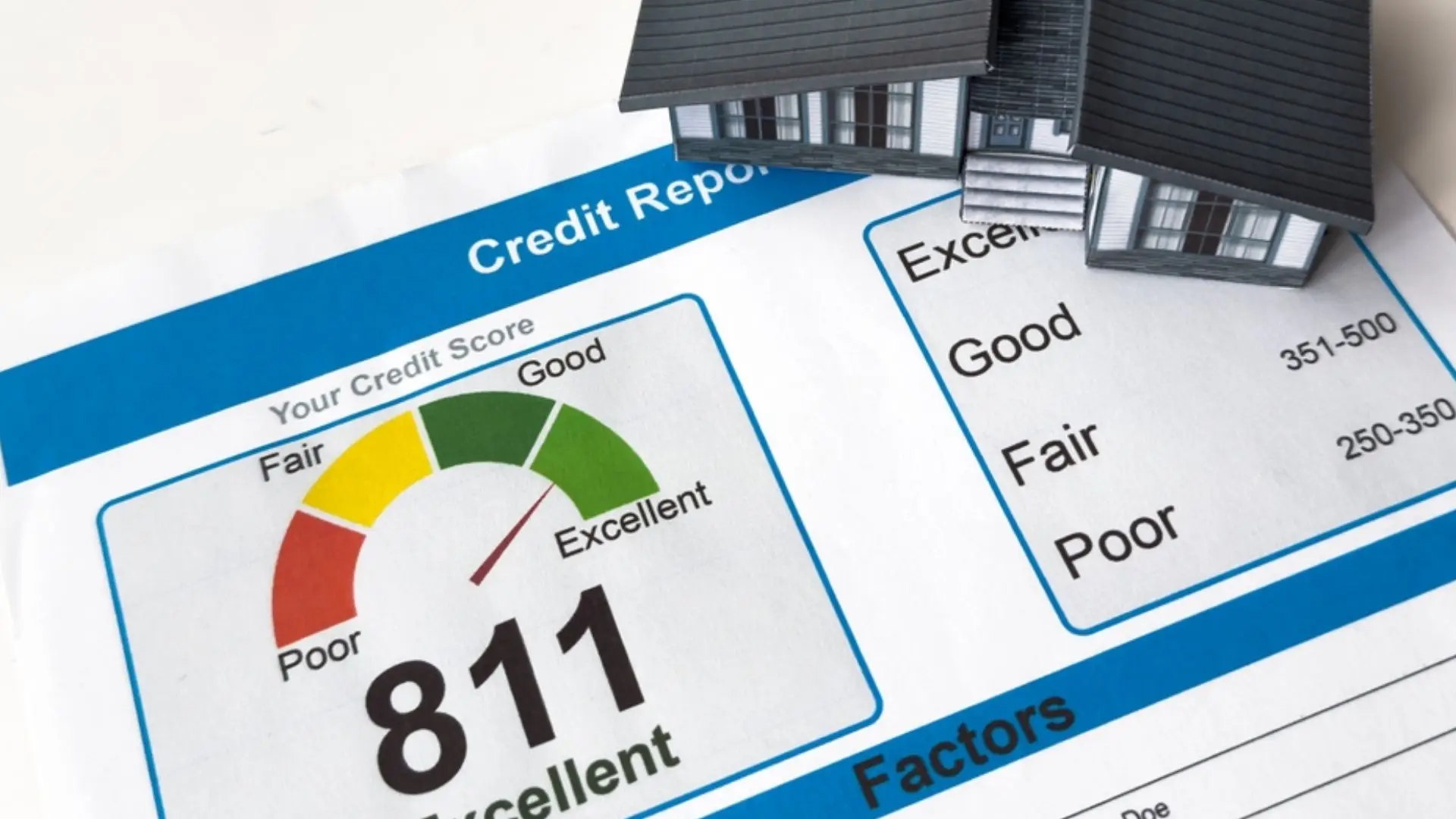
Credit scores in India range between 300 and 900, with 900 as the highest credit score. If a person has no credit history at all, they are assigned a score of -1 and if less than six months the score shows as 0.
“Your CIBIL Score is a 3-digit numeric summary of your credit history that indicates your creditworthiness and demonstrates your ability to repay a loan. CIBIL score ranges from 300 to 900. The closer your score is to 900, the higher are the chances of you getting your loan /credit card.”
CIBIL website
Who Calculates Your Credit Score in India?
There are four major Credit Information Companies in India that work to calculate credit scores which are TransUnion CIBIL, Experian, Equifax, and CRIF High Mark. These companies use an algorithm to check your creditworthiness, which incorporates factors as payment history, credit usage, and credit history length.
Although all four credit information companies have developed their own credit scores, the most popular one is the CIBIL credit score. It usually takes between 18 to 36 months to establish a good credit score.
What is a Good CIBIL Score in India?
Source: Shutterstock
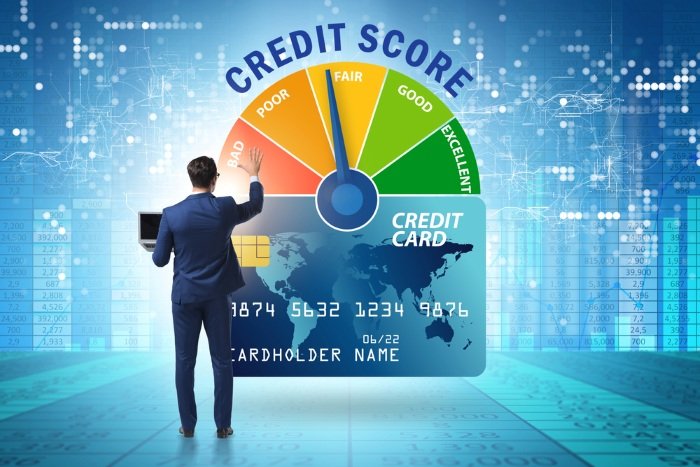
A score of more than 750 is excellent, a score of 650 to 749 is good, a score of 500 to 649 is average and a score below 499 is poor.
A CIBIL score of 750 and higher indicates a strong position. Banks will easily give you loans, and they will offer you the best interest rates.
Here is the range of CIBIL score as per Kotak Mahindra Bank:
| CIBIL Score Range | What does it mean? |
| Below 600 | A CIBIL score below 600 indicates that urgent action is needed and the approval probability for loans is low. |
| 600-649 | In this range, the CIBIL score is considered doubtful, making loan approval difficult. |
| 650-699 | Falling within this range suggests satisfactory or fair creditworthiness, with a possible chance of loan approval. |
| 700-749 | With a score in this bracket, the creditworthiness is considered good, increasing the chances of loan approval. |
| 750-900 | A CIBIL score in the range of 750-900 reflects an excellent credit profile, meaning a very high probability of loan approval. |
How is Your Credit Score Calculated?
Your credit score isn’t just a random number. It is determined by certain factors. Here is how the weightage is divided:
1. Payment History (35%)
This is the number one most important factor. Are you paying the EMIs and credit card bills on time? Each late or missed payment will appear on your credit report, and it will lower your credit score.
2. Credit Utilization Ratio (30%)
This is how much of your available credit limit you are actually using. If your credit limit is Rs. 1,00,000 and you are using Rs. 90,000 every month, your credit utilization ratio is 90%, which is considered too high. Ideally, you should not use more than 30% of your overall credit limit.
3. Length of Credit History (15%)
Older accounts that have been properly handled are a positive thing for your CIBIL score. The longer history with credit the better.
4. Credit Mix (10%)
Having a combination of secured loans such as an auto loan and unsecured loans, can be a good thing for your score. It demonstrates to the lending institution that you’re able to manage various kinds of credit sensibly.
5. New Credit Applications (10%)
A hard inquiry is when each lender accesses your credit report every time you apply for a new credit card or loan. If you have too many hard inquiries in a short amount of time, this can lead to an even lower score, and suggest you are credit hungry.
Common Myths About Credit Scores
Let us clear up a few things that a lot of people get wrong.
Myth 1: Checking your own credit score will reduce it.
This is false. When you check your own score it is referred to as a “soft inquiry” and won’t have any impact on your score.
Myth 2: A good salary means a good credit score.
The amount of savings you have is not directly a part of calculations. Your earnings are not a part of your credit score. It’s your credit behavior that’s important.
Myth 3: Closing old credit cards improves your score.
In reality, closing old accounts can adversely affect your score because the amount of available credit that you have is decreased, and your credit history is shortened. It’s best to maintain old accounts even if they are not used on a regular basis.
How to Improve Your CIBIL Score?
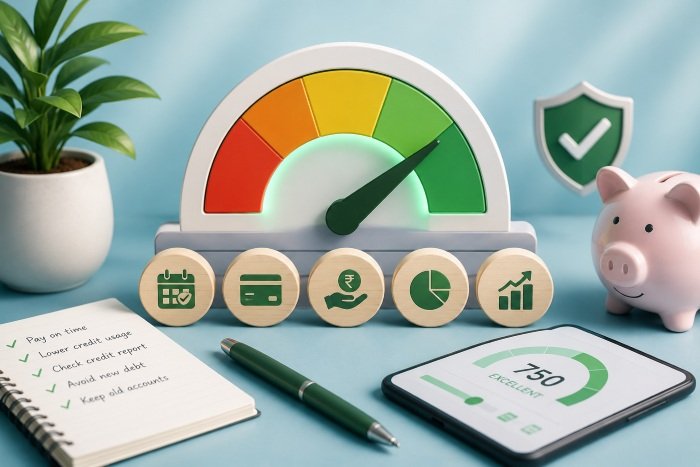
If your score isn’t where you’d like, the good news is there is a way to make it better; it’s possible to improve your score. This is not easy to do; it takes time and consistency, but it’s certainly possible. Here are the best steps to take:
1. Always Pay on Time
The main factor to increase a credit score is timely payments. Try to settle all the EMI’s and credit card bills on time. Schedule automatic debit reminders or automatic payments, so you know that you’re never late for a payment.
2. Do Not Apply for Too Many Loans at Once
Every credit enquiry may have a slight effect on your score. The fewer credit applications made, the more stable a credit score can be. Apply for credit only if it’s necessary.
3. Check Your Credit Report for Errors
Inaccurate information such as an unpaid loan that you’ve paid off, or an incorrect credit limit, may be pulling down your score. Requesting a free CIBIL report annually and following up the error cases promptly is crucial for maintaining a good credit score.
4. Be Patient
It takes about 4 to 12 months to improve credit scores, depending on the extent of past credit problems and how well credit behaviors are adhered to. By paying bills on time, decreasing credit usage and monitoring new applications, one can improve over time.
Your credit score is one of the biggest numbers in your financial life. It affects your ability to qualify for a loan, the interest rate on a loan, and sometimes your ability to get a job and/or rental agreement.
Fortunately, it is not difficult to establish and maintain a healthy credit rating. It only takes three simple tips: Pay your dues on time, don’t borrow more than you can afford, and review your credit report periodically for mistakes.
READ| Gross Domestic Product (GDP) Importance, Types, Formula
For more such well-researched GK articles helpful for exam aspirants and general readers seeking authentic and up-to-date coverage of current affairs, history, polity, science, technology, economy, sports, and beyond, keep exploring various categories of GKinfoBuzz, your trusted resource for knowledge and information.