
Last Updated on July 1, 2026 by Gaurav
Most of us know his name through our school textbooks. But few know the whole story of this man. He was the topper of Calcutta University, he went to jail for India and helped in the drafting of the Constitution and became the first President of India. After all this he left and returned to simple life in Bihar. Let’s find out who was the first President of India and his significant contributions.
READ| List of Presidents of India (1950 – Present)
Who Was the First President of India?
Source: Indian National Congress
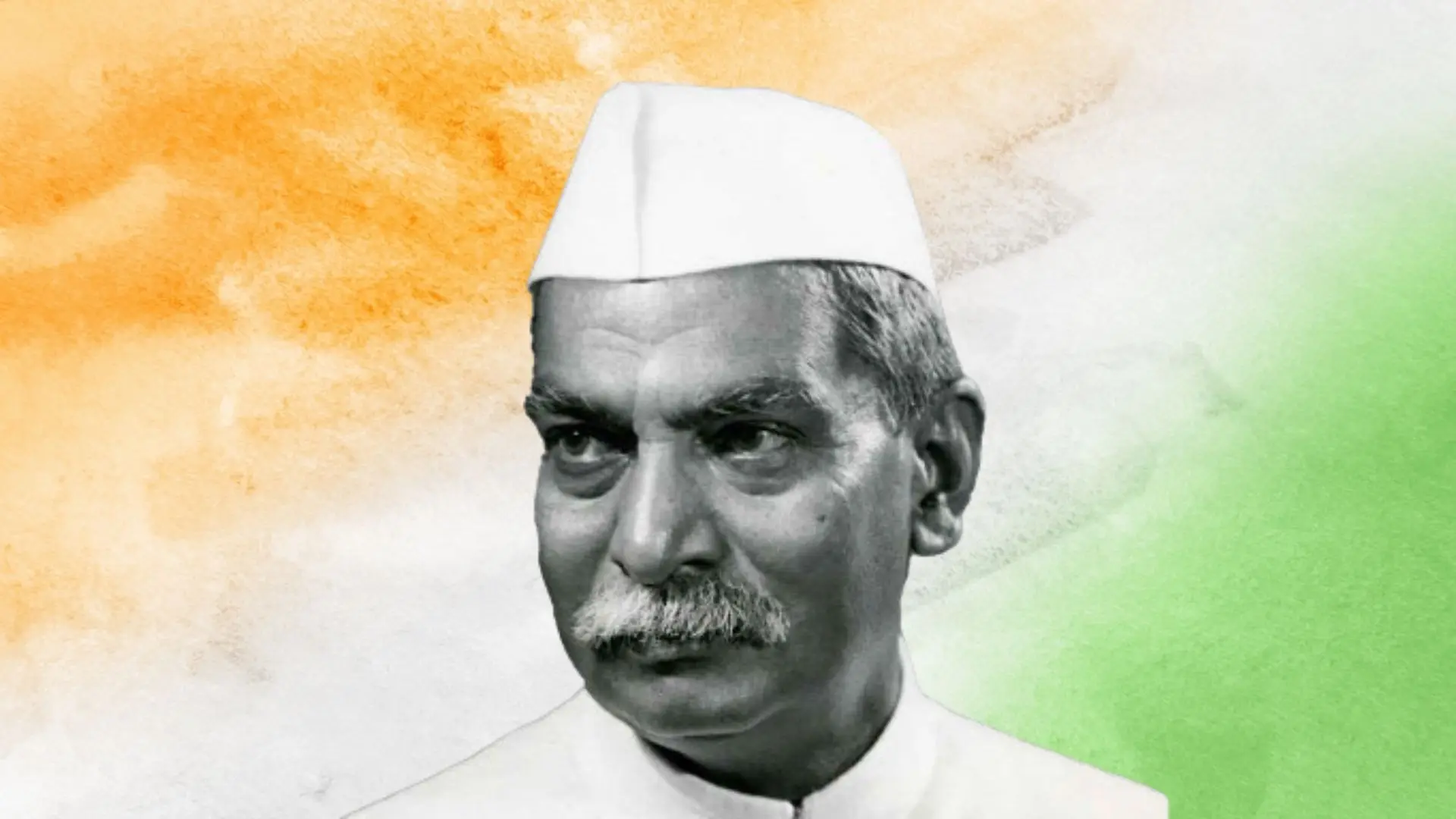
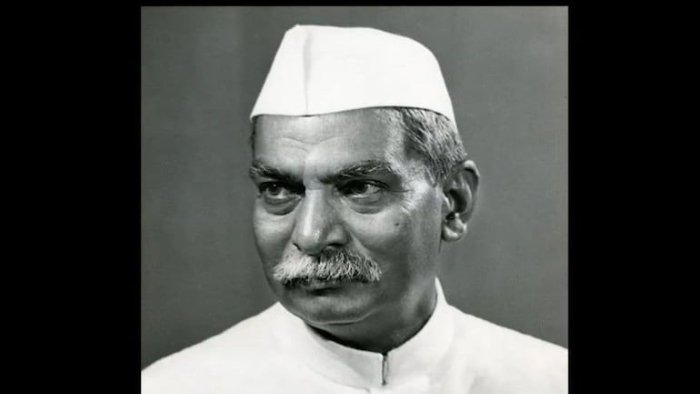
Dr. Rajendra Prasad was the first President of India. He held this position from 26 January 1950 to 13 May 1962, spanning 12 years. No other President in Indian history has served for this long. He was also the one President to have served consecutively for two full terms of office.
“Dr. Rajendra Prasad served as the first President of India, holding the office from January 26, 1950, until May 13, 1962.”
President of India Website
Dr. Rajendra Prasad: Early Life and Education
Dr. Rajendra Prasad was born on 3 December 1884 in Ziradei in the Siwan district of Bihar. He was brought up in a large joint family. His father was a scholar who was fluent in Sanskrit and Persian.
His mother was a very religious woman. As a kid Rajendra used to listen to her narrating stories from Ramayana and Mahabharata. These tales would be with him for the rest of his life.
His earliest memories were playing kabaddi with his friends. His home village was harmonious, and people from various communities lived together. That experience influenced his ideas regarding unity and harmony in the future.
He followed the tradition of the old days and got married at the early age of 12 with Rajvanshi Devi. The two continued to stay together for more than 70 years, until her death in 1962.
“Dr. Rajendra Prasad, son of Mahadev Sahai, was born in Zeradei, siwan, Bihar on December 3, 1884. Being the youngest in a large joint family he was greatly loved. He was strongly attached to his mother and elder brother Mahendra. In Zeradei’s diverse population, people lived together in onsiderable harmony. His earliest memories were of playing “Kabaddi” with his Hindu and Muslim friends alike. In keeping with the old customs of his village and family, he was married when he was barely 12 years old to Rajvanshi Devi.”
District Siwan
He topped the University of Calcutta entrance test, and received a scholarship of Rs. 30 per month. In December 1907, he obtained first division in M.A. in Economics from Calcutta University. Later he obtained his Masters of Law with a Gold Medal in 1915. He received his PhD in law from Allahabad University in 1937.
“He appeared in the examination for admission to the University of Calcutta, in which he scored very good marks. He started getting a scholarship of Rs. 30 every month. For the first time, a young man from his village had succeeded in getting admission to Calcutta University, which was certainly a matter of pride for Rajendra Prasad and his family. In 1902, Shri Prasad joined the Presidency College, from where he graduated. In 1907, he did M.A. in Economics from the University of Calcutta. In 1915, he completed his master’s degree for which he was awarded the Gold Medal. After this, he also obtained a doctorate in law from Allahabad University.”
Indian National Congress
How Did Dr. Rajendra Prasad Join the Freedom Struggle?
In the year 1915, a meeting was organised in Calcutta in the honour of Mahatma Gandhi, which was his first encounter with him. It was that one meeting that changed the path of his life.
Gandhi visited Champaran in Bihar two years later in 1917. The farmers in the region were being forced by Britishers to grow indigo and the conditions were unfair. Rajendra Prasad was at Gandhi’s side during this movement. He was a key figure of the Champaran movement, championing the cause of the farmers and for this, he was known as a leader who knew the struggles of common people.
After the Champaran incident, he couldn’t turn back! He left behind his flourishing legal career in 1921 to start a National College near Patna to commit himself whole-heartedly to the struggle for India’s independence.
The District Siwan mentions: “Dr. Prasad called for non cooperation in Bihar as part of Gandhiji’s non-cooperation movement. He gave up his law practice and started a National College near Patna,1921. The college was later shifted to Sadaqat Ashram on the banks of the Ganga.”
He was arrested by the British during the Salt Satyagraha of 1930 and the Quit India movement of 1942. He was arrested several times and jailed. Each time he came out he returned to the fight.
In 1934, 1939 and 1947 he served thrice as the President of the Indian National Congress. Gandhi had great faith in him. Rajendra Prasad was the one among all the close associates of Gandhi.
READ| Who Was the First President of the United States?
What Was Dr. Rajendra Prasad’s Role in Making the Indian Constitution?
Dr. Rajendra Prasad took over one of the most significant roles in the history of India after its independence in 1947. He was elected chairman of the Constituent Assembly, the group that was responsible for drafting and adopting India’s Constitution. This process was led by him from August 1947 to 26 January 1950.
The District Siwan mentions: “In July 1946, when the Constituent Assembly was established to frame the Constitution of India, he was elected its President. Two and a half years after independence, on January 26, 1950, the Constitution of independent India was ratified”
Prior to this, in 1946, he was given the responsibility of Food and Agriculture in the interim government. This is when he coined the slogan “Grow More Food” for his country.
What Happened After He Retired as President?
After 12 years, in 1962, Dr. Rajendra Prasad stepped down from the position of the President of India. He remained at the Sadaqat Ashram, Patna, Bihar in his last few days.
He gave up on living a luxurious life and settled into a simple existence. He had every right to good facilities, medical care in any part of the country and a contented life. He rejected everything. He went back to the very house he had begun his political career from in Patna.
That same year, he was honoured with the Bharat Ratna, India’s highest civilian award. His wife Rajvanshi Devi, passed away on 9 September 1962. On 28 February 1963, Dr. Rajendra Prasad passed away at the age of 78.
The District Siwan states: “Dr. Rajendra Prasad spent the last few months of his life in retirement at the Sadaqat Ashram in Patna. He died on February 28, 1963.”
Books Written by Dr. Rajendra Prasad
Not many people know that he was also a writer. He has written several important books such as Satyagraha at Champaran (1922), India Divided (1946), Atmakatha (1946), Mahatma Gandhi and Bihar Some Reminiscences (1949) and Bapu ke Kadmon Mein (1954).
From giving up his comfortable life and esteemed career for the nation to becoming the first President of India, Dr. Rajendra Prasad’s life is a great example of a visionary leader who believed in the solidarity of the nation.
READ| List of Prime Ministers of India (1947 – Present)
For more such well-researched GK articles helpful for exam aspirants and general readers seeking authentic and up-to-date coverage of current affairs, history, polity, science, technology, economy, sports, and beyond, keep exploring various categories of GKinfoBuzz, your trusted resource for knowledge and information.


Keep uploading such informative pieces🫡